Words that sound alike can easily cause confusion, especially when they have completely different meanings. “Bear fruit” and “bare fruit” are a good example because bear and bare are pronounced the same but are used in very different ways.
If you have come across the phrase “bear fruit” in the Bible, everyday speech, or motivational writing, you may have wondered whether “bare fruit” could also be correct. In most cases, “bear fruit” is the expression you want when talking about producing fruit, results, growth, or positive outcomes.
The word bear can mean to produce or bring forth, while bare means uncovered or exposed. This difference becomes especially important when writing about nature, personal growth, achievements, or biblical teachings. In this guide, we’ll explain “Bear Fruit or Bare Fruit?” in simple English, explore the meanings of both words, and provide clear examples to show when each form is appropriate.
Quick Answer ⚡
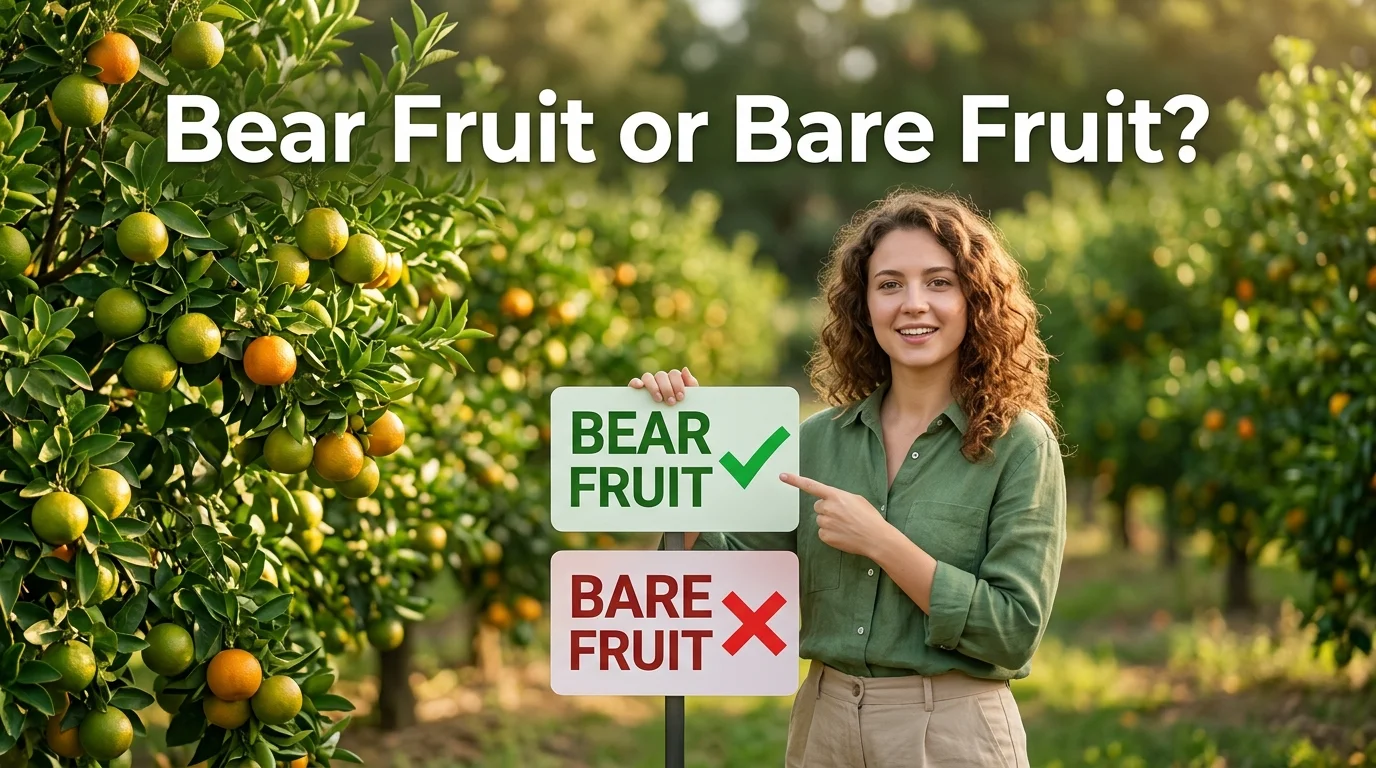
“Bear fruit” is the correct phrase. It means to produce results or succeed, and it comes from the verb “bear,” meaning “to produce or carry.” “Bare fruit” is a common misspelling “bare” means “naked or uncovered” and has nothing to do with results or success.
Why Do People Mix These Up? 🍊
English is full of homophones words that sound the same but are spelled differently and mean different things. “Bear” and “bare” are classic examples, and this confusion trips up even confident writers. Since both words are pronounced /bɛr/, your ears can’t tell them apart only your eyes (and your grammar knowledge!) can.
Let’s break each word down individually so there’s zero doubt left.
What Does “Bear Fruit” Mean? 🌳
The word “bear” is a verb with several meanings, including:
- To carry or support something (e.g., “The bridge can bear heavy loads.”)
- To endure something (e.g., “I can’t bear the noise.”)
- To produce or yield something (e.g., “The tree bears apples every fall.”)
When we say something “bears fruit,” we’re using that third meaning to produce or yield results. It’s often used both literally (about actual trees and plants) and figuratively (about plans, efforts, or hard work paying off).
Examples of “Bear Fruit” in a Sentence 📌
- 🌱 Literal: “The apple tree finally bore fruit after three years.”
- 💼 Figurative: “Her hard work in the lab finally bore fruit when the vaccine was approved.”
- 📈 Figurative: “The new marketing strategy is starting to bear fruit sales are up 20%.”
- 🎓 Figurative: “Years of studying finally bore fruit when she passed the bar exam.”
- 🤝 Figurative: “We hope these negotiations will bear fruit soon.”
Notice the past tense is “bore fruit,” not “beared fruit” “bear” is an irregular verb (bear → bore → borne/born).
What Does “Bare Fruit” Mean? 🍑
The word “bare” is usually an adjective meaning naked, uncovered, plain, or empty. It has nothing to do with producing results.
- “Bare feet” = feet with no shoes
- “Bare walls” = walls with nothing on them
- “Bare minimum” = the smallest amount possible
So technically, “bare fruit” isn’t a standard idiom at all. If you did use it literally, it might describe fruit with no skin, wrapping, or covering like “bare, unwashed fruit sitting on the counter.” But it is never correct when you mean “to succeed” or “to produce results.”
Examples of “Bare” Used Correctly 📌
- 👣 “She walked on the bare floor.”
- 🌳 “The trees were bare after autumn.”
- 🍇 “He served bare, unpeeled fruit as a snack.” (literal, unrelated to the idiom)
- 🧾 “Please stick to the bare facts of the case.”
Bear vs. Bare: Comparison Table 📊
| Word | Part of Speech | Meaning | Example Sentence |
| Bear (verb) | Verb | To carry, endure, or produce | “The tree will bear fruit in spring.” |
| Bear (noun) | Noun | The animal | “We saw a brown bear at the zoo.” |
| Bare | Adjective/Verb | Naked, plain, uncovered / to reveal | “The room was completely bare.” |
| Bear fruit | Idiom | To succeed or produce results | “The plan finally bore fruit.” |
| Bare fruit | ❌ Incorrect phrase | Not a standard idiom | Avoid using this in place of “bear fruit” |
Common Mistakes to Avoid 🚫
Here are the most frequent errors people make:
- ❌ “I hope our efforts bare fruit.” ✅ “I hope our efforts bear fruit.”
- ❌ “The project finally bared fruit after months of work.” ✅ “The project finally bore fruit after months of work.”
- ❌ “Their partnership hasn’t bared fruit yet.” ✅ “Their partnership hasn’t borne fruit yet.”
- ❌ Confusing “bear” (animal) with “bare” (naked) in unrelated sentences like writing “bare market” instead of “bear market” in finance writing! 📉
Memory Trick to Never Confuse Them Again 🧠
Here’s a simple mnemonic to lock this in permanently:
🐻 “A BEAR carries things including fruit and success.” Think of a bear literally carrying a basket of fruit on its back. If you can picture a bear holding fruit, you’ll remember that “bear fruit” is about producing or carrying results.
Another quick trick:
- “Bare” has an A for “Almost nothing” (naked, empty, plain).
- “Bear” has an E for “Effort” (produces results through effort).
Real-Life Examples From Everyday Writing 📝
📧 In Emails
“I wanted to update you that our new outreach strategy is starting to bear fruit we’ve seen a 15% increase in responses this month.”
📱 On Social Media
“3 years of grinding finally bore fruit 🙌 Just signed my first book deal! #hardworkpaysoff”
📰 In News Headlines
“Peace Talks Yet to Bear Fruit as Tensions Continue”
🎓 In Academic Writing
“The researchers noted that early-stage interventions are more likely to bear fruit than late-stage corrective measures.”
🗣️ In Everyday Speech
“I know it’s frustrating, but keep at it your efforts will bear fruit eventually.”
British vs. American English: Any Difference? 🇬🇧 🇺🇸
Good news there’s no regional difference here! Both British and American English use:
- “Bear fruit” as the correct idiom
- “Bore fruit” as the past tense
- “Borne fruit” as the past participle (e.g., “Has the plan borne fruit?”)
This is one of the rare cases where English usage is consistent across the pond. The only regional quirk worth noting: American English sometimes uses “born” instead of “borne” in casual writing, but grammatically, “borne” is correct when referring to results or effort (as opposed to “born,” which relates to birth).
| Tense | Correct Form |
| Present | bear fruit |
| Past | bore fruit |
| Past Participle | (has/have) borne fruit |
Why This Matters for SEO and Professional Writing ✍️
If you’re a content writer, student, or professional, using correct idioms like “bear fruit” boosts your credibility. Search engines and readers alike favor content with correct spelling and proper grammar tips applied consistently. A single “bare fruit” typo in a business proposal or blog post can undermine your authority so it pays (literally) to get it right.
Related terms and LSI keywords worth knowing if you’re improving your English usage:
- Grammar tips
- Common mistakes
- Homophones in English
- Correct spelling
- Idioms and phrases
- Bear vs bare
- English grammar rules
- Business English writing
FAQs: People Also Ask ❓
1. Is it “bear fruit” or “bare fruit”?
It’s “bear fruit.” This is the correct idiom meaning to produce results or succeed. “Bare fruit” is a common misspelling.
2. What does “bear fruit” mean in a sentence?
It means that something produces results or leads to success literally (a tree producing fruit) or figuratively (a plan or effort paying off).
3. What is the past tense of “bear fruit”?
The past tense is “bore fruit,” and the past participle is “borne fruit.”
4. Is “bare fruit” ever correct?
Only in a very literal, non-idiomatic sense like describing fruit with no packaging or peel. It is never correct as a substitute for the idiom “bear fruit.”
5. Why are “bear” and “bare” confused so often?
Because they’re homophones they sound exactly alike but have different spellings and meanings, which makes them easy to mix up while writing quickly.
6. Is there a difference between British and American English here?
No, both use “bear fruit,” “bore fruit,” and “borne fruit” identically.
7. What’s a good way to remember the difference?
Picture a bear physically carrying fruit 🐻🍎 this helps you remember that “bear” (not “bare”) relates to producing or carrying results.
Final Takeaway
In conclusion, bear fruit is the correct phrase when you mean to produce results, benefits, or actual fruit. The verb bear means to produce or carry, while bare means uncovered or exposed. Therefore, “bear fruit” is commonly used in everyday, biblical, and figurative contexts, such as “hard work will bear fruit.”
Bare fruit is usually incorrect when you are trying to express the idea of producing results. Remembering this simple difference can help you avoid confusion and improve your writing. Whenever you mean “produce results” or “produce fruit,” choose bear fruit, not bare fruit.

James Carter is an English language enthusiast and content writer who loves making grammar simple and easy to understand. He creates clear, beginner-friendly guides on spelling, grammar rules, confusing words, and everyday English usage. His goal is to help readers write with confidence through practical examples, easy explanations, and accurate language tips.