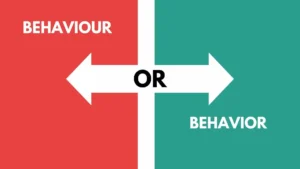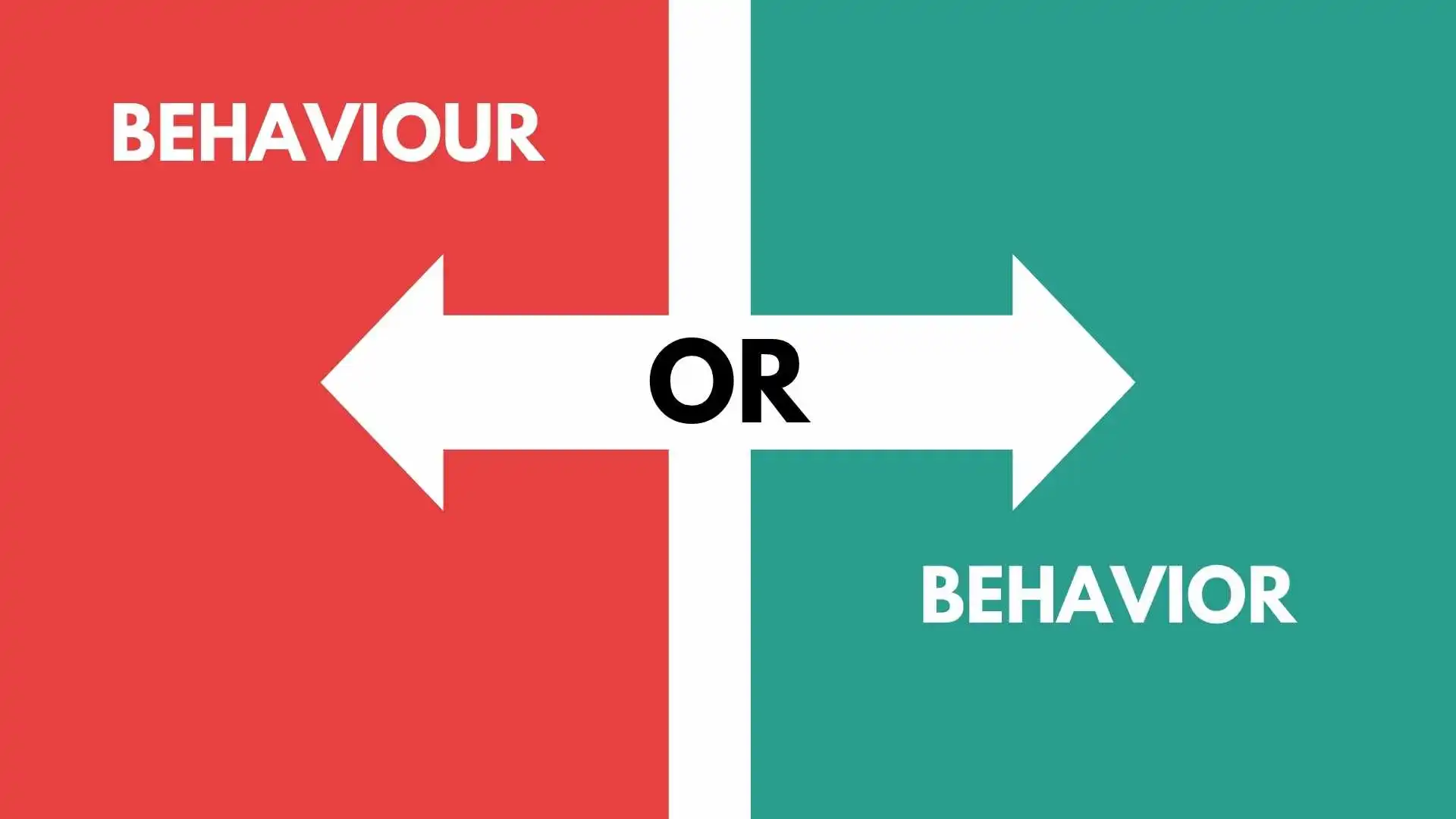
Choosing between Behaviour or Behavior can be confusing, especially when you are writing for an international audience. Both spellings are correct, but the difference comes down to the variety of English you are using.
“Behaviour” is the standard British English spelling, while “Behavior” is the preferred American English spelling. The meaning remains exactly the same in both forms, referring to the way a person, animal, or group acts or responds in a particular situation.
This small spelling difference often appears in school assignments, professional writing, websites, emails, and everyday communication. Understanding when to use each form can help you write more clearly and confidently. If you are following British English, such as in the UK, you will normally use behaviour, while American English typically uses behavior.
⚡ Quick Answer
“Behavior” is American English, and “behaviour” is British English. Both spellings mean the same thing the way a person, animal, or thing acts and both are 100% correct, depending on which English variant you’re using.
That’s it. That’s the whole secret. But let’s dig deeper, because there’s a lot of useful nuance (and a fun mnemonic) coming up. 👇
What Does “Behavior/Behaviour” Actually Mean?
Before we get into spelling, let’s nail down the meaning. Behavior (or behaviour) refers to:
- The way someone acts or conducts themselves
- The manner in which something functions or responds
- Actions or reactions of a person, animal, system, or object under certain conditions
Examples of Usage
- “Her behavior during the meeting was very professional.” 💼
- “The dog’s behaviour changed after training.” 🐕
- “Scientists study animal behavior to understand instincts.”
- “His rude behaviour shocked everyone at the party.”
- “Consumer behavior trends shifted during the pandemic.”
Notice something? The meaning never changes. Only the spelling shifts based on which side of the Atlantic you’re writing for.
American English vs British English: The Real Difference
This isn’t a one-off exception it’s part of a much bigger pattern in English spelling. American English generally simplifies certain British spellings by dropping the “u.”
Here are other words that follow the same rule:
| British English | American English |
| Colour | Color |
| Favour | Favor |
| Honour | Honor |
| Neighbour | Neighbor |
| Behaviour | Behavior |
Yep if you’ve ever wondered why “color” looks different in a British novel, this is the exact same rule at play. 🇬🇧🇺🇸
Comparison Table: Behaviour vs Behavior
| Feature | Behaviour (British) | Behavior (American) |
| Meaning | Way of acting or conducting oneself | Way of acting or conducting oneself |
| Region Used | UK, Australia, Canada*, India, most Commonwealth countries | USA, and American-influenced writing |
| Spelling Pattern | Includes “-our” | Drops the “u,” uses “-or” |
| Example Sentence | “The teacher praised her good behaviour.” | “The teacher praised her good behavior.” |
| Used In | British newspapers, UK academic writing | US media, American academic writing |
| Correctness | ✅ Correct in British English | ✅ Correct in American English |
*Fun fact: Canada often mixes both spellings depending on context, though “behaviour” is more traditional there.
Common Mistakes People Make 😅
Even though both spellings are correct, people still slip up. Here are the most common errors:
- Mixing spellings in the same document Using “behaviour” in one paragraph and “behavior” in another. This looks inconsistent and unprofessional.
- Assuming one spelling is “wrong” Neither is wrong! It all depends on your audience.
- Misspelling it as “behaivor” or “behavour” These are simply incorrect in both English variants.
- Ignoring regional context for academic or business writing If you’re writing a report for a US company, switching to British spelling mid-document can seem careless.
🧠 Memory Trick (Mnemonic)
Here’s an easy way to remember which is which:
“U” for United Kingdom, no “U” for USA.
- British English → has the extra “u” → behaviour
- American English → drops the “u” → behavior
Another fun trick: Think of the word “colour” if you already know Brits write “colour” with a “u,” just apply the same logic to “behaviour.” Once one clicks, they all click! 🔑
Real-Life Examples: Where You’ll See Both Spellings
📧 In Emails
- British: “We need to address his unprofessional behaviour immediately.”
- American: “We need to address his unprofessional behavior immediately.”
📱 On Social Media
- British: “Can’t believe the behaviour of some fans at the match today 😤”
- American: “Can’t believe the behavior of some fans at the game today 😤”
📰 In News Headlines
- British (BBC style): “Study reveals shocking behaviour patterns in teenagers.”
- American (CNN style): “Study reveals shocking behavior patterns in teenagers.”
🎓 In Academic Writing
- British universities (Oxford, Cambridge) expect: “Animal behaviour is influenced by environmental factors.”
- American universities (Harvard, Stanford) expect: “Animal behavior is influenced by environmental factors.”
💬 In Everyday Speech
Spoken English doesn’t reveal spelling, so pronunciation is identical the difference is purely visual, appearing only in writing.
Related keywords (LSI) worth knowing:
- Grammar tips
- Common mistakes in English
- English usage rules
- Correct spelling guide
- British vs American English
- Spelling variations
- English language learners
- Word usage differences
Behaviour or Behavior: Which Should You Use?
Here’s a simple decision guide:
- ✅ Writing for a US audience, American company, or US-based blog? Use behavior.
- ✅ Writing for a UK, Australian, Indian, or Commonwealth audience? Use behaviour.
- ✅ Writing academic papers? Match the spelling convention required by your university or journal.
- ✅ Writing for a global audience? Pick one and stay consistent throughout the entire piece.
Frequently Asked Questions (FAQs) ❓
1. Is “behavior” or “behaviour” correct?
Both are correct! “Behavior” is American English, and “behaviour” is British English. Neither is grammatically wrong.
2. Which spelling should I use in a resume or CV?
Use behavior if applying to US-based companies, and behaviour if applying to UK, Australian, or Commonwealth-based companies.
3. Do Canadians use “behavior” or “behaviour”?
Canadians typically use behaviour, following British spelling conventions, though American influence means you’ll occasionally see “behavior” too.
4. Is “behaviour” used in Australia and India?
Yes! Australia, India, New Zealand, and most Commonwealth nations follow British spelling, so behaviour is standard there.
5. Why does American English drop the “u” in words like behavior?
This traces back to Noah Webster, an American lexicographer who simplified many British spellings in the early 1800s to create a distinct American English standard.
6. Can I mix both spellings in one document?
It’s best not to. Mixing spellings within the same piece of writing looks inconsistent and unprofessional. Pick one style and stick with it.
7. Does spelling affect SEO rankings?
Yes, slightly. Using the spelling that matches your target audience’s region can improve relevance and readability, which indirectly supports SEO performance.
8. Is there a difference in pronunciation between behavior and behaviour?
No. Both words are pronounced exactly the same way the difference exists only in written form.
Final Thoughts: The Key Takeaway
In conclusion, Behaviour or Behavior are both correct spellings, but they are used in different forms of English. Behaviour is the standard British English spelling, commonly used in the UK, Australia, and other countries that follow British English. Behavior is the preferred American English spelling and is widely used in the United States.
The meaning of both words is exactly the same: they describe the way a person, animal, or group acts or responds in different situations. Choosing the right spelling mainly depends on your audience and the type of English you are following. Once you understand this simple difference, you can confidently use Behaviour and Behavior in your writing.

Sophia Collins is a passionate English grammar writer at GrammBoost.com who loves making the English language simple and easy to understand. She creates clear, beginner-friendly guides on grammar, spelling, word differences, and common language mistakes. Her goal is to help students, writers, and English learners build confidence and improve their writing through practical, easy-to-follow explanations.