
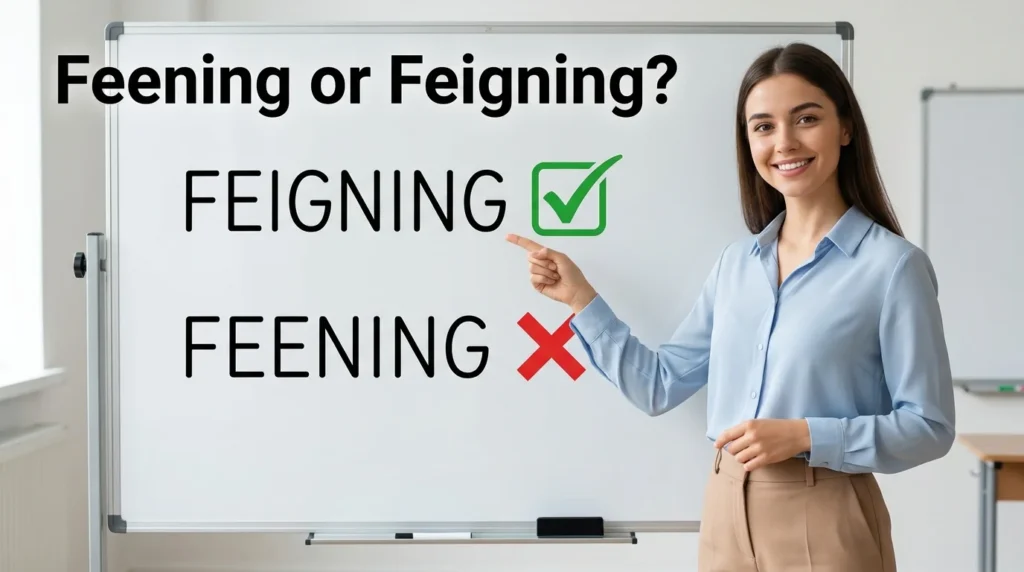
A single letter can completely change the meaning of an English word, and “feening” and “feigning” are a perfect example. These two words may look and sound similar, but they are used in very different situations. Feening is an informal slang term related to “feen,” often describing someone who strongly wants, craves, or is eager for something.
You may see it in text messages, social media comments, songs, and casual conversations. Feigning, on the other hand, is a standard English word that means pretending or giving a false appearance of something. For example, someone might be feigning interest even though they are not actually interested.
Because both words are commonly encountered in informal online communication, it is easy to confuse them when writing or reading a sentence. Knowing the difference helps you understand the intended meaning from context and avoid spelling mistakes.
Quick Answer ⚡
“Feening” (from “fiending”) means craving or desperately wanting something it’s slang. “Feigning” means pretending or faking something, like feigning surprise or feigning illness. They are completely different words with completely different meanings the only thing they share is that they sound a bit similar when spoken quickly.
What Does “Feening” Mean? 🍫
Feening is an informal, slang spelling of “fiending.” It comes from the word “fiend,” which originally meant a demon or evil spirit, but in modern slang, a “fiend” is someone with an intense craving for something (like a drug, food, or even attention).
So when someone says they’re “feening” for something, they mean they’re craving it badly almost obsessively.
Examples of “Feening” in a Sentence 🗣️
- “I’m feening for some pizza right now, I haven’t eaten all day.” 🍕
- “She’s been feening for a vacation ever since work got stressful.” ✈️
- “He was feening hard for a cigarette after quitting for a week.” 🚬
- “My dog is feening for treats every time I open the fridge.” 🐶
Key Things to Know About “Feening”
- It’s not standard English you won’t find it in formal writing or academic papers
- It’s most common in casual speech, texting, hip-hop lyrics, and social media
- The “correct” slang spelling is actually “fiending” (from “fiend”), but “feening” is such a common phonetic spelling that it’s widely used and understood
- Avoid using it in resumes, emails to your boss, or school essays it’s strictly informal 🚫
What Does “Feigning” Mean? 🎭
Feigning is a real, standard English word that means pretending or faking something. It comes from the verb “feign,” which has been part of the English language for centuries (it even shows up in Shakespeare!).
When you “feign” something, you’re putting on an act pretending to feel, be, or do something that isn’t true.
Examples of “Feigning” in a Sentence 📝
- She was feigning interest in the meeting while secretly checking her phone. 📱
- He feigned surprise when they announced the winner, even though he already knew. 🏆
- The cat was feigning sleep but watching us the whole time. 😼
- Employees sometimes feign illness to get out of coming into work. 🤒
Key Things to Know About “Feigning”
- It’s formal and grammatically correct perfectly fine for essays, emails, articles, and professional writing
- Common phrases include: feigning ignorance, feigning innocence, feigning interest, feigning illness
- Related words: feign (base verb), feigned (past tense), feint (a related word meaning a deceptive move, often used in sports or military contexts)
Feening vs. Feigning: Comparison Table 📊
| Feature | Feening | Feigning |
| Meaning | Craving or desperately wanting something | Pretending or faking something |
| Word Origin | Slang spelling of “fiending” (from “fiend”) | From the verb “feign” (Old French feindre) |
| Part of Speech | Verb (slang/informal) | Verb (standard/formal) |
| Formality | Informal, slang | Formal and standard English |
| Common Context | Texting, music, casual conversation | Essays, news, professional writing, literature |
| Example Sentence | “I’m feening for tacos right now.” | “She’s feigning excitement about the gift.” |
| Dictionary Status | Rarely listed; “fiending” is the closer standard spelling | Fully recognized in all major dictionaries |
| Use in Resume/Email | ❌ Avoid | ✅ Totally fine |
Common Mistakes to Avoid ⚠️
Here are the most frequent errors people make with these two words:
- Using “feening” in formal writing since it’s slang, it instantly makes writing look unprofessional.
- Confusing “feigning” with “feening” because they sound alike when spoken fast especially in songs or casual speech.
- Misspelling “fiending” as “feening” technically, “fiending” is the more historically accurate slang spelling, but “feening” has become widely accepted through common usage.
- Mixing up “feigning” with “faining” there is no word “faining” in English, so watch out for that typo.
- Forgetting the silent connection to “feign” remember that “feigning” always relates to pretending, never craving.
Memory Trick to Remember the Difference 🧠💡
Here’s a simple mnemonic to lock this in forever:
“FEIGN” rhymes with “REIGN” and when you FEIGN something, you’re pretending to REIGN (rule) over an emotion or reaction you don’t really feel.
“FEENING” sounds like “FIEND-ing” and a FIEND craves things intensely. Think: fiend = craving = feening.
Another quick trick:
- Feig(n)ing has a “g” that’s silent, just like the truth is silent when you’re faking something. 🤫
- Feening rhymes with “leaning” and when you’re craving something badly, you’re practically leaning toward it. 😅
Real-Life Examples 🌍
From Social Media 📱
“not me feening for boba at 11pm again 😩🧋”
From Text Messages 💬
“bro I’m feening for some sleep, this week has been rough”
From News or Academic Writing 📰
“The senator appeared to be feigning concern over the policy, despite having voted against similar measures in the past.”
From Everyday Speech 🗣️
“Don’t act like you’re feigning surprise I know you already knew about the party!”
From Song Lyrics 🎤
Many hip-hop and R&B songs use “feening” (or “fiending”) to describe intense desire or longing for a person, food, or feeling this is one of the biggest reasons the slang spelling has spread so widely online.
British vs. American English Notes 🇬🇧🇺🇸
- “Feigning” is used identically in both British and American English no spelling or meaning differences.
- “Feening” is almost exclusively an American slang term, rooted in African American Vernacular English (AAVE) and hip-hop culture, and it has since spread globally through music and social media.
- British English speakers are less likely to use “feening” naturally in speech, though it’s understood widely thanks to American pop culture and streaming platforts.
Why This Confusion Happens (Keyword & Language Insight) 🔍
From a language-trends perspective, searches for “feening or feigning” spike whenever:
- A popular song uses the word “feening” or “fiending”
- Social media trends feature the slang term
- People try to write the word down for the first time and aren’t sure how it’s spelled
This is a great example of how spoken slang collides with standard grammar rules, creating genuine confusion especially for English learners or anyone unfamiliar with AAVE-influenced slang.
FAQs: People Also Ask 🙋
1. Is “feening” a real word?
Not in traditional dictionaries. It’s a slang variation of “fiending,” which comes from the noun “fiend.” It’s widely understood, but it’s not considered standard English.
2. What does “feigning ignorance” mean?
It means pretending not to know something on purpose, even though you actually do.
3. Can I use “feening” in an essay?
No it’s slang and considered too informal for academic or professional writing. Use words like “craving” or “yearning” instead.
4. What’s the difference between “feign” and “feint”?
“Feign” means to pretend, while “feint” refers to a deceptive movement or distraction, often used in sports, boxing, or military strategy.
5. Is “fiending” or “feening” more correct?
“Fiending” is technically closer to the original word “fiend,” but “feening” has become an accepted informal spelling due to widespread use in music and online culture.
6. What is a synonym for “feigning”?
Synonyms include: pretending, faking, simulating, affecting, and putting on.
7. What is a synonym for “feening”?
Synonyms include: craving, yearning, longing, and jonesing (also slang).
Final Thoughts:
In conclusion, feening and feigning are often confused because they look and sound similar, but they have different meanings. Feigning is the correct standard word when you mean pretending or giving a false appearance of a feeling, illness, or behavior. Feening, on the other hand, is an informal spelling sometimes used in slang, especially when someone means craving or strongly desiring something.
The right choice depends on the context and intended meaning. If you are writing formally, feigning is usually the safer choice. Understanding this difference will help you avoid spelling mistakes and communicate your ideas more clearly and accurately.

James Carter is an English language enthusiast and content writer who loves making grammar simple and easy to understand. He creates clear, beginner-friendly guides on spelling, grammar rules, confusing words, and everyday English usage. His goal is to help readers write with confidence through practical examples, easy explanations, and accurate language tips.