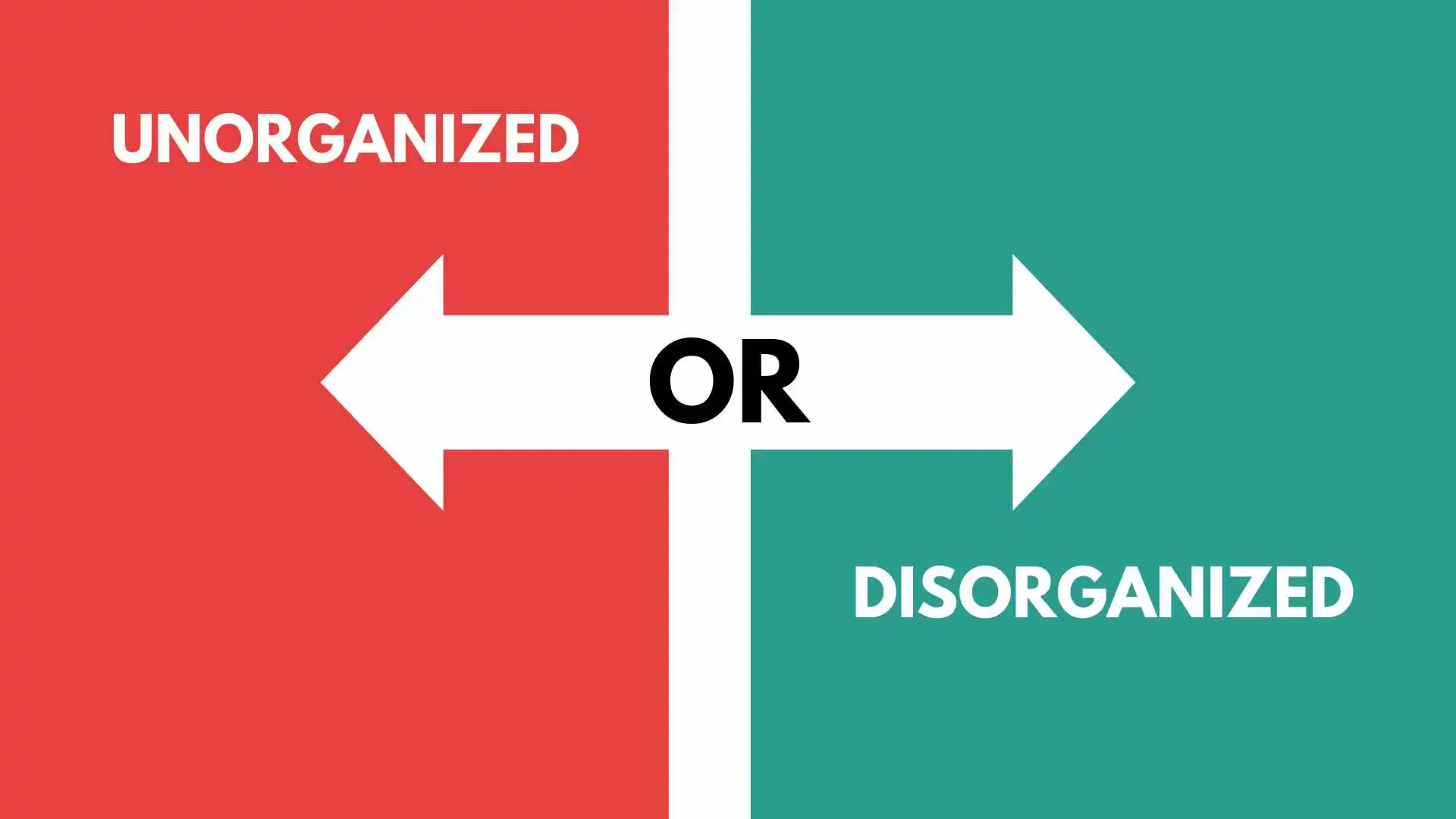
The terms “unorganized” and “disorganized” are often used interchangeably, but they can carry slightly different meanings depending on the situation.
Both words describe a lack of order, structure, or proper arrangement, whether you are talking about a messy room, scattered thoughts, poor planning, or an inefficient system.
However, understanding the subtle difference between unorganized vs disorganized can help you choose the most accurate word in everyday conversations and writing.
Quick Answer 🎯
Unorganized means something has not been organized at all it’s neutral, like a blank slate. Disorganized means something was supposed to be organized but is messy or chaotic it carries a negative, critical tone. In everyday speech, though, most people use them interchangeably, and dictionaries increasingly agree.
Let’s dig deeper. 👇
What Does “Unorganized” Mean?
Unorganized (adjective) describes something that lacks organization or structure often because it simply hasn’t been arranged yet. Think of it as the “neutral” cousin of the pair. There’s no judgment baked into the word itself; it just states a fact.
Examples of “Unorganized” in Sentences
- The new employee inherited an unorganized filing cabinet from her predecessor.
- Workers voted to form a union because the factory floor was previously unorganized.
- His thoughts felt unorganized before he outlined them on paper.
- The garage sale items were unorganized, just piled onto tables.
- Labor historians study how unorganized labor forces eventually formed unions.
Notice something? “Unorganized” often shows up in formal, technical, or historical contexts especially around labor, politics, and systems. It’s the go-to word when talking about groups of workers, territories, or data that haven’t been structured yet.
What Does “Disorganized” Mean?
Disorganized (adjective) describes something that was organized (or should be) but has fallen into chaos, confusion, or disorder. This word has more emotional weight it implies a mess, inefficiency, or a lack of proper planning.
Examples of “Disorganized” in Sentences
- My desk is completely disorganized I can never find my stapler! 😅
- The event felt disorganized; nobody knew where to go or what time things started.
- She’s a brilliant thinker but incredibly disorganized when it comes to deadlines.
- The company’s disorganized approach to customer service led to lost sales.
- His disorganized notes made studying for the exam a nightmare.
“Disorganized” is the word you’ll hear most often in everyday conversation describing messy rooms, chaotic meetings, or scattered thoughts. It has a slightly critical or frustrated tone attached to it.
Comparison Table: Unorganized vs Disorganized 📊
| Feature | Unorganized | Disorganized |
| Meaning | Not arranged or structured at all | Arranged poorly or fallen into disorder |
| Tone | Neutral, factual | Negative, critical |
| Common Use | Formal/technical (labor, data, systems) | Everyday/casual (rooms, people, events) |
| Implies Prior Structure? | No it never had structure | Yes it should’ve had structure but doesn’t |
| Example | “Unorganized labor” | “Disorganized desk” |
| Frequency in Speech | Less common | More common |
| Best For | Describing something starting from scratch | Describing something that became messy |
Common Mistakes People Make ⚠️
Here’s where things get interesting many style guides actually treat these two words as near-synonyms, and most native speakers use them interchangeably without anyone batting an eye. But if you want to sound precise, here are the slip-ups to avoid:
- ❌ Using “unorganized” when you mean someone is chronically messy (use disorganized for personality traits).
- ❌ Using “disorganized” for something that’s never had structure, like a newly formed group (use unorganized).
- ❌ Assuming one is “correct” and the other is “wrong” both are valid, standard English words! ✅
- ❌ Overthinking it in casual writing for texts, social posts, or casual emails, either word usually works fine.
Memory Trick 🧠
Here’s a simple mnemonic to lock this in:
“Dis” = Destroyed structure. “Un” = Undeveloped structure.
Think of disorganized as something that had order and then it got “dis-mantled” or messed up. Think of unorganized as something that simply never got organized in the first place like an “un-touched” pile.
Another fun trick: Disorganized Desk, Unorganized Union both start with their respective letters and pair naturally with their most common real-world use case (messy desks vs labor groups).
Real-Life Examples 🌍
In Emails
“Apologies for the disorganized response earlier here’s a clearer breakdown of the project timeline.”
On Social Media
“My entire camera roll is so disorganized rn 😩 someone please help me sort 10,000 photos”
In News Headlines
“Efforts to unionize the previously unorganized warehouse workers gained momentum this week.”
In Academic Writing
“The study found that disorganized attachment styles in early childhood can affect emotional regulation later in life.”
In Everyday Speech
“Ugh, my closet is a disaster it’s completely disorganized.”
You’ll notice: disorganized dominates casual and emotional contexts, while unorganized pops up more in formal, structural, or historical discussions (especially around labor and systems).
British vs American English 🇬🇧 🇺🇸
Good news there’s no major regional split here! Both unorganized and disorganized are used in both British and American English, and neither is considered “the British version” or “the American version” of the other.
However:
- Disorganized is statistically far more common in both dialects for everyday use.
- Unorganized appears slightly more often in American English, especially in labor and union-related contexts (e.g., “unorganized labor” is a common term in U.S. labor law and history).
- Style guides like the Associated Press (AP) and Oxford Dictionary list both as valid, standard adjectives.
FAQs: People Also Ask 💬
1. Is “unorganized” a real word?
Yes! Unorganized is a completely valid, dictionary-recognized adjective meaning “not organized or arranged.”
2. Is “disorganized” more correct than “unorganized”?
No, neither is more “correct.” They’re both standard English words, but disorganized is used more frequently in everyday speech.
3. Can I use “unorganized” and “disorganized” interchangeably?
In casual writing, yes, most people won’t notice the difference. In formal or precise writing, use disorganized for chaos/mess and unorganized for something lacking structure from the start.
4. Which word describes a messy room better?
Disorganized is the better fit it implies things went from ordered to chaotic.
5. Which word is used in labor and union contexts?
Unorganized as in “unorganized workers” or “unorganized labor,” referring to groups without a union.
6. Is “unorganised” (with an S) correct?
That’s the British spelling of “unorganized,” following the same pattern as “organise” vs “organize.” Both are correct depending on your regional dialect.
7. What’s the opposite of “disorganized”?
The opposite is organized meaning structured, tidy, or well-arranged.
Conclusion: Which Should You Use? ✅
Here’s the bottom line: disorganized is your best bet for describing messy people, spaces, or events it’s the word you’ll use 90% of the time in daily life. Unorganized shines in formal or technical contexts, especially when talking about systems, data, or labor groups that simply haven’t been structured yet.
Neither word is “wrong,” so don’t stress too much but now that you know the subtle difference, you can pick the perfect word every time and sound like a total grammar pro. 🌟

Olivia Bennett is a passionate English grammar writer at GrammBoost.com who loves making grammar simple and easy to understand. She specializes in spelling, word differences, punctuation, and everyday English usage. Through clear explanations and practical examples, Olivia helps students, writers, and professionals write with greater confidence and accuracy.