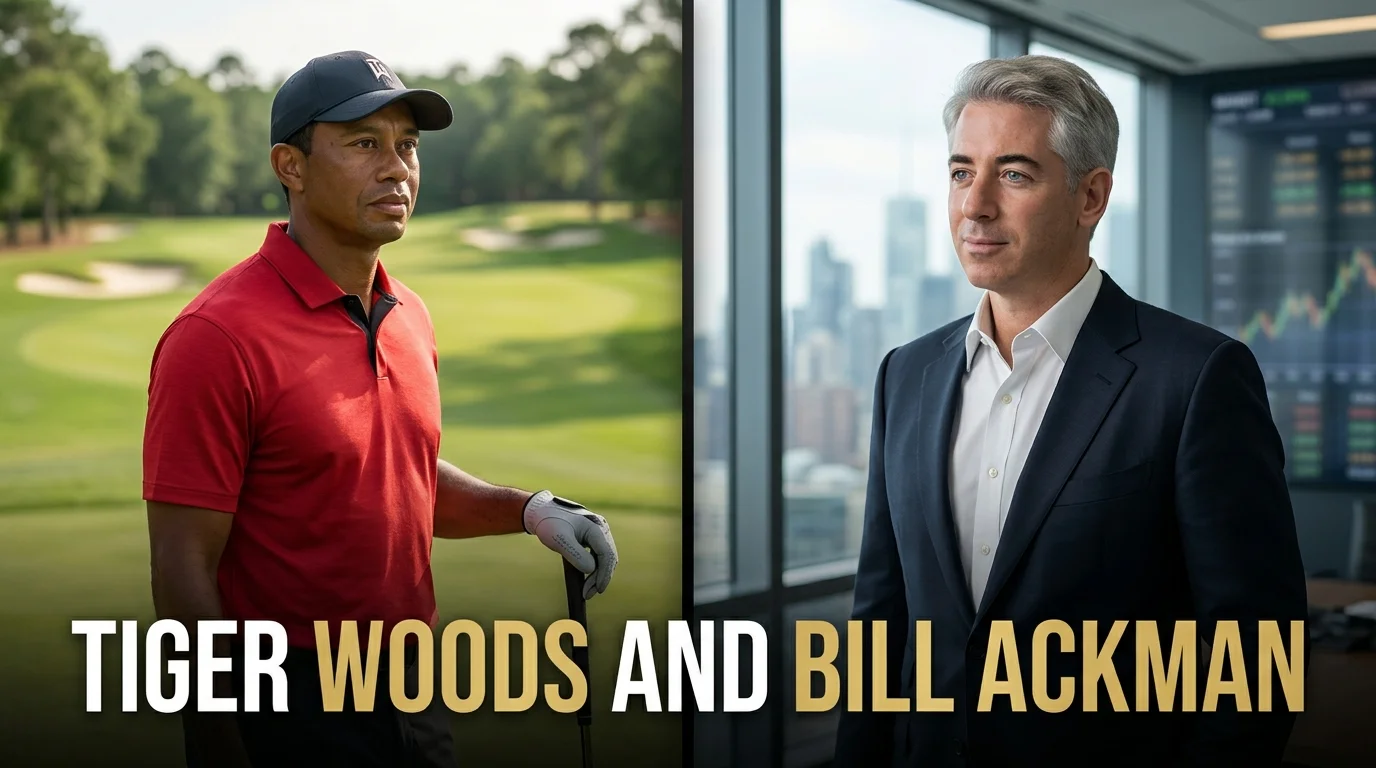
Tiger Woods and Bill Ackman are successful American figures whose careers have attracted attention in sports, business, and finance. Tiger Woods became one of the greatest professional golfers in history, while Bill Ackman built his reputation as an investor and the founder of Pershing Square Capital Management. Although they work in different industries, their names are connected through Nike, one of the world’s best-known sportswear companies.
The connection between Tiger Woods and Bill Ackman is interesting because they have had very different relationships with the same company. Woods became a prominent Nike athlete after signing with the brand in 1996. Ackman’s investment firm, meanwhile, disclosed a substantial position in Nike shares in 2024. One relationship involved athlete endorsements and sports marketing; the other involved investing in a publicly traded company.
However, this connection does not automatically mean that Woods and Ackman are friends, business partners, or direct financial collaborators. Understanding the difference is essential when researching their professional histories and the reasons their names appear together online.
This article explores the Tiger Woods and Bill Ackman connection, their biographies, career achievements, business ventures, financial success, and relationship with Nike. It also explains how athlete endorsements differ from stock investments and what readers can learn from the intersection of sports, branding, and finance.
What Is the Connection Between Tiger Woods and Bill Ackman?
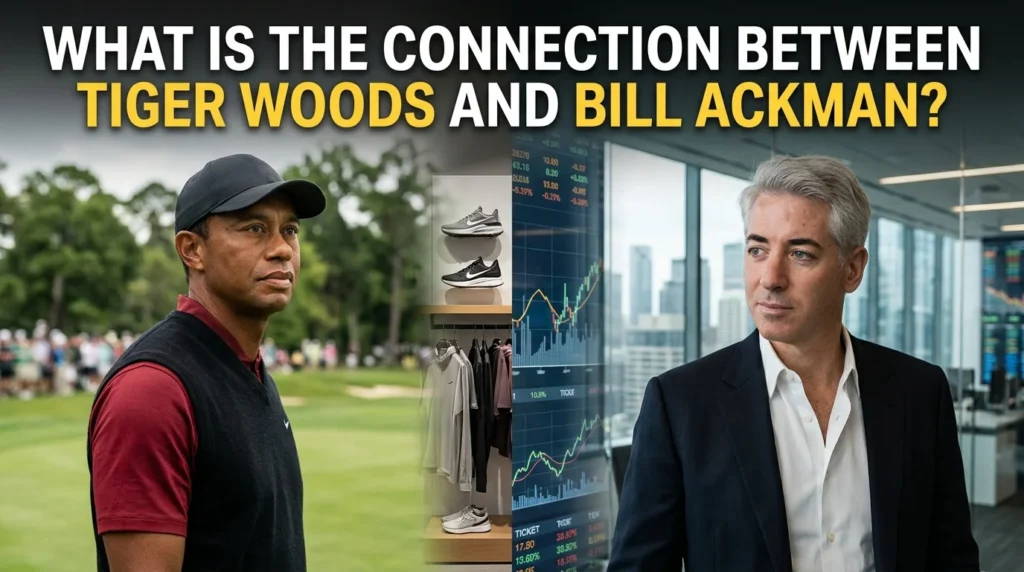
The most notable documented connection between Tiger Woods and Bill Ackman is Nike. Both have been associated with the company, but their roles were different.
Tiger Woods worked with Nike as a professional athlete and brand ambassador for more than two decades. His tournament performances, distinctive playing style, and international popularity helped make him one of the company’s most recognizable golf personalities.
Bill Ackman’s connection developed through Pershing Square Capital Management, the investment firm he founded in 2004. In a regulatory filing covering the second quarter of 2024, Pershing Square disclosed approximately 3.04 million Nike shares, valued at about $229.1 million at the end of that quarter.
The two relationships attracted attention because they involved the same company during a period of change for Nike. Woods announced the end of his Nike partnership in January 2024, while Pershing Square’s Nike position became publicly visible through its investment disclosure.
Nevertheless, the timing alone does not establish a direct relationship between the two men. There is no verified evidence that Woods influenced Ackman’s investment decision or that Ackman invested directly in Woods’ personal businesses.
Understanding Their Different Relationships With Nike
| Category | Tiger Woods | Bill Ackman |
| Connection to Nike | Athlete endorsement partnership | Investment through Pershing Square |
| Main purpose | Promote products and represent the brand | Seek investment returns from company shares |
| Relationship type | Commercial endorsement | Public-market investment |
| Relevant milestone | Signed with Nike in 1996; partnership ended in 2024 | Nike shares disclosed in a 2024 regulatory filing |
| Direct partnership with the other person | Not established | Not established |
This distinction is important because people can have different commercial relationships with the same company without working together.
An athlete may receive compensation to promote a brand, while an investor purchases shares because they believe the company offers an attractive financial opportunity. Neither relationship necessarily creates a personal connection between the athlete and the investor.
Who Is Tiger Woods?

Tiger Woods is an American professional golfer widely regarded as one of the greatest players in the history of the sport. Born Eldrick Tont Woods on December 30, 1975, in Cypress, California, he began learning golf as a young child with encouragement from his father, Earl Woods.
Woods demonstrated remarkable golfing ability early in life. His performances in junior competitions and amateur tournaments attracted national attention, and he gradually developed into one of the most promising young golfers in the United States.
He attended Stanford University before turning professional in 1996. His transition to professional golf was followed by rapid success, making him an international sporting star and an important figure in the commercial development of the game.
His achievements include 15 men’s major championship victories and 82 official PGA Tour wins, a record he shares with Sam Snead. Woods also helped attract new audiences to golf through his performances, personality, and highly visible sponsorship relationships.
The Tiger Woods biography is significant not only because of his sporting records but also because his career demonstrates how athletic excellence can create opportunities in marketing, entrepreneurship, and entertainment.
Tiger Woods’ Greatest Golf Achievements
One of Woods’ defining achievements came in 1997, when he won the Masters Tournament by 12 strokes. At 21 years old, he became the youngest Masters champion at that time. His victory established him as a major force in professional golf.
Woods later achieved another historic milestone by winning all four men’s major championships consecutively across 2000 and 2001. Known as the Tiger Slam, this achievement demonstrated his exceptional consistency across different courses and competitive conditions.
His major championship record includes five Masters titles, four PGA Championships, three U.S. Open titles, and three Open Championships. These victories place him second on the men’s all-time major championship list behind Jack Nicklaus, who won 18.
Woods also shares the PGA Tour record of 82 official victories with Sam Snead. His long career required technical skill, physical preparation, and the ability to perform under pressure.
Injuries and other personal and professional challenges affected the later stages of his career. Nevertheless, his historic achievements continue to influence golfers, sports marketers, and business leaders.
How Tiger Woods Changed Professional Golf
Woods helped make golf more visible to audiences around the world. His success attracted interest from people who had not traditionally followed the sport, while his intense competitive style gave major tournaments a prominent new personality.
His popularity also helped demonstrate the commercial value of elite athletes. Sponsors could connect their products with a player whose performances received extensive media coverage and whose reputation represented excellence and determination.
This influence extended to television audiences, merchandise, sponsorship agreements, and the broader golf industry. Woods became more than a tournament competitor; he became a recognizable global sports brand.
His career illustrates how a combination of performance, personality, and commercial partnerships can influence the development of a sport.
Who Is Bill Ackman?
Bill Ackman, whose full name is William Albert Ackman, is an American investor and the founder and chief executive of Pershing Square Capital Management. He was born on May 11, 1966, in Chappaqua, New York.
Ackman attended Harvard College and earned an MBA from Harvard Business School. His education helped prepare him for a career in finance, business analysis, and investment management.
He founded Pershing Square Capital Management in 2004. The firm became known for taking concentrated positions in selected publicly traded companies and advocating for changes when it believed those changes could improve business performance or shareholder value.
Ackman is also recognized for explaining investment ideas publicly. His presentations, interviews, and commentary have made him a prominent figure in discussions about corporate strategy and financial markets.
His career has included successful investments, controversial decisions, and substantial losses. These experiences show that investment management involves uncertainty even when a decision is supported by extensive research.
Bill Ackman’s Investment Approach
Ackman’s investment approach often focuses on businesses that he believes have attractive long-term prospects. His firm examines financial statements, competitive advantages, management quality, cash flow, and the potential for operational improvements.
One important element is concentrated investing. Instead of spreading capital equally across a very large number of companies, Pershing Square may commit significant amounts to a smaller group of selected businesses.
This strategy can produce substantial gains when an investment performs well. However, it can also increase risk because a disappointing result in one major holding may significantly affect the portfolio.
Ackman is also associated with activist investing. Activist investors acquire stakes in companies and may advocate for changes involving leadership, operations, corporate governance, or capital allocation.
These strategies require careful research and an understanding of business conditions. Even a well-supported investment thesis can fail if market conditions change or a company’s performance falls short of expectations.
Bill Ackman’s Career Successes and Challenges
Ackman’s career has included notable investment campaigns, including his involvement with Canadian Pacific Railway, which became associated with corporate restructuring and leadership changes.
He has also experienced highly publicized investment setbacks. His position in Valeant Pharmaceuticals, for example, became associated with substantial losses and criticism of the company’s business model.
Such experiences are important to understanding his investment career. A prominent investor’s public reputation does not eliminate the possibility of making mistakes, and past success does not guarantee future returns.
Ackman’s career offers lessons about the risks of concentrated portfolios, the importance of evaluating company fundamentals, and the need to reconsider assumptions when new evidence emerges.
Bill Ackman’s Nike Investment: What the Records Show
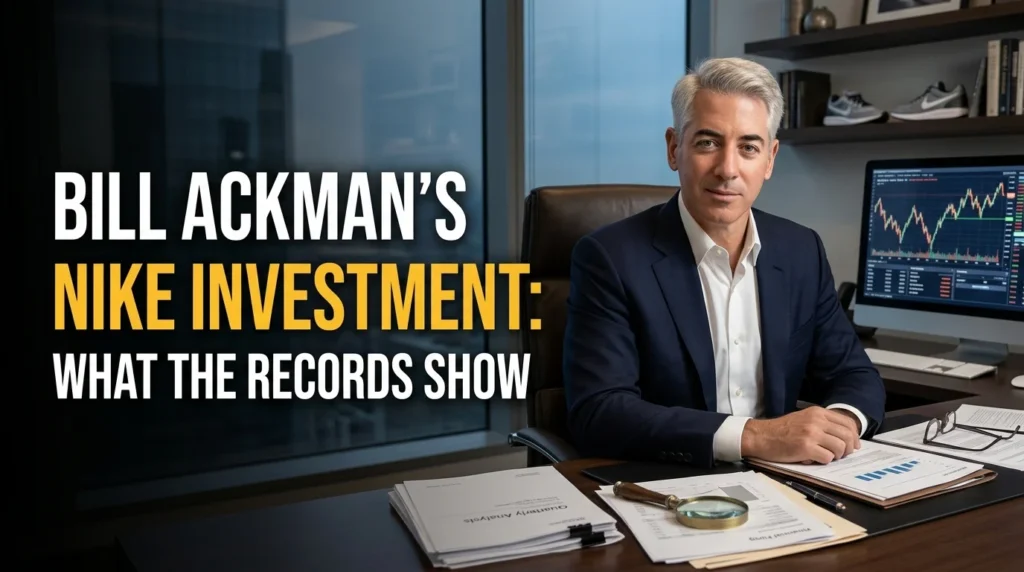
Bill Ackman’s Nike investment deserves closer attention because it provides the clearest financial link between his career and Woods’ long association with the company.
According to Reuters’ reporting on Pershing Square’s August 2024 disclosure, the firm held approximately 3.04 million Nike shares at the end of June 2024. The position was worth approximately $229 million at that reporting date. Nike was facing slowing sales and stronger competition, making its future performance an important consideration for investors.
Reuters+1
Why Ackman Considered Nike an Investment Opportunity
Investors often look for established businesses whose market value may not fully reflect their long-term potential. Nike had a globally recognized brand, extensive distribution, established relationships with athletes, and a long history in sportswear.
However, the company also faced challenges involving product demand, competition, and business strategy. These factors created a situation in which investors needed to weigh the brand’s long-term strengths against its immediate financial difficulties.
Ackman’s investment was consistent with the broader practice of evaluating whether a company’s future prospects justified its share price. A well-known brand can attract customers, but its stock can still underperform if revenue declines, margins weaken, or competitors gain market share.
It is also important to distinguish an investor’s public position from the investor’s private reasoning. A regulatory filing establishes reported ownership at a particular time, but it does not necessarily explain every consideration behind the purchase.
Did Ackman Plan to Change Nike?
Ackman is known for activist investing, but an investment in a company does not automatically mean that the investor intends to demand management changes.
Contemporary reporting on the 2024 Nike disclosure noted that Pershing Square’s filing did not establish an intention to launch an activist campaign at Nike.
The Business Times+1
This distinction matters because investors can buy shares for different reasons. Some seek to influence management, while others expect a company to improve through its existing leadership and strategy.
Therefore, the most accurate description of Ackman’s Nike position is a reported investment, not proof of a plan to take control of the company or establish a partnership with Woods.
Was Ackman’s Nike Investment Permanent?
No investment should be assumed to remain in a portfolio indefinitely. Public filings describe holdings at specific reporting dates, and investors can buy, sell, or restructure their positions afterward.
Pershing Square’s published 2024 annual report later described its decision to convert its Nike common-stock position into call options in early 2025. The report explained that this structure was intended to maintain exposure to Nike’s potential recovery while freeing capital for other investments.
Pershing Square Holdings, Ltd.
This development illustrates why articles about investors should use dated information. A position reported in 2024 should not automatically be described as a current holding in 2026.
Tiger Woods and Nike: A Partnership That Shaped Sports Marketing
Tiger Woods’ Nike partnership was one of the most recognizable athlete endorsement relationships in golf. It began in 1996, when Woods entered professional competition, and ended in January 2024.
During those years, Woods became closely associated with Nike’s golf apparel and marketing. His major championship performances gave the company repeated exposure, while his recognizable appearance helped connect its products with professional golf.
How Athlete Endorsements Work
An athlete endorsement is a commercial agreement in which a company compensates a sports personality to represent, promote, or use its products under agreed terms.
The value of such an agreement can depend on the athlete’s performance, audience reach, public reputation, and influence on consumer purchasing decisions.
For Nike, Woods offered more than visibility. His competitive achievements helped create a compelling association between the brand and excellence in golf. His popularity also made him a valuable figure in advertising and sports marketing.
However, endorsement relationships are not the same as company ownership. An athlete does not automatically own shares in a company simply because they represent its products.
Likewise, an investor who purchases company shares does not automatically acquire a contractual relationship with the company’s athletes.
Why Tiger Woods Left Nike
On January 8, 2024, Woods announced that his partnership with Nike had ended. Their relationship had lasted more than 27 years, making it a major chapter in both his commercial career and the company’s history in golf.
Woods subsequently introduced Sun Day Red, a new apparel and footwear brand developed with TaylorMade.
His decision represented a shift from representing an established sportswear brand to building a distinct brand connected to his personal identity.
The change also demonstrated that long-running endorsement relationships can evolve as athletes develop new business goals and companies reconsider their commercial strategies.
Sun Day Red and Woods’ Next Business Chapter
Sun Day Red uses a recognizable element of Woods’ golfing identity: his tradition of wearing red during the final round of tournaments.
The brand gives Woods an opportunity to participate more directly in the development of products associated with his name. It also extends his commercial activities beyond traditional endorsement arrangements.
Building a brand, however, involves more than recognition. Product quality, pricing, distribution, customer service, inventory, and marketing all influence long-term performance.
Woods’ experience in professional golf provides relevant industry knowledge, but the brand’s future success depends on how effectively the business meets customer needs.
Tiger Woods’ Business Ventures Beyond Nike
Tiger Woods has used his experience and reputation to pursue several ventures beyond competitive golf. These activities demonstrate how athletes can apply their knowledge to apparel, sports entertainment, and golf course design.
TGR Design
TGR Design is Woods’ golf course design business. It draws on his knowledge of course strategy, shot selection, playing conditions, and the experience of golfers at different skill levels.
Golf course design offers a different kind of challenge from competitive play. Designers must consider the natural landscape, drainage, environmental conditions, construction costs, and the balance between difficulty and enjoyment.
Woods’ involvement allows him to contribute to golf through planning and design rather than tournament performance alone.
TMRW Sports and TGL
Woods co-founded TMRW Sports with Rory McIlroy and Mike McCarley. The company helped develop TGL, a technology-focused team golf competition designed to present golf in a different format.
TGL combines simulator technology with a specialized short-game area and a team-based competition structure. The format aims to offer a more compact presentation than traditional tournament golf.
The venture reflects an effort to explore new ways of attracting audiences and adapting sports entertainment to changing viewing habits.
How These Ventures Support Woods’ Long-Term Career
Professional athletes often face a limited period during which they can compete at the highest level. Injuries, age, and the physical demands of competition can affect their ability to earn prize money.
Business ventures provide alternative opportunities that may continue beyond active competition. Woods’ interests in apparel, course design, and sports entertainment demonstrate how sporting knowledge and personal branding can support a broader professional identity.
These ventures also carry commercial risks. Even a famous athlete must build strong products, establish effective management, and understand the needs of customers.
Tiger Woods Net Worth and Sources of Wealth
Tiger Woods’ financial success reflects decades of professional golf, endorsement agreements, business ventures, and investments. His achievements on the course helped establish a reputation that attracted commercial opportunities beyond tournament competition.
It is important to distinguish Woods’ career earnings from his net worth. Career earnings measure income accumulated over time, while net worth represents the value of assets minus liabilities at a particular date.
Professional Golf Earnings
Woods earned substantial prize money through victories in major championships and other professional tournaments. His 82 official PGA Tour wins and 15 major championship victories helped sustain his position among golf’s most successful competitors.
Tournament earnings, however, represent only one part of his financial story. Endorsements and business activities have also played important roles in his commercial success.
Sponsorships and Business Interests
Woods’ long relationship with Nike was a major part of his endorsement history. He also developed commercial relationships with other brands over the course of his career.
His later ventures, including Sun Day Red, TGR Design, and TMRW Sports, demonstrate how he has expanded his activities into entrepreneurship and sports entertainment.
The financial value of these businesses depends on their performance, ownership arrangements, expenses, and future prospects. Their value should not be assumed to equal the total revenue they generate.
How Reliable Are Tiger Woods’ Net Worth Estimates?
Public net worth estimates can differ because private investments, business ownership, property, liabilities, and contractual arrangements are not always fully disclosed.
For that reason, an article should avoid presenting an unverified figure as an exact measurement of Woods’ wealth. If a specific estimate is used, it should be attributed to a credible source and accompanied by the date of the estimate.
Bill Ackman Net Worth and Sources of Wealth
Bill Ackman’s financial success is primarily associated with investment management, personal investments, and his ownership interests in businesses.
As the founder and chief executive of Pershing Square Capital Management, Ackman has spent years evaluating companies, allocating capital, and managing investment strategies.
Investment Management and Personal Wealth
Investment managers may earn income through management fees, performance-related compensation where applicable, and returns on their own investments.
However, the assets managed by an investment firm should not be confused with the personal wealth of its founder. Much of the capital under management belongs to clients or investors.
Ackman’s personal financial position can change with investment performance, market conditions, compensation, and the value of his holdings.
Why Net Worth Figures Change
Investors who hold publicly traded shares can experience changes in the value of their assets whenever stock prices fluctuate. Private business interests may also change in value as earnings, market conditions, and future expectations develop.
These factors make net worth estimates time-sensitive.
Readers researching Bill Ackman’s net worth should therefore look for recent estimates from reputable financial publications and check how those estimates were calculated. A reported investment position should not be treated as proof of personal wealth equal to the full market value of the shares.
Tiger Woods and Bill Ackman: Key Differences and Similarities
Woods and Ackman have followed different paths, but their careers share several themes, including professional discipline, strategic decision-making, and the importance of reputation.
| Category | Tiger Woods | Bill Ackman |
| Main profession | Professional golfer | Investor and hedge fund manager |
| Education | Stanford University | Harvard College and Harvard Business School |
| Main professional focus | Golf, apparel, and sports ventures | Investment management and corporate strategy |
| Major career achievement | 15 major championships and 82 PGA Tour victories | Building Pershing Square Capital Management |
| Business approach | Athlete branding and sports entrepreneurship | Research-driven investing and activist strategies |
| Main sources of commercial opportunity | Prize money, endorsements, and businesses | Investment returns and investment-management activities |
| Nike relationship | Athlete endorsement partnership | Public-market investment through Pershing Square |
| Major risks | Injuries, competitive decline, and business execution | Market volatility, investment losses, and incorrect assumptions |
What Makes Their Careers Similar?
Both men developed reputations through years of professional activity. Woods became known for his performances under pressure, while Ackman became known for his financial analysis and willingness to take concentrated investment positions.
Both have also pursued opportunities beyond their original professional roles. Woods expanded into business ventures, while Ackman became a prominent public commentator on financial and corporate issues.
Nevertheless, the risks they face are different. Woods’ athletic career depends partly on physical health and competitive performance, whereas Ackman’s investment career depends heavily on financial decisions and changing market conditions.
Their experiences show that professional success can create new opportunities without removing uncertainty.
Lessons From the Tiger Woods and Bill Ackman Connection
The connection between Tiger Woods and Bill Ackman provides several useful lessons about branding, investment research, and the interpretation of business news.
1. A Strong Brand Still Faces Business Challenges
Nike’s reputation and athlete relationships have helped it establish a prominent position in sportswear. However, brand recognition alone cannot guarantee revenue growth or strong stock performance.
Companies must continue developing products, managing expenses, responding to customers, and competing effectively.
Investors should therefore examine financial performance and business strategy instead of relying exclusively on a company’s public image.
2. Endorsements and Investments Are Different
Woods represented Nike through an athlete endorsement relationship. Ackman’s firm invested in Nike shares.
An endorsement generally involves promoting a company’s products under a commercial agreement. A stock investment involves purchasing an ownership interest in a public company.
Understanding this distinction prevents readers from assuming that athletes and investors who share a company connection must also have a direct business relationship.
3. Timing Does Not Prove a Connection
Woods’ departure from Nike and Pershing Square’s disclosed Nike investment occurred in 2024.
However, the sequence of those events does not establish that one caused the other. Investors evaluate numerous considerations when purchasing shares, and the available evidence does not establish that Woods’ departure was the reason for Ackman’s investment.
Careful reporting separates documented events from assumptions about motivation.
4. Investment Positions Can Change
A public filing describes a company’s or investment firm’s reported holdings at a particular point in time. It does not guarantee that those holdings remain unchanged.
Pershing Square’s later reporting about its Nike position illustrates why financial information needs a date and context.
Pershing Square Holdings, Ltd.
Readers should verify current holdings through recent filings rather than treating an older disclosure as a statement of present ownership.
5. Professional Reputation Can Support New Ventures
Woods’ reputation in golf helped create opportunities in apparel, course design, and sports entertainment. Ackman’s reputation in finance helped establish his position in investment management and public business discussions.
However, reputation is only a starting point. New ventures still require effective management, financial planning, and the ability to deliver value.
Frequently Asked Questions About Tiger Woods and Bill Ackman
1. What is the connection between Tiger Woods and Bill Ackman?
Their most notable documented business connection is Nike. Woods had a long-running endorsement relationship with the company, while Pershing Square Capital Management disclosed a Nike stock position in 2024.
2. Did Bill Ackman invest directly in Tiger Woods?
There is no verified public evidence establishing a direct investment by Ackman in Woods or his private businesses. The documented connection involves Nike shares.
3. When did Tiger Woods leave Nike?
Woods announced the end of his Nike partnership on January 8, 2024. Their relationship began in 1996, when Woods turned professional.
4. How many Nike shares did Pershing Square hold in June 2024?
Pershing Square disclosed approximately 3.04 million Nike shares as of June 30, 2024, valued at about $229 million at that time. This is a historical position, not confirmation of its current holdings.
Reuters+1
5. Are Tiger Woods and Bill Ackman business partners?
No publicly verified joint business partnership between them has been established. Their documented connection comes from their separate commercial relationships with Nike.
6. What is Tiger Woods famous for?
Woods is famous for winning 15 major championships, recording 82 official PGA Tour victories, and influencing professional golf and sports marketing.
7. What is Bill Ackman known for?
Ackman is known for founding Pershing Square Capital Management, making concentrated investments, engaging in activist investing, and discussing corporate strategy and financial markets.
8. What businesses is Tiger Woods involved in?
His business activities include Sun Day Red, TGR Design, and TMRW Sports, which helped develop TGL. These ventures extend his work beyond professional golf.
9. Are Tiger Woods and Bill Ackman friends?
Their personal relationship has not been reliably established in the public information discussed here. Their connection through Nike does not prove a close personal friendship.
10. What is the main lesson from their connection?
Their story demonstrates that two people can have different relationships with the same company without being direct partners. It also highlights the importance of checking dates and evidence when researching investments and public figures.
Conclusion
Tiger Woods and Bill Ackman have achieved success in different professional fields, but Nike provides a clear link between their histories. Woods became one of the most recognizable athletes in golf through his championship performances and long-standing endorsement relationship with Nike. Ackman developed his reputation in finance through Pershing Square Capital Management and its investment strategies.
Their connection is primarily commercial and indirect. Woods represented Nike as an athlete, while Ackman’s firm disclosed an investment in the company’s shares in 2024. These relationships should not be confused with a direct investment in Woods, a joint business venture, or a confirmed personal friendship.

Sophia Collins is a passionate English grammar writer at GrammBoost.com who loves making the English language simple and easy to understand. She creates clear, beginner-friendly guides on grammar, spelling, word differences, and common language mistakes. Her goal is to help students, writers, and English learners build confidence and improve their writing through practical, easy-to-follow explanations.