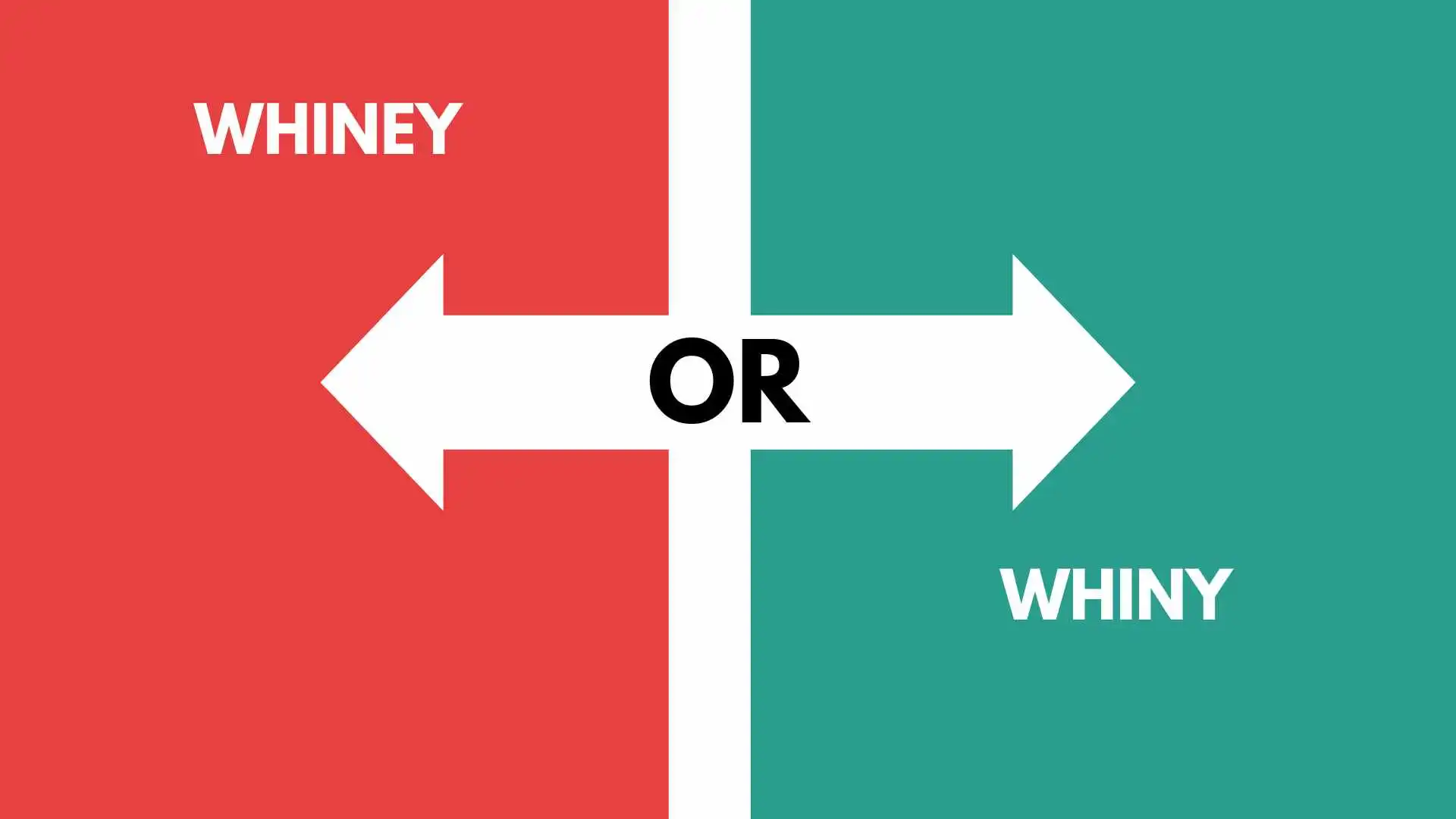
Have you ever typed the word describing a complaining, nasal, annoying tone… and then just stared at it, wondering if you spelled it right? You’re not alone!
“Whiney or whiny” is one of those sneaky little spelling mix-ups that trips up even native English speakers. It looks like it should have that extra “e” after all, we write “whine” with an “e,” right? So shouldn’t the adjective keep it too?
Grab a cup of coffee ☕, because we’re about to clear up this confusion once and for all with examples, tables, memory tricks, and everything a grammar nerd (or beginner) could want.
Quick Answer 🎯
“Whiny” is the correct and standard spelling. “Whiney” is a common misspelling though it does show up occasionally as an informal variant, it’s not considered standard English in dictionaries or formal writing.
If you remember just one thing from this article, remember this: drop the “e,” keep it simple it’s “whiny.”
What Does “Whiny” Actually Mean?
Before we go further, let’s nail down the meaning.
Whiny (adjective) describes:
- A person who complains a lot, often in an annoying or childish way
- A tone of voice that sounds high-pitched, nasal, or complaining
- Something (like a sound or writing style) that resembles constant complaining
Examples of “Whiny” in a Sentence 📝
- The toddler had a whiny voice when he didn’t get his favorite toy.
- Stop being so whiny about the weather it’s just a little rain!
- Her whiny email to customer service didn’t get her anywhere.
- He gave a whiny excuse for being late again.
- Nobody likes a whiny coworker who complains about every little task.
Notice the pattern? “Whiny” almost always carries a slightly negative, complaining vibe. 😤
Where Does “Whiny” Come From?
“Whiny” is built from the verb “whine” (to complain in a high-pitched, annoying way) plus the suffix “-y”, which turns nouns/verbs into adjectives.
Here’s the tricky part: when you add “-y” to a word ending in a silent “e,” you usually drop the “e” first.
| Base Word | + “-y” Suffix | Correct Spelling |
| whine | whin + y | whiny |
| shine | shin + y | shiny |
| grime | grim + y | grimy |
| noise | nois + y | noisy |
| spice | spic + y | spicy |
See the trend? 👀 English spelling has a consistent rule here and “whiny” follows it perfectly.
So… Is “Whiney” Ever Correct?
Here’s where it gets a little nuanced.
- “Whiney” is not standard in American or British English dictionaries.
- However, it’s a common misspelling that pops up frequently online, in casual writing, and even in some published content probably because people intuitively want to preserve the “e” from “whine.”
- Some informal or regional usages treat “whiney” as an acceptable variant, but if you’re writing for school, work, or any formal context, stick with “whiny.”
Think of “whiney” as the spelling equivalent of a whiny kid trying to sneak an extra cookie it shows up, but it’s not really supposed to be there. 🍪😄
Comparison Table: Whiny vs. Whiney
| Feature | Whiny ✅ | Whiney ❌ |
| Standard spelling? | Yes | No (common misspelling) |
| Found in dictionaries? | Yes (Merriam-Webster, Oxford) | Rarely, sometimes as informal variant |
| Used in formal writing? | Yes | No |
| Common in casual/social media? | Yes | Yes (mistakenly) |
| Example sentence | “Stop being so whiny.” | “Stop being so whiney.” (incorrect) |
| Recommended usage | Always use this | Avoid |
Common Mistakes People Make 🚫
- Assuming the “e” carries over Many people think since “whine” has an “e,” the adjective should too. It doesn’t!
- Autocorrect confusion Some phone keyboards and browsers may not flag “whiney” as wrong, leading people to think it’s fine.
- Mixing it up with similar words like “whinny” (the sound a horse makes!). More on that below. 🐴
- Overusing informal spelling in professional writing using “whiney” in a resume, email, or article can make writing look less polished.
Memory Trick to Remember the Correct Spelling 🧠✨
Here’s a fun mnemonic:
“When you WHINE too much, you lose the ‘E’ and become WHINY.”
Or try this visual trick:; picture the word “whine” losing weight (the extra letter) as it transforms into an adjective kind of like shedding extra baggage. 🎒➡️👤
Another helpful trick:
- Shiny, spicy, noisy, whiny they all drop the “e” before adding “-y.”
- If you remember “shiny,” you’ll remember “whiny” follows the same rule!
Whiny vs. Whinny Don’t Mix These Up! 🐎
This is a bonus mix-up worth mentioning because it trips up a lot of learners.
| Word | Meaning | Example |
| Whiny | Complaining, annoying tone | “He’s being whiny about his chores.” |
| Whinny | The sound a horse makes | “The horse gave a soft whinny.” |
They sound almost identical when spoken quickly, but they mean completely different things!
Real-Life Examples 🌍
📧 In an Email
“I understand your frustration, but please avoid a whiny tone when addressing the support team.”
📱 On Social Media
“My little brother is being SO whiny today lol, someone send help 😩”
📰 In News/Journalism
“Critics called the politician’s speech whiny and defensive rather than confident.”
🎓 In Academic Writing
“The study noted a correlation between whiny vocal tones and perceived immaturity in workplace communication.”
🗣️ In Everyday Speech
“Ugh, don’t be so whiny about doing the dishes!”
Notice how “whiny” fits naturally into casual, professional, and even academic tones while “whiney” would look out of place or incorrect in all of them.
British vs. American English 🇬🇧 🇺🇸
Good news there’s no regional difference here!
- American English: whiny ✅
- British English: whiny ✅
Both dialects agree: “whiny” is correct, and “whiney” is considered a misspelling in both. This is one of those rare grammar rules where the whole English-speaking world is on the same page. 🌎
Keyword & Usage Insights 🔍
If you’re a content writer, blogger, or student researching this topic, here are some related terms often searched alongside “whiny or whiney”:
- Whiny meaning
- Whiny synonym
- Correct spelling of whiny
- Whiny vs whiney grammar
- Words ending in -y spelling rule
- Common English spelling mistakes
- Grammar tips for adjectives
Including these naturally in your writing (like this article does!) helps with SEO optimization while also answering real user search intent.
Synonyms for “Whiny” 🔄
Want to mix up your vocabulary? Here are some alternatives:
- Complaining
- Petulant
- Fretful
- Querulous
- Peevish
- Grumbling
- Sniveling
Example: “Instead of saying ‘whiny,’ you could say the child was being petulant about bedtime.”
FAQs About “Whiny or Whiney” ❓
1. Is it “whiny” or “whiney”?
“Whiny” is the correct, standard spelling. “Whiney” is a common misspelling.
2. Why do people spell it “whiney”?
Because the base word “whine” has an “e,” people mistakenly assume the adjective form keeps it too but English spelling rules usually drop the silent “e” before adding “-y.”
3. Is “whiney” in the dictionary?
No major dictionary (Merriam-Webster, Oxford, Cambridge) lists “whiney” as the primary or standard spelling.
4. What is the noun form related to “whiny”?
The related noun/verb is “whine” (e.g., “Stop your whining!”).
5. Is “whiny” formal or informal?
“Whiny” is generally used in informal to neutral contexts. It’s acceptable in journalism, blogs, and everyday writing, but very formal academic writing might prefer synonyms like “querulous” or “petulant.”
6. What’s the difference between “whiny” and “whinny”?
“Whiny” describes complaining behavior or tone, while “whinny” refers to the sound a horse makes.
7. Can “whiny” describe things other than people?
Yes! You can describe a whiny sound, a whiny tone in writing, or even a whiny guitar riff in music reviews.
Final Recap: Whiny or Whiney? 🎯
In conclusion, “whiny” is the correct and widely accepted spelling when describing someone who complains in an annoying or high-pitched way. “Whiney” is sometimes seen, but it is generally considered a less common variant and may be confused with a name or the word “wine.” To avoid spelling mistakes and ensure clear writing, it is best to use “whiny” in modern English.
Remembering the correct spelling can improve your grammar and make your writing more accurate. You are writing casually, academically, or professionally, choosing “whiny” will help you communicate your meaning clearly and correctly.

Sophia Collins is a passionate English grammar writer at GrammBoost.com who loves making the English language simple and easy to understand. She creates clear, beginner-friendly guides on grammar, spelling, word differences, and common language mistakes. Her goal is to help students, writers, and English learners build confidence and improve their writing through practical, easy-to-follow explanations.