English spelling can sometimes be confusing, especially when two words look almost identical but only one is correct. “Emmaculate or Immaculate” is a common spelling question because both versions may seem reasonable when you hear them spoken aloud.
However, the correct spelling is “immaculate,” which means perfectly clean, neat, flawless, or free from mistakes. You can use it to describe a spotless room, well-maintained clothing, excellent work, or something that is in perfect condition.
For example, “Her house was immaculate” means her house was exceptionally clean and tidy. On the other hand, “emmaculate” is a misspelling and is not the standard English form. Confusion often happens because English words can contain repeated letters, and it is not always easy to remember whether a word begins with one or two letters.
Quick Answer ⚡
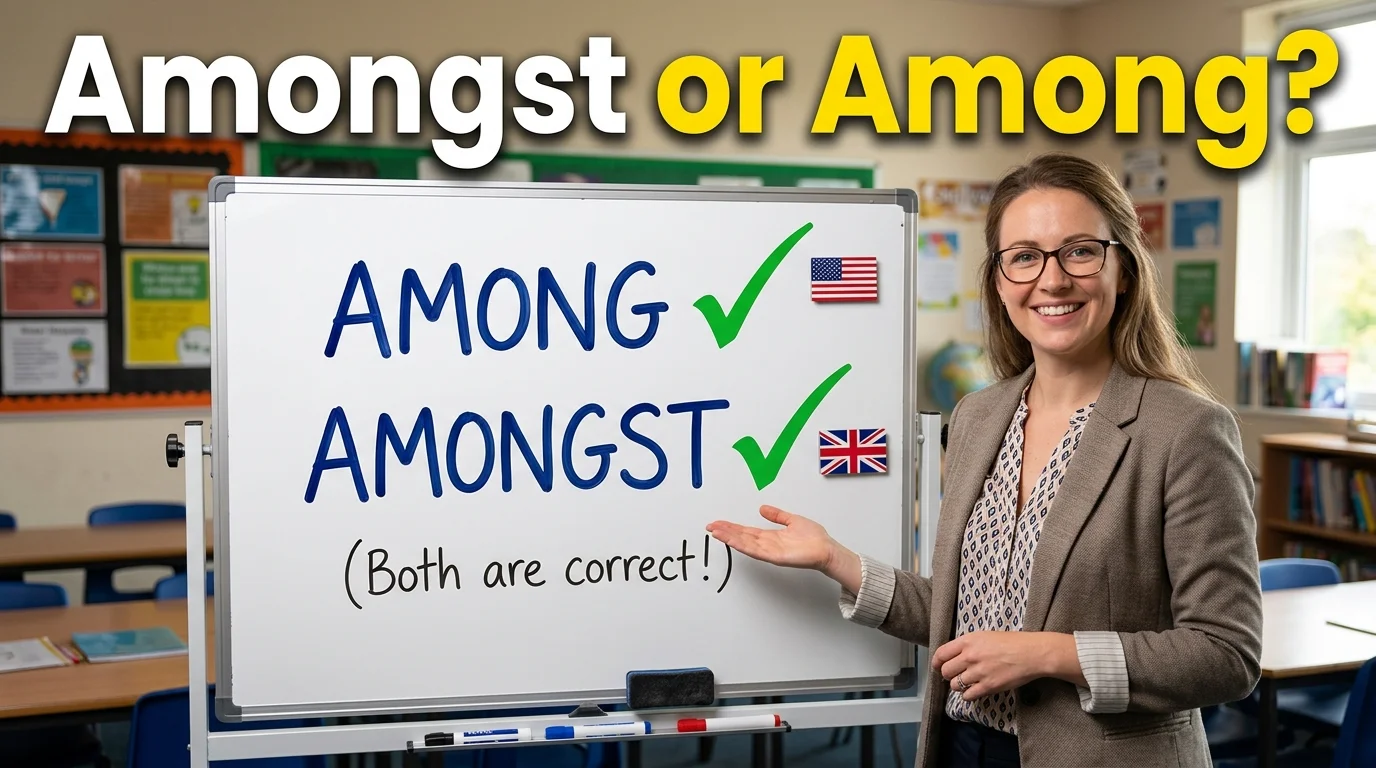
Both “among” and “amongst” are correct spellings, and they mean the same thing. The difference is mostly about style and region “among” is more common in modern American English, while “amongst” feels more traditional and is used more often in British English.
Now let’s break this down properly so you’ll never feel unsure again. 👇
What Do “Among” and “Amongst” Actually Mean? 📖
Both words are prepositions, and they mean:
- Being in the middle of, surrounded by, or included as part of a group.
- Distributed between multiple people or things.
They are used interchangeably in almost every context. There’s no rule that says one is “more correct” than the other it’s simply a matter of preference and tone.
Examples of “Among”
- She felt safe among her friends. 👯♀️
- The prize money will be divided among the winners.
- There’s a rumor going among the students about a surprise test.
- He was among the first to arrive at the party.
- Among all the desserts on the table, the chocolate cake disappeared first. 🍰
Examples of “Amongst”
- She felt safe amongst her friends. 👯♀️
- The prize money will be divided amongst the winners.
- There’s a rumor going amongst the students about a surprise test.
- He was amongst the first to arrive at the party.
- Amongst all the desserts on the table, the chocolate cake disappeared first. 🍰
Notice something? Every single sentence works exactly the same way with either word. That’s because “among” and “amongst” are simply two spellings of the same preposition. 🎉
Where Did “Amongst” Even Come From? 🕰️
Great question! “Amongst” isn’t some random invented word it has a real linguistic history.
- The original Old English word was “onmang.”
- Over time, it evolved into “among.”
- Later, English speakers added an extra -st ending (a pattern also seen in words like “against” and “whilst”), creating “amongst.”
This -st ending was common in Middle English and gave words a slightly more formal or poetic feel. That’s part of why “amongst” still carries an old-fashioned, literary vibe today. 📚
Comparison Table: Among vs Amongst
| Aspect | Among | Amongst |
| Meaning | Surrounded by, included in a group | Same meaning as “among” |
| Correct Spelling? | ✅ Yes | ✅ Yes |
| Common Region | American English 🇺🇸 (more common) | British English 🇬🇧 (more traditional) |
| Tone | Neutral, modern, everyday | Slightly formal, old-fashioned, literary |
| Frequency of Use | Very high | Lower, but still valid |
| Example Sentence | “She sat among friends.” | “She sat amongst friends.” |
British English vs American English 🇬🇧🇺🇸
This is where things get interesting! Unlike a true spelling mistake (like “offerred” instead of “offered”), “amongst” is a legitimate word it’s just used with different frequency depending on where you are in the world.
In American English 🇺🇸
- “Among” is strongly preferred.
- “Amongst” is rare and can sound overly formal, old-fashioned, or even a little pretentious in casual writing.
- Most American style guides (like AP Style) recommend “among” for clarity and modern tone.
In British English 🇬🇧
- Both “among” and “amongst” are used, though “among” is still statistically more common in everyday writing.
- “Amongst” appears more often in literature, formal writing, and older texts.
- It’s not unusual to hear “amongst” in British conversation, especially in more formal or academic settings.
Similar Word Pairs With the Same “-st” Pattern
| Modern Form | Older/Formal Form |
| Among | Amongst |
| While | Whilst |
| Alone | (no direct match) |
| Against | (already has “-st”) |
Notice the pattern? Words like “whilst” (vs. “while”) follow the exact same trend as “amongst” vs. “among” both are correct, but one feels more traditional. 🧠
Memory Trick to Remember the Difference 🧠
Here’s a fun mnemonic to help you recall which one fits which style:
“AmongST sounds like a knighT save it for formal or old-fashioned writing!” 🏰
Or try this simple rule of thumb:
“When texting or emailing casually, go with AMONG. When writing a novel set in the 1800s, AMONGST fits right in!” 📖
Common Mistakes People Make ❌
- Thinking “amongst” is incorrect it’s not! Both words are grammatically valid.
- Overusing “amongst” in casual writing it can sound stiff or unnatural in texts, emails, or social media captions.
- Mixing formality levels using “amongst” in a casual sentence full of slang can feel mismatched.
- ❌ “Amongst all my besties, she’s the funniest lol”
- ✅ “Among all my besties, she’s the funniest lol” 😂
- Assuming regional exclusivity some people think “amongst” is only British, but it does appear occasionally in American formal or literary writing too.
Pro tip: If you’re unsure which to use, go with “among.” It works everywhere, in every tone, and is the safer, more modern choice. ✅
Real-Life Examples: Where You’ll See “Among” and “Amongst” 📬
In Emails
“Please distribute the documents among the team members before Friday’s meeting.”
In Social Media Posts
“So grateful to be among such an amazing community of creators today! 🙌 #blessed”
In News Headlines
“Confusion Among Residents After Sudden Policy Change”
“Debate Amongst Lawmakers Continues Over New Bill” (more formal tone)
In Academic Writing
“The study found significant variation amongst participants from different age groups.”
In Everyday Speech
“I felt so out of place standing among all those tall basketball players!” 🏀
Notice how “among” fits naturally into casual and modern contexts, while “amongst” pops up more in formal reports, academic papers, and literary writing.
Why This Grammar Tip Matters for Writers ✨
If you write blogs, emails, resumes, or social media captions, knowing when to use “among” vs “amongst” helps you:
- Match your tone to your audience (casual vs formal).
- Sound natural rather than overly stiff or old-fashioned.
- Avoid distracting readers with unnecessarily formal word choices in casual content.
Search terms like “grammar tips,” “English usage,” “correct spelling,” and “common mistakes” are searched by thousands of learners every month trying to sound more polished in their writing. Understanding subtle style differences like this one instantly makes your writing feel more intentional and professional. 🌟
Quick Reference: When to Use Which 📊
| Situation | Recommended Word |
| Texting a friend | Among |
| Writing a business email | Among |
| Writing a formal report | Either (Among preferred) |
| Writing British academic content | Amongst (optional) |
| Writing historical fiction | Amongst |
| Social media captions | Among |
| Legal or governmental documents | Among (for clarity) |
FAQs: People Also Ask 🙋
1. Is “amongst” a real word, or is it a mistake?
Yes, “amongst” is a completely real and correctly spelled word. It’s not a typo or a misspelling it’s simply a more formal or old-fashioned variant of “among.”
2. Which one is correct: “among” or “amongst”?
Both are correct! They mean the same thing. “Among” is more common in modern and American English, while “amongst” is more traditional and common in British English.
3. Is “amongst” British or American English?
“Amongst” is used in both, but it’s much more common in British English, especially in formal or literary writing. American English strongly favors “among.”
4. Can I use “amongst” in professional writing?
Yes, but it can sound slightly formal or old-fashioned. For most modern business writing, “among” is the safer and more natural choice.
5. Why does “amongst” have an extra “-st” at the end?
The “-st” ending comes from Middle English spelling patterns, similar to how “while” became “whilst.” It doesn’t change the meaning just the tone.
6. Is there a difference in meaning between “among” and “amongst”?
No, there is no difference in meaning. They are fully interchangeable in every context.
7. Should I use “among” or “amongst” in academic writing?
Either works, but “among” is generally recommended for clarity and modern tone, unless you’re specifically writing in a British academic or literary style.
Final Thoughts:
In conclusion, among and amongst are both correct words with the same basic meaning. They are used when referring to someone or something within a group of people or things. Among is more common in both American and British English and sounds natural in everyday conversations and formal writing. Amongst is used more frequently in British English and can sometimes sound more formal or traditional.
In most situations, you can use either word without changing the meaning of your sentence. However, choosing among may be the simpler option for general writing. Understanding this difference helps you communicate clearly and confidently.

James Carter is an English language enthusiast and content writer who loves making grammar simple and easy to understand. He creates clear, beginner-friendly guides on spelling, grammar rules, confusing words, and everyday English usage. His goal is to help readers write with confidence through practical examples, easy explanations, and accurate language tips.