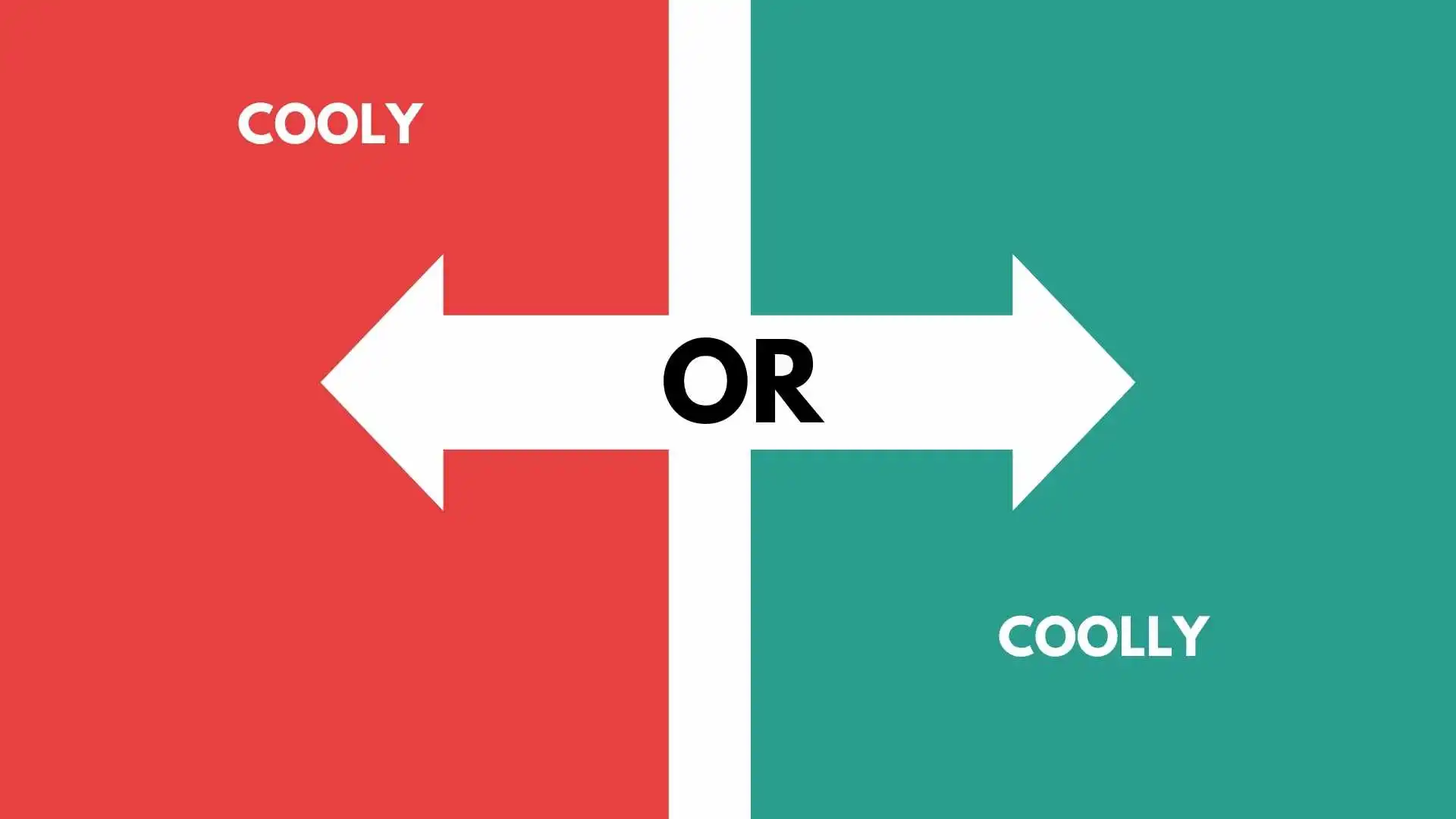
When writing in English, small spelling differences can sometimes create big confusion. One common example is “Cooly or Coolly?” Many people wonder which spelling is correct and when it should be used.
In most situations, “coolly” is the correct word when you want to describe someone doing something in a calm, controlled, or unemotional way. On the other hand, “cooly” is generally not the standard spelling for this meaning.
Understanding the difference can help you avoid common writing mistakes and make your English clearer and more professional. Whether you are writing an email, school assignment, social media post, or everyday message, using the correct spelling matters.
Quick Answer ⚡
“Coolly” is the correct spelling it’s the adverb form of “cool,” and it always has two L’s. “Cooly” is not a standard English word (it’s sometimes used as a name or informal slang), so stick with coolly in all formal and everyday writing.
Let’s break down exactly why, and how to remember it forever.
Why Does This Mix-Up Happen? 🤔

This confusion is super common, and honestly, it makes sense. Here’s why people mess it up:
- English adverb rules feel inconsistent. We add “-ly” to adjectives to make adverbs (quick → quickly, sad → sadly), so it feels like “cool” should just become “cooly.”
- Double letters are easy to miss when typing fast, especially on mobile keyboards.
- Autocorrect doesn’t always catch it, especially since “cooly” resembles a real (if rare) proper noun in some dialects.
- Visual similarity “cooly” just looks like it could be right at a glance.
But English grammar has a specific rule for adjectives that already end in a consonant + “l,” and that’s exactly where this word trips people up.
Meaning and Correct Usage of “Coolly” ✅
Coolly is an adverb. It describes how an action is done either in a calm, composed way, or in a somewhat unfriendly/detached way.
Two Main Meanings of “Coolly”
- Calmly / with composure
- She handled the crisis coolly, without raising her voice.
- He coolly explained the delay to the angry customer.
- In an unfriendly or distant manner
- They greeted the new employee coolly.
- The critics reacted coolly to the singer’s new album.
More Example Sentences
- 📧 Email: “Please respond coolly and professionally, even if the client is upset.”
- 📱 Social media caption: “Watched her walk away coolly like nothing happened 💅”
- 📰 News headline: “Officials react coolly to the latest trade proposal.”
- 🎓 Academic writing: “The author coolly dismantles the opposing argument using verified data.”
- 🗣️ Everyday speech: “He just coolly walked into the meeting like he wasn’t 20 minutes late.”
What About “Cooly”? ❌
Here’s the honest truth: “cooly” is not a standard English word.
You might see it used as:
- A surname or place name (e.g., certain historical/regional usages).
- Informal internet slang, where people accidentally (or lazily) drop a letter.
- A typo for “coolly.”
But in standard grammar, spelling, and dictionaries (both British and American English), “cooly” isn’t listed as a correct adverb. If you’re writing an essay, email, article, or professional message avoid it entirely.
Comparison Table: Cooly vs Coolly 📊
| Word | Correct? | Part of Speech | Meaning | Example |
| Coolly | ✅ Yes | Adverb | Calmly / in a detached way | “She coolly ignored the rumors.” |
| Cooly | ❌ No (in standard use) | N/A (occasional proper noun/slang) | Not a recognized adverb | Avoid using this spelling |
The Spelling Rule Behind It (And a Memory Trick!) 🧠
Here’s the grammar rule that explains everything:
When an adjective ends in “l,” and you add “-ly” to make it an adverb, you keep BOTH L’s.
Look at these similar examples:
| Adjective | + “-ly” | Correct Adverb |
| cool | + ly | coolly |
| real | + ly | really |
| full | + ly | fully |
| final | + ly | finally |
See the pattern? 🔍 None of these drop a letter they simply stack the “l” from the root word with the “l” from “-ly.”
Memory Trick / Mnemonic 🎯
Think of it this way:
“Cool” already has one L. Add ‘-ly,’ and you get double the chill: C-O-O-L-L-Y.
Or picture it visually: “cool” + “ly” = coolLLy like two ice cubes stacked together, staying nice and cool. ❄️❄️
If you can spell “really” and “fully” correctly, you already know the pattern for “coolly.”
Common Mistakes to Avoid 🚫
- ❌ “He acted so cooly during the interview.” → ✅ “He acted so coolly during the interview.”
- ❌ “She spoke cooly to the reporters.” → ✅ “She spoke coolly to the reporters.”
- ❌ Assuming autocorrect will always fix it it often won’t, since “cooly” isn’t always flagged as wrong.
- ❌ Confusing it with “coolie,” a completely different (and outdated/sensitive) historical term these words are unrelated in meaning, so don’t mix them up.
British vs American English 🇬🇧🇺🇸
Good news here there’s no regional difference for this word. Both British and American English agree:
- ✅ Coolly is correct in both dialects.
- ❌ Cooly is not standard in either.
This is one of the rare grammar rules where you don’t have to worry about “color vs colour” style variations. One correct spelling, worldwide. 🌍
Real-Life Examples From Different Contexts 📌
| Context | Example Sentence |
| Email/Business | “Please respond coolly to negative feedback online.” |
| Social Media | “She coolly dropped the mic and walked off stage 🎤” |
| News Article | “The market reacted coolly to the announcement.” |
| Academic Paper | “The researcher coolly presents contrasting data points.” |
| Everyday Chat | “He just coolly shrugged and said, ‘no big deal.'” |
FAQs: People Also Ask 🙋
1. Is “cooly” a real word?
Not in standard English. It’s occasionally used as a name or slang, but it’s not a recognized adverb in dictionaries.
2. What is the correct spelling cooly or coolly?
Coolly is correct. Always use two L’s.
3. Why does “coolly” have two L’s?
Because the adjective “cool” already ends in “l,” and adding the adverb suffix “-ly” keeps both letters just like “real” becomes “really.”
4. Is “coolly” used in British English too?
Yes! There’s no difference between British and American English for this word “coolly” is correct in both.
5. What’s an example sentence using “coolly”?
“She coolly handled the tough questions during the press conference.”
6. Is “coolly” the same as “coldly”?
Not exactly. “Coolly” can mean calm and composed or mildly unfriendly, while “coldly” usually implies a harsher, more emotionally distant tone.
7. What are other words with double letters like this?
Words like fully, really, and finally follow the same spelling pattern.
Final Takeaway 🎉
In conclusion, “coolly” is the correct spelling when describing someone who behaves in a calm, controlled, or unemotional way. It is the adverb form of “cool.” For example, “She coolly handled the difficult situation.” On the other hand, “cooly” is generally not used as the standard adverb and is often considered a spelling mistake. Remembering the difference can improve your writing and help you communicate more clearly. So, when you want to describe an action done calmly or without showing strong emotion, “coolly” is always the correct choice.

James Carter is an English language enthusiast and content writer who loves making grammar simple and easy to understand. He creates clear, beginner-friendly guides on spelling, grammar rules, confusing words, and everyday English usage. His goal is to help readers write with confidence through practical examples, easy explanations, and accurate language tips.