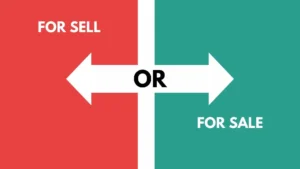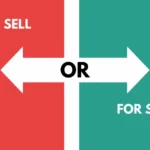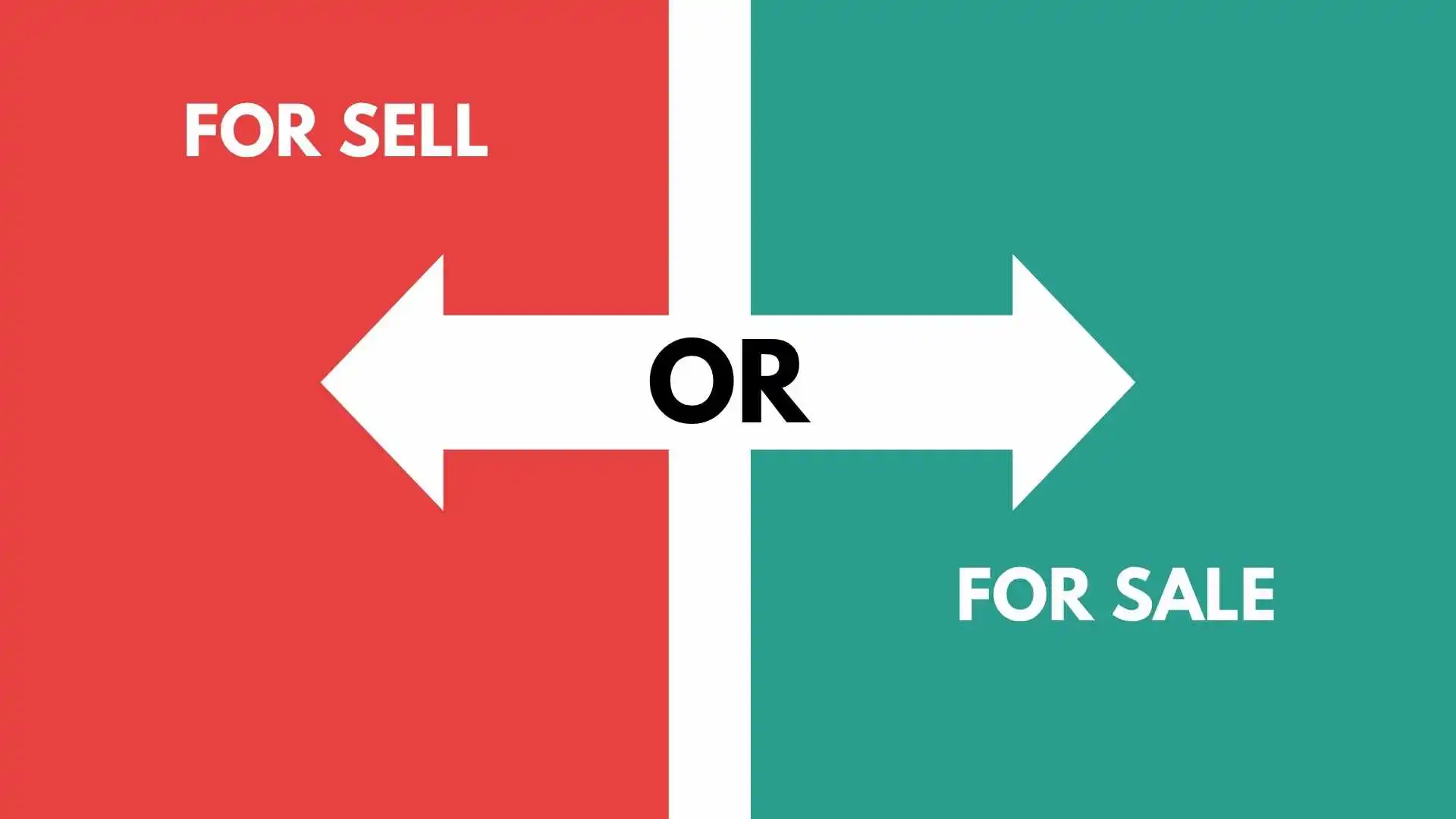
If you’ve ever typed up a quick post to get rid of your old couch, list a car, or advertise your small business, you’ve probably paused for a second and wondered: is it “for sell” or “for sale”? 🤔
You’re not alone. This is one of the most common English mix-ups, especially among non-native speakers and even native speakers typing fast on social media. The confusion happens because “sell” and “sale” sound similar, are related in meaning, and both show up constantly in shopping, business, and marketing contexts.
But here’s the good news: once you understand the tiny grammar rule behind it, you’ll never mix them up again.
Quick Answer ⚡
“For sale” is correct. It means something is available to be bought. “For sell” is a common mistake “sell” is a verb (an action), and “for” needs a noun after it, not a verb. So always write “House for sale,” never “House for sell.”
Let’s break this down completely, with examples, tables, mnemonics, and real-life usage, so this rule sticks in your brain forever. 🧠
Understanding the Root of the Confusion
To fix this mistake permanently, you need to understand the word types involved:
- Sell = a verb (an action word something you do)
- Sale = a noun (a thing the event or state of something being sold)
In English, the word “for” is a preposition, and prepositions are almost always followed by nouns or noun-like words (called gerunds, e.g., “selling”), not plain verbs.
So grammatically:
- ❌ “for sell” → preposition + verb = incorrect
- ✅ “for sale” → preposition + noun = correct
This single grammar rule is the key to solving this mix-up forever.
“Sell” Meaning and Correct Usage 🗣️
Sell is a verb. It describes the action of exchanging something for money.
Examples of “sell” in a sentence:
- I want to sell my old bicycle.
- She sells handmade candles online.
- They sold their house last month.
- Can you help me sell these tickets?
- He is trying to sell his car before moving abroad.
Common forms of “sell”:
| Form | Example |
| Base form | sell |
| Past tense | sold |
| Past participle | sold |
| Present participle (gerund) | selling |
| Third person singular | sells |
👉 Notice: “selling” (the gerund form) can follow “for” in some contexts, such as “This item is for selling purposes” but this sounds awkward and is rarely used naturally. Native speakers almost always prefer “for sale.”
“Sale” Meaning and Correct Usage 🛍️
Sale is a noun. It refers to:
- The act of selling something, or
- An event where items are sold at a discount
Examples of “sale” in a sentence:
- This car is for sale.
- There’s a huge sale at the mall this weekend.
- The sale of the property was finalized yesterday.
- My shoes were on sale, so I bought two pairs.
- The company reported strong sales last quarter.
Common phrases using “sale”:
- “For sale” – available to be purchased
- “On sale” – discounted or being sold
- “Sale price” – the discounted price
- “Yard sale” / “Garage sale” – informal sale of used household items
- “Sales team” – people who sell products for a company
Comparison Table: “For Sell” vs “For Sale” 📊
| Feature | For Sell ❌ | For Sale ✅ |
| Word type | Verb (sell) | Noun (sale) |
| Grammatically correct? | No | Yes |
| Meaning | N/A (incorrect phrase) | Available to be purchased |
| Common usage | Rarely used correctly | Very common in ads, listings, signs |
| Example | ~~”House for sell”~~ | “House for sale” |
| Used in real estate? | No | Yes, constantly |
| Used in classifieds/social media? | Sometimes (mistakenly) | Yes, correctly |
Memory Trick to Never Forget Again 🧠✨
Here’s a simple mnemonic to lock this into your memory:
“For SALE has an A, like Available.”
Both “sale” and “available” contain the letter A, and something “for sale” is available to buy.
Another fun trick:
“Sell is something you DO. Sale is something you SEE.” (You see a “For Sale” sign you don’t see a “sell” sign!)
Try repeating this out loud a few times it really helps the rule stick. 🔁
Common Mistakes People Make 🚫
Let’s look at some real mistakes people often type, especially in a hurry:
| Incorrect ❌ | Correct ✅ |
| Car for sell | Car for sale |
| This house is for sell | This house is for sale |
| Items for sell online | Items for sale online |
| Puppies for sell | Puppies for sale |
| My phone is for sell, DM me | My phone is for sale, DM me |
Why does this mistake happen so often?
- Pronunciation confusion: “sell” and “sale” sound close in fast speech.
- Translation habits: In some languages, the verb form is used directly, leading to direct (incorrect) translation.
- Autocorrect issues: Mobile keyboards sometimes don’t catch this error since both are real words.
- Speed typing on social media: Quick marketplace posts often skip proofreading.
Real-Life Examples 📱📰🎓
1. Social Media Marketplace Post
“Barely used gaming laptop for sale, message me for price! 💻”
2. Real Estate Listing
“Beautiful 3-bedroom home for sale in a quiet neighborhood.”
3. Email to a Colleague
“Hi team, just a reminder that the old office chairs are for sale first come, first served.”
4. News Headline
“Local Bakery Chain Put Up For Sale After 20 Years in Business”
5. Academic/Business Writing
“The sale of the company’s assets was approved by the board.”
6. Everyday Speech
“Hey, is your bike still for sale?”
Notice a pattern? In every single case signs, listings, conversations, and news it’s always “for sale.” ✅
British English vs American English 🇬🇧🇺🇸
Good news here: this rule is the same in both British and American English. There’s no regional difference “for sale” is universally correct.
However, there are some related regional differences worth knowing:
| Term | British English 🇬🇧 | American English 🇺🇸 |
| Discounted sale event | “Sale” (e.g., “Boxing Day sale”) | “Sale” (e.g., “Black Friday sale”) |
| Used goods sale at home | “Car boot sale” | “Garage sale” / “Yard sale” |
| Real estate listing | “House for sale” | “House for sale” |
| Selling profession | “Salesperson” | “Salesperson” |
So while the shopping culture differs slightly, the grammar rule for “for sale” stays exactly the same everywhere English is spoken. 🌍
FAQs People Also Ask ❓
1. Is “for sell” ever correct?
No. “For sell” is grammatically incorrect in standard English. Always use “for sale.”
2. What does “for sale” mean?
It means an item, property, or service is available to be purchased.
3. Can I say “for selling” instead of “for sale”?
Technically it’s grammatically possible, but it sounds unnatural. Native speakers almost always say “for sale” instead of “for selling.”
4. Is “sale” a noun or a verb?
“Sale” is a noun. The verb form is “sell” (with past tense “sold”).
5. What’s the difference between “sale” and “sell”?
“Sell” is the action of exchanging goods for money, while “sale” is the noun referring to the transaction or event.
6. Why do people write “for sell” by mistake?
It usually happens due to pronunciation similarity, direct translation from another language, or fast typing without proofreading.
7. Is “on sale” the same as “for sale”?
Not exactly. “For sale” means available to buy, while “on sale” usually means discounted or reduced in price.
8. How do you use “for sale” in a sentence?
Example: “This vintage guitar is for sale contact me if interested.”
Conclusion: The Key Takeaway 🎯
Understanding the difference between “for sell” and “for sale” is important for clear and correct English. “For sale” is the correct phrase when you want to say that something is available for purchase. For example, “This car is for sale” or “The house is for sale.” On the other hand, “for sell” is grammatically incorrect because sell is a verb, while sale is a noun. Remembering this simple difference can help you avoid mistakes in advertisements, listings, signs, and everyday writing. Whenever you mean that something is available to buy, always use “for sale.”

Sophia Collins is a passionate English grammar writer at GrammBoost.com who loves making the English language simple and easy to understand. She creates clear, beginner-friendly guides on grammar, spelling, word differences, and common language mistakes. Her goal is to help students, writers, and English learners build confidence and improve their writing through practical, easy-to-follow explanations.