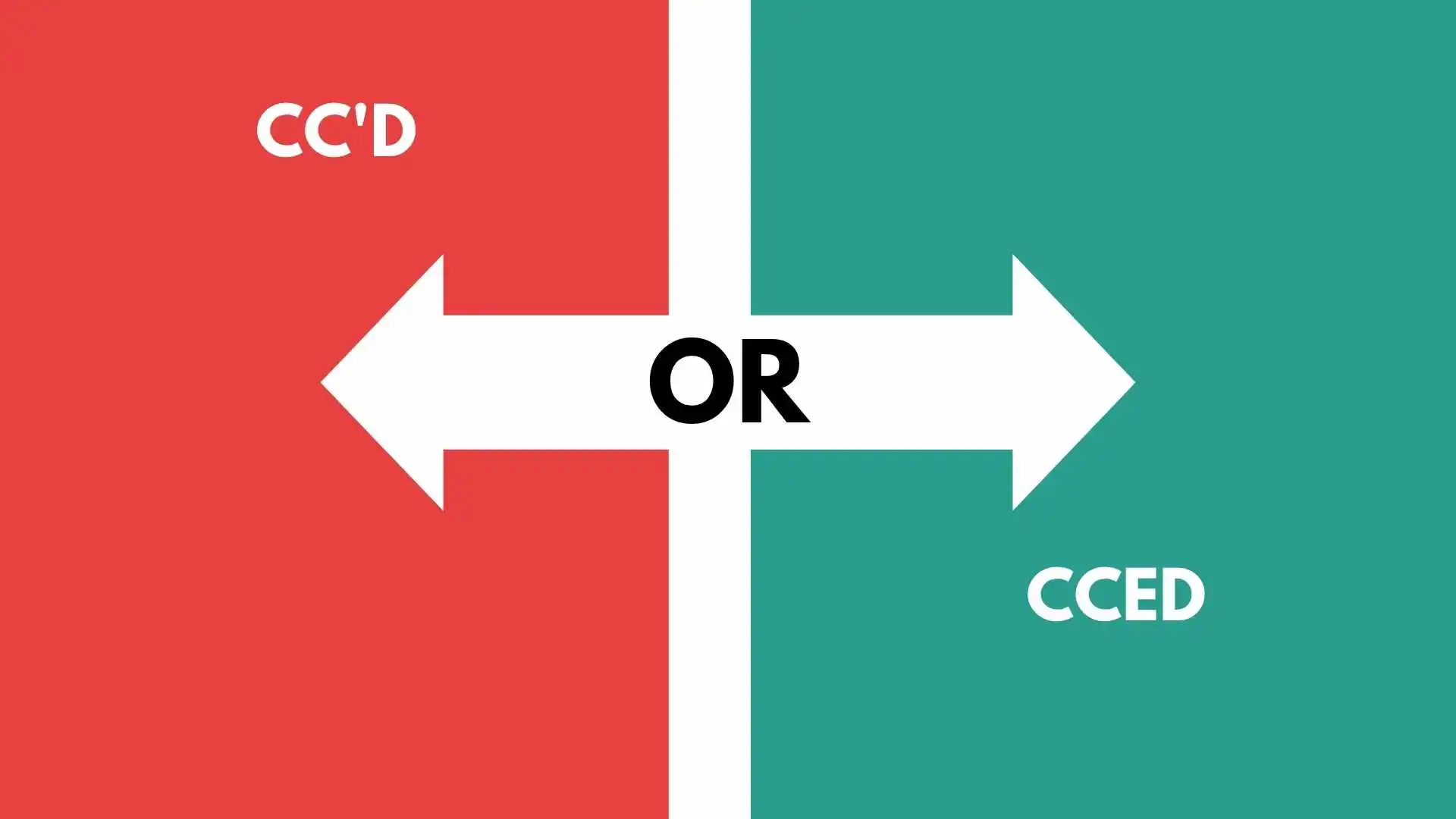
Have you ever typed an email, wanted to say you added someone as a carbon copy, and then just… frozen? You stare at the screen wondering: is it “cced,” “cc’d,” “CC’d,” or “CC’ed”? 🤔
You’re not alone. This is one of those sneaky little grammar rules English never really explains in school, because “CC” wasn’t even a word until email made it one. It started as an abbreviation (“carbon copy”), and now people expect it to behave like a real verb with a past tense and everything. That’s where the confusion creeps in.
If you’ve ever paused mid-sentence wondering how to spell this, this guide is for you. We’ll settle the debate once and for all, with examples, tables, and a few tricks to help it stick in your memory.
Quick Answer 🎯
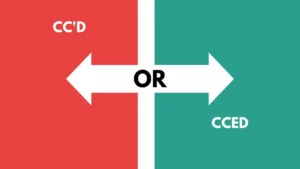
The correct and most widely accepted spelling is “cc’d” (with an apostrophe). Some style guides and writers use “cc’ed,” and “cced” (no apostrophe) is common informally, but it’s technically considered incorrect by most grammar and style authorities.
Let’s break down exactly why, and how to use it correctly every time.
What Does “CC” Actually Mean?
Before we tackle the spelling, let’s quickly cover the meaning, since understanding the origin makes the grammar much easier to remember.
CC stands for “carbon copy.” Back before computers, if you wanted to send the same letter to two people, you’d place a sheet of carbon paper between two pages, and typing on the top page would create a duplicate copy underneath. That duplicate was the “carbon copy.”
When email came along, the term stuck. Today, when you CC someone on an email, you’re sending them a copy of the message usually for their information, even though they’re not the primary recipient. 💌
- To: the main person you’re writing to
- CC: people who should stay in the loop
- BCC: people who get a copy, but no one else can see they were included
The Real Problem: CC Became a Verb
Here’s where things get interesting. Originally, “CC” was just a noun or an abbreviation used as a label (like on the top of a memo). But because email made it so common, people started using it as a verb:
- “Can you CC me on that email?”
- “I’ll CC the whole team.”
And once a word becomes a verb, English speakers naturally want to conjugate it present tense, past tense, and so on. That’s exactly why we need a past-tense form, and that’s exactly where the spelling debate began.
How to Spell the Past Tense of “CC”: Breaking It Down
1. “CC’d” ✅ (Most Recommended)
This is the most widely accepted and most commonly recommended spelling in modern style guides, including guidance often cited by editors and grammar resources like the Associated Press and various English usage experts.
Why the apostrophe? Because “CC” is an abbreviation (not a full word), adding “-ed” directly onto it can look confusing or hard to read. The apostrophe signals that letters are being skipped, similar to contractions.
Examples:
- I cc’d my manager on the report.
- She cc’d three colleagues on the invitation.
- Did you get cc’d on that email thread?
- We should have cc’d the client earlier.
2. “CC’ed” ✅ (Acceptable Alternative)
Some style guides and writers prefer this version because it looks more like a “normal” past-tense verb (similar to how we don’t shorten other verbs with apostrophes).
Examples:
- He cc’ed the entire department by mistake.
- I cc’ed you on the last update.
- They cc’ed legal before sending the contract.
3. “Cced” ❌ (Common but Discouraged)
This version drops the apostrophe entirely. It’s easy to type and widely used in casual writing, texting, and Slack messages, but most grammar authorities consider it non-standard.
Examples (informal only):
- Just cced you on that thread!
- I cced everyone, no worries.
⚠️ Tip: Avoid “cced” in formal writing, resumes, business emails, or academic work. Stick to “cc’d” or “cc’ed” instead.
Comparison Table: CC’d vs CC’ed vs Cced
| Spelling | Correctness | Best Used In | Example |
| CC’d | ✅ Most recommended | Formal & informal writing | “I cc’d Sarah on the update.” |
| CC’ed | ✅ Acceptable alternative | Formal writing, style-guide-conscious writing | “He cc’ed the whole team.” |
| Cced | ❌ Informal, often flagged as incorrect | Very casual texts/chats only | “Just cced you real quick!” |
| CC (base form) | ✅ Correct as present tense/verb or noun | Any context | “Please CC me on this.” |
Common Mistakes People Make 🚫
- Using “CC” as if it doesn’t need a past tense at all
- ❌ “I CC you yesterday.”
- ✅ “I cc’d you yesterday.”
- Capitalizing incorrectly mid-sentence
- ❌ “I CC’D him.”
- ✅ “I cc’d him.” (Lowercase is standard once it’s used as a verb, though CC as a noun/label is often capitalized.)
- Confusing “CC’d” with “seed” or “sead” when typing fast 😅
- This is a common typo, especially on mobile keyboards with autocorrect.
- Forgetting the apostrophe entirely
- ❌ “I cced them.”
- ✅ “I cc’d them.”
- Overusing CC when BCC is more appropriate
- This isn’t a grammar mistake, but a common email etiquette mistake worth mentioning! Use BCC when you don’t want all recipients to see each other’s email addresses.
Memory Trick to Remember the Spelling 🧠
Here’s a simple mnemonic:
“CC” + apostrophe + “d” = Carbon Copied, Done!
Think of the apostrophe as a stand-in for missing letters, just like in contractions such as “don’t” (do not) or “isn’t” (is not). Since “CC” is short for “carbon copy,” the apostrophe reminds you that letters are being skipped when you turn it into past tense.
Another trick: if you can say “cee-seed” out loud and it sounds natural, you’re using “cc’d” correctly (say it like “seed” with a soft “c” sound). 🌱
Real-Life Examples: Where You’ll See This Word
📧 In Emails
“Hi team, I’ve cc’d finance so they’re aware of the budget change.”
💼 In the Workplace
“Make sure you cc’d your supervisor before sending anything to the client.”
💬 In Casual Chat/Slack
“Oh I cced you already, check your inbox!” (informal, common but not “correct” per style guides)
📰 In News or Formal Writing
“Internal documents show the executive cc’d several board members on the memo.”
🎓 In Academic or Professional Writing
“The correspondence indicates that the author cc’d multiple stakeholders throughout the negotiation process.”
British English vs. American English: Any Differences?
Good news this one isn’t a British vs. American English battle like “colour” vs. “color.” 🇬🇧🇺🇸
- Both American and British English use “CC’d” or “CC’ed” as the accepted past-tense forms.
- “Cced” is discouraged in both dialects, though it appears informally worldwide, especially in fast-paced digital communication.
- Business English across both regions generally favors “cc’d” for professional emails.
So no matter where you’re writing from, “cc’d” is your safest bet. ✅
FAQs: People Also Ask 🙋♀️
1. Is it “cc’d” or “cc’ed”?
Both are acceptable, but “cc’d” is more commonly recommended and widely used in professional and everyday writing.
2. Is “cced” a real word?
It’s used informally, especially in texting or casual chat, but it’s not considered standard or correct in formal writing.
3. What does “cc’d” mean in an email?
It means someone was added as a carbon copy recipient on an email, meaning they received a copy of the message for informational purposes.
4. Should “CC” be capitalized when used as a verb?
When used as a lowercase verb form (like “cc’d” or “cc’ed”), lowercase is standard. However, “CC” as a noun/label at the top of an email is usually capitalized.
5. What’s the difference between CC and BCC?
CC (carbon copy) recipients are visible to everyone on the email. BCC (blind carbon copy) recipients are hidden from other recipients.
6. Can I use “cc’d” in formal writing or resumes?
Yes! “Cc’d” is acceptable in professional and formal contexts, especially when referring to email communication or documentation.
7. Why does “CC” need an apostrophe in past tense?
Because “CC” is an abbreviation, not a full word. The apostrophe helps clarify that it’s being used as a verb in past tense, similar to how contractions work.
Conclusion: The Final Verdict 🏁
In conclusion, CC’d is the correct and standard way to write the past tense of “CC” when referring to adding someone to an email’s copy list. While CCed or Cced may appear in informal writing, CC’d is clearer, more natural, and widely preferred in professional communication. Using the correct form helps keep your emails polished and easy to understand. You are writing a business email, workplace message, or formal correspondence, CC’d is the safest choice. Remember that “CC” means “carbon copy,” and “CC’d” simply indicates that someone was included in the email for their information. Choosing the right spelling makes your writing more professional and consistent.

Olivia Bennett is a passionate English grammar writer at GrammBoost.com who loves making grammar simple and easy to understand. She specializes in spelling, word differences, punctuation, and everyday English usage. Through clear explanations and practical examples, Olivia helps students, writers, and professionals write with greater confidence and accuracy.