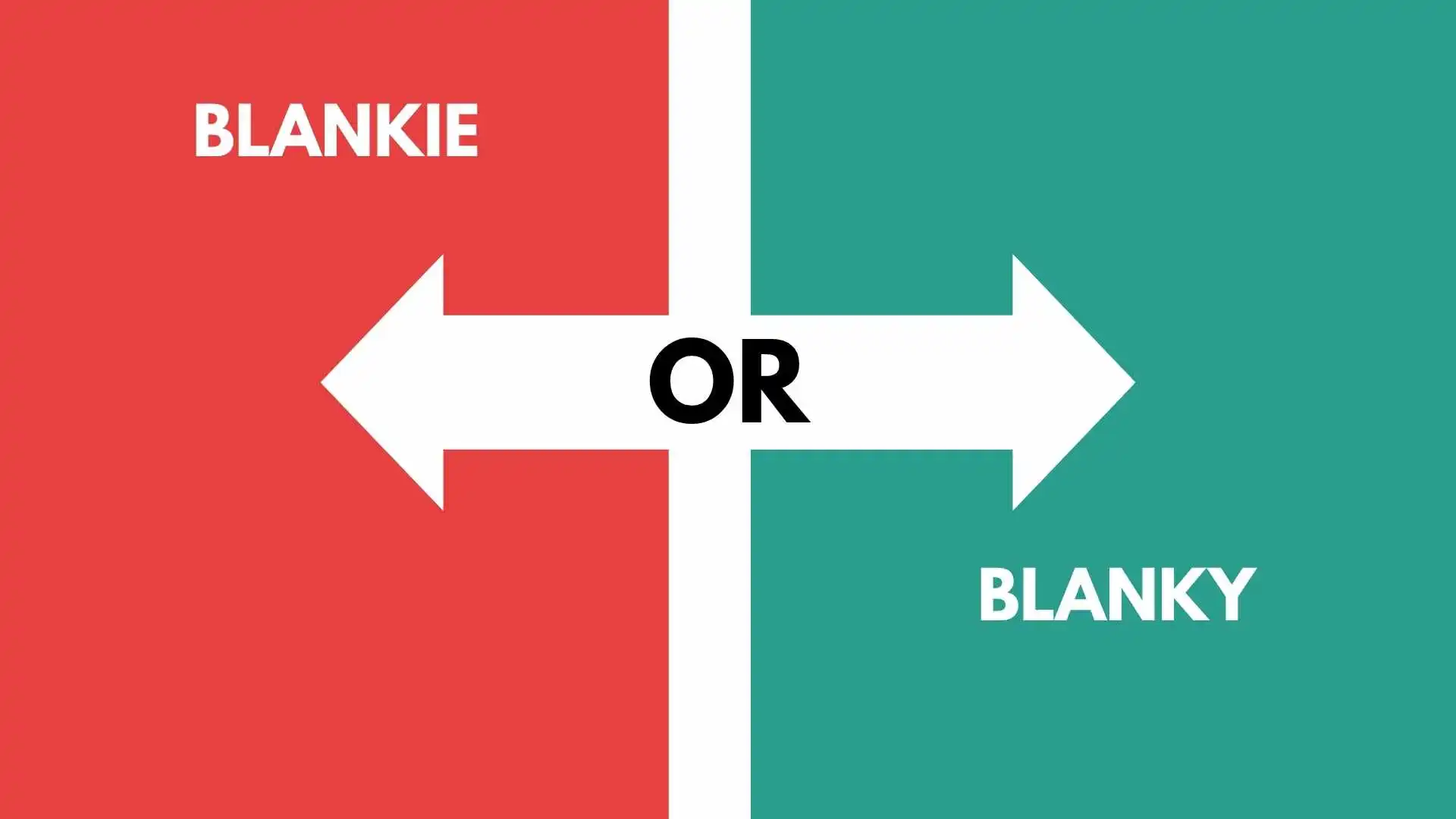
Picture this: you’re writing a sweet caption for your toddler’s favorite cuddle cloth, or maybe you’re texting a friend about your own comfort blanket (no judgment, adults need cozy things too 😄). You type it out… and suddenly freeze. Is it “blankie” or “blanky”? Your fingers hover over the keyboard, autocorrect isn’t helping, and now you’re Googling it at 11 p.m.
You are not alone. This is one of those adorable little English words that never made it into strict dictionary rules, which means people spell it however feels right to them. That’s exactly why the confusion exists and why we’re going to clear it up for good today.
By the end of this article, you’ll know exactly which spelling to use, when it’s acceptable to use the other, and how to sound confident every time you write it. Let’s dive in! 🚀
Quick Answer ⚡
“Blankie” is the more widely accepted and commonly used spelling, especially in American English and in published, informal writing. “Blanky” is a valid alternative spelling used by some people, but it’s less standard and appears far less often in print, blogs, and dictionaries.
What Does “Blankie” (or “Blanky”) Even Mean?
Before we compare spellings, let’s quickly define the word itself.
Blankie (or blanky) is an informal, affectionate term for:
- A small blanket, often one a child carries around for comfort
- A security object think Linus from Peanuts and his famous blue blanket
- Sometimes used jokingly by adults to describe their own favorite cozy blanket
It’s a term of endearment, not a formal or technical word which is exactly why there’s no single “official” spelling locked into strict grammar rules. 🧡
“Blankie” vs “Blanky”: Meaning, Usage & Examples
Let’s break both spellings down individually so you can see how each one is actually used.
1. Blankie ✅ (Most Common Spelling)
“Blankie” is the spelling you’ll see most often in:
- Children’s books
- Parenting blogs and forums
- Product listings (like baby blankets on Amazon or Etsy)
- Everyday conversation and texting
Examples:
- “Emma won’t go to bed without her blankie.”
- “Don’t forget to pack Noah’s blankie for the sleepover!”
- “This soft fleece blankie makes the perfect baby shower gift.”
- “I still sleep with my childhood blankie, don’t judge me.” 😂
2. Blanky ⚠️ (Less Common, But Still Used)
“Blanky” shows up occasionally, mostly in casual speech, text messages, or as a personal/family spelling preference. It’s not incorrect, but it’s far less standardized.
Examples:
- “Where’s your blanky, sweetie?”
- “He dragged his blanky across the living room floor.”
- “Grandma knitted a blanky for the new baby.”
Bottom line: Both spellings mean the exact same thing. The difference is purely about spelling popularity and convention, not meaning.
Comparison Table: Blankie vs Blanky 📊
| Feature | Blankie | Blanky |
| Popularity | ✅ More common | ⚠️ Less common |
| Dictionary presence | Appears in more informal dictionaries and glossaries | Rarely listed |
| Used in publishing/blogs | ✅ Frequently | Occasionally |
| Best for | Writing, product names, parenting content | Casual speech, personal preference |
| Example | “She hugged her blankie tight.” | “She hugged her blanky tight.” |
| Formality | Informal (but standard informal) | Informal (non-standard) |
| Recommended for SEO/content writing | ✅ Yes | ❌ Not ideal for SEO |
Common Mistakes People Make ❌
Even though this is a cute, low-stakes word, people still trip up. Here are the most common mistakes:
- Mixing spellings in the same document Pick one spelling (“blankie”) and stick with it throughout your writing.
- Assuming it’s a “baby word” not worth spelling correctly Brands, parenting sites, and product descriptions still need consistency for SEO and professionalism.
- Confusing it with “blanket” “Blankie” is the cute, informal version of “blanket,” not a separate word with a different meaning.
- Overcapitalizing it Unless it’s the start of a sentence or a specific product name, keep it lowercase: “her blankie,” not “her Blankie.”
🧠 Memory Trick (Mnemonic)
Here’s an easy way to remember which spelling to default to:
“Blankie” ends in -ie, just like “cookie,” “sweetie,” and “cutie.” Since blankie is a cute, affectionate word just like those other -ie words it makes sense that it follows the same -ie ending pattern. 🍪
If you can remember that cute, affectionate nicknames in English often end in -ie (not -y), you’ll almost always land on the right spelling.
Real-Life Examples 🌍
Let’s look at how “blankie” (and occasionally “blanky”) shows up in different real-world contexts.
📧 In Emails
“Hi Sarah, just a reminder to pack Liam’s blankie for daycare tomorrow he won’t nap without it!”
📱 On Social Media
“POV: your toddler refuses to leave the house without her blankie 😂🧸 #momlife #toddlerlife”
📰 In News or Feature Articles
“Experts say transitional objects like a child’s blankie or favorite stuffed toy can help ease separation anxiety.”
🎓 In Academic or Psychology Writing
In more formal or academic contexts, writers usually avoid “blankie” altogether and use the clinical term “transitional object” instead a phrase coined by pediatrician and psychoanalyst Donald Winnicott.
💬 In Everyday Speech
“Where’s Mia’s blankie? She can’t fall asleep without it.”
British vs American English 🇬🇧🇺🇸
Here’s a fun little regional note:
- In American English, “blankie” is the dominant spelling and is widely used in parenting culture, product names, and casual speech.
- In British English, people often use the word “comforter” or simply “blanket” instead of “blankie,” though “blankie” is understood and increasingly used, especially online and among younger parents.
- Some British families also use “blanky” or even affectionate variations like “blankie-poo” (yes, really English is wonderfully weird 😄).
| Region | Common Term | Notes |
| 🇺🇸 American English | Blankie | Most widely used and recognized |
| 🇬🇧 British English | Comforter / Blanket / Blankie | “Blankie” is used but less dominant |
| 🌐 Global/Informal English | Blankie or Blanky | Both understood, blankie preferred |
FAQs: People Also Ask 🙋♀️
1. Is “blankie” a real word?
Yes! While it’s informal, “blankie” is widely recognized and even appears in several online and informal dictionaries as a legitimate word for a child’s comfort blanket.
2. Is “blanky” wrong?
Not exactly wrong just less common. It’s a nonstandard variant spelling that some people and families use instead of “blankie.”
3. What is the plural of blankie?
The plural is “blankies” (not “blankys”). Example: “The twins each have their own blankies.”
4. Can adults use the word “blankie”?
Absolutely! Many adults affectionately refer to their favorite cozy blanket as their “blankie,” often in a joking or nostalgic way.
5. What’s the more formal or clinical term for “blankie”?
In psychology, it’s often called a “transitional object” an item that provides comfort and security, especially to young children.
6. Is “blankie” used differently in British vs. American English?
American English uses “blankie” more frequently, while British English often prefers “comforter” or “blanket,” though “blankie” is still understood.
7. Why does English have so many spelling variations for informal words?
Informal, affectionate words like “blankie” evolve through spoken language first, so spelling often follows sound and personal preference rather than strict grammar rules which is why variants like “blanky” exist.
Final Takeaway: Blankie or Blanky? 🎯
When deciding between Blankie or Blanky, both words can refer to a small, soft blanket, especially one used for comfort, warmth, or by children. However, blankie is the more common and widely recognized spelling in everyday English. It often sounds cute, informal, and affectionate, while blanky is a less common alternative that may appear in casual speech or personal writing. If you are writing for a general audience, blankie is usually the better choice. Ultimately, the right word depends on your context and personal preference, but understanding the difference helps you use each term naturally and confidently.

James Carter is an English language enthusiast and content writer who loves making grammar simple and easy to understand. He creates clear, beginner-friendly guides on spelling, grammar rules, confusing words, and everyday English usage. His goal is to help readers write with confidence through practical examples, easy explanations, and accurate language tips.