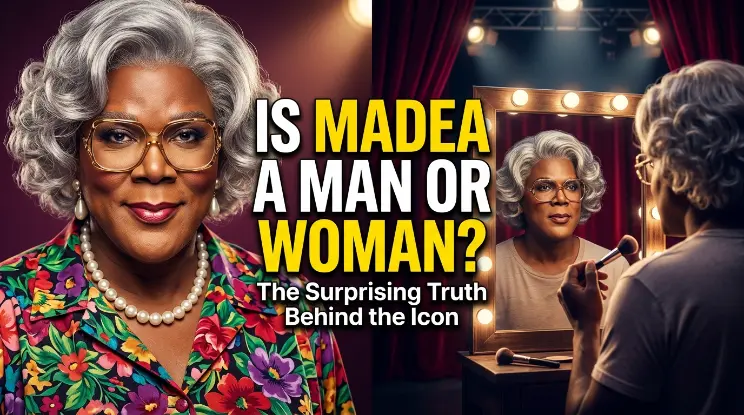
If you’ve ever watched a Tyler Perry movie and found yourself squinting at the screen thinking, “Wait… is that a man or a woman?” you’re not alone. Millions of people search this exact question every year, and honestly, it’s a fair one!
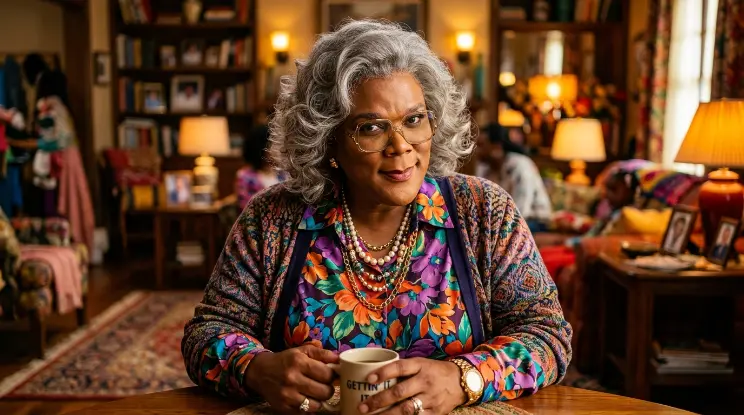
Madea is loud, sassy, wears floral dresses, and has that unmistakable deep, gravelly voice. She looks like someone’s tough Southern grandma, but something about her feels… different. That “something” is exactly why so many people end up confused.
This article breaks it all down in simple, friendly terms no film-school jargon, just clear answers. 😊
Quick Answer ⚡
Madea is a fictional female character played by a man actor and filmmaker Tyler Perry. Madea herself is written and portrayed as a woman (in-story), but the actor behind the wig and dress is male. This is called a drag performance or cross-dressing role, similar to how actors like Robin Williams (Mrs. Doubtfire) or Martin Lawrence (Big Momma’s House) have played female characters.
Who Exactly Is Madea? 👀
Before we dig deeper, let’s get clear on the basics.
- Full name: Mabel “Madea” Simmons
- Character type: A tough, no-nonsense Southern grandmother
- Created by: Tyler Perry
- First appearance: 1999, in the stage play I Can Do Bad All by Myself
- First movie role: Diary of a Mad Black Woman (2005)
- Played by: Tyler Perry (a man), in a wig, prosthetic makeup, and padded costume
Madea’s personality is inspired by real women in Perry’s life specifically his own mother and aunt. He’s said many times in interviews that Madea is a loving tribute to tough, strong Black women who raised families through hard times, wrapped in a comedic package.
Madea the Character vs. Tyler Perry the Actor: Breaking It Down 🎭
This is where most of the confusion clears up once you separate two things:
- Madea (the character) written, and treated within the story, as a woman.
- Tyler Perry (the actor) a real-life man who plays her.
Think of it like Halloween. If a man dresses up as a witch for a costume party, the costume is female, but the person underneath is still male. Madea works the same way, just on a much bigger, more polished scale with makeup artists, costume designers, and years of practice.
📊 Comparison Table: Madea vs. Tyler Perry
| Aspect | Madea (the character) | Tyler Perry (the actor) |
| Gender in the story | Female | N/A (real person) |
| Real-life gender | N/A (fictional) | Male |
| Appearance | Wig, floral dresses, padded body suit | Regular male appearance off-camera |
| Voice | Deep, gruff “grandma” voice | Perry’s natural speaking voice |
| Role | Comedic protagonist | Actor, writer, director, producer |
| First appeared | 1999 (stage play) | Born September 13, 1969 |
| Personality | Blunt, tough, street-smart | Business-savvy, private, hardworking |
Why Does Tyler Perry Play a Female Character? 💡
This isn’t just a random gimmick there’s real intention behind it.
- Tribute to family: Perry has said Madea is based on his mother and aunt, women who survived tough circumstances with humor and grit.
- Comedic tradition: Men playing older women for comedy is a long-standing tradition in film and theater (think Big Momma, Mrs. Doubtfire, or even Shakespearean theater, where men originally played all roles, including women).
- Storytelling tool: Madea allows Perry to deliver blunt truths and family lessons in a way that feels both funny and heartfelt.
Common Mistakes People Make 🚫
Let’s clear up a few things people often get wrong.
| Common Mistake | Why It’s Wrong | Correct Understanding |
| “Madea is a real woman actress.” | Madea is fictional and played by a man. | Tyler Perry, a male actor, plays her. |
| “Tyler Perry is transgender.” | Playing a female character in film ≠ gender identity. | Perry identifies as male in real life; Madea is a role, not his identity. |
| “Madea and Tyler Perry are the same person.” | Madea is one of many characters Perry plays. | Perry also plays Joe and Brian in several films. |
| “It’s disrespectful for a man to play a woman.” | This is a matter of opinion, not fact. | It’s a comedic tradition used respectfully by many actors. |
🧠 Memory Trick (Mnemonic)
Here’s an easy way to remember it:
“M for Madea, M for Made-up.” Madea is a made-up (fictional) woman, played by a real man.
Or simply remember: “Costume ≠ Person.” The dress and wig are a costume; the actor underneath is still real.
Real-Life Examples of This Confusion 📱
You’ll see this question pop up everywhere:
On social media (Twitter/X):
“Wait, I just found out Madea is actually a MAN under all that makeup 😭 my childhood is shook”
In a casual text message:
“Yo is Madea a dude or what lol”
In academic/film writing:
“Tyler Perry’s portrayal of Madea continues a long cinematic tradition of male actors performing exaggerated female characters for comedic effect.”
In news headlines:
Entertainment articles often describe Perry as “playing multiple roles,” including Madea, Joe, and Brian, in the same movie which is exactly what’s happening in his newer projects too.
Everyday speech:
“My grandma thought Madea was a real lady until I told her it’s Tyler Perry!”
Trend Alert: Madea Is Still Going Strong in 2026 📈
Madea isn’t just an old-school throwback the character is still active and evolving. Tyler Perry recently expanded the franchise with new Netflix releases, including Madea’s Destination Wedding and a Madea-universe spin-off, Joe’s College Road Trip, where Perry plays multiple characters at once (Madea, Joe, and Brian) proof that this is a well-established, ongoing acting technique, not a one-time joke.
This shows the “man playing a woman” format isn’t outdated it’s a beloved, continuing part of pop culture.
British vs. American English Usage Notes 🇬🇧🇺🇸
While “Madea” itself isn’t a grammar term, the broader concept of men playing women on screen has different names depending on the region:
| Term | Region | Meaning |
| Drag performance | Both US & UK | A performer dressing as the another gender for entertainment |
| Pantomime dame | Mainly British | A British theater tradition where men play older female characters comedically |
| Cross-dressing role | Both US & UK | General term for an actor playing a different gender on screen |
Fun fact: The British “pantomime dame” tradition is very similar to Madea both use humor, exaggerated female costumes, and a male actor for comedic storytelling. 🎭
FAQs: People Also Ask ❓
1. Is Madea based on a real person?
Not exactly one real person she’s inspired by a combination of Tyler Perry’s mother and aunt.
2. Does Tyler Perry play any other female characters?
Madea is his most famous female role, though he primarily plays male characters like Joe and Brian in the same movie franchise.
3. Why does Madea have a deep voice?
Because the actor, Tyler Perry, is a man, and part of the comedic effect comes from the exaggerated “grandma” voice layered over his natural voice.
4. Is it offensive for a man to play a woman in movies?
Opinions vary. Many see it as harmless comedic tradition (like Mrs. Doubtfire), while others have different views on gender portrayal in media it’s a topic people can reasonably disagree on.
5. What was Madea’s first movie?
Her first film role was in Diary of a Mad Black Woman (2005), though she appeared earlier in stage plays starting in 1999.
6. How many Madea movies are there?
As of recent releases, there are well over a dozen Madea films and stage plays, with new installments continuing to release on Netflix.
7. Is Tyler Perry married?
This isn’t related to the Madea character, but it’s a common side question Perry keeps most of his personal life private.
Conclusion: The Simple Truth 🎯
So, is Madea a man or a woman? Madea is a fictional woman, written and performed by a real-life man, Tyler Perry. It’s a classic example of a comedic drag role no different in concept from Mrs. Doubtfire or a British pantomime dame. Understanding the difference between a character and the actor playing them clears up all the confusion.
Next time someone asks you this question, you’ll know exactly how to explain it clearly, correctly, and with a fun fact or two to share! 😄
Meta Description:

James Carter is an English language enthusiast and content writer who loves making grammar simple and easy to understand. He creates clear, beginner-friendly guides on spelling, grammar rules, confusing words, and everyday English usage. His goal is to help readers write with confidence through practical examples, easy explanations, and accurate language tips.