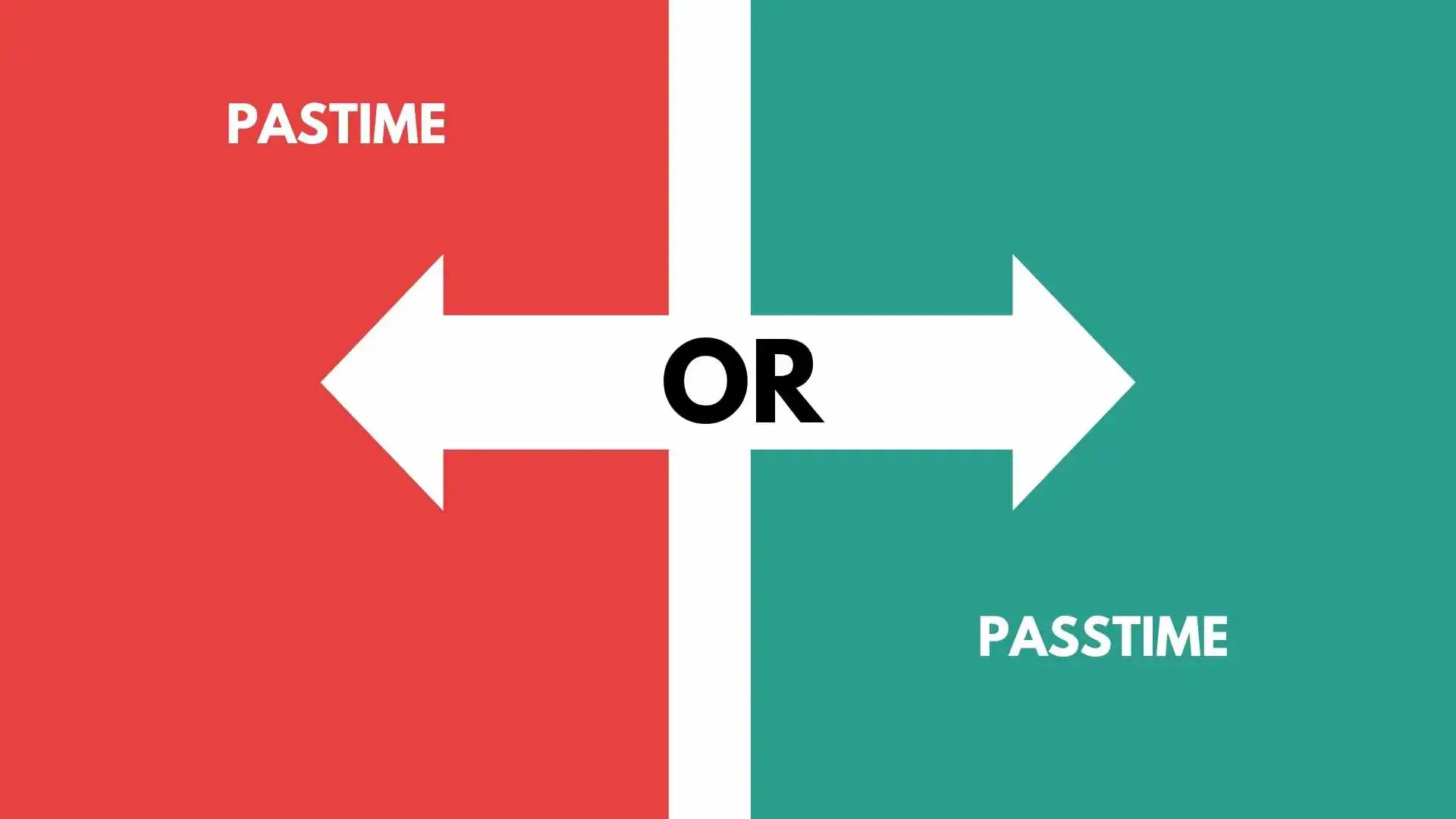
English spelling can sometimes be confusing, especially when two versions of a word look almost identical. One common example is “Pastime or Passtime?” Many people wonder whether passtime is an acceptable spelling or if pastime is the correct word to use.
The correct spelling is pastime, written as one word with only one “s” in the middle. A pastime refers to an activity that someone enjoys doing regularly in their free time, such as reading, gardening, painting, playing games, or listening to music. These activities help people relax, have fun, and make good use of their spare time.
Understanding the difference between pastime and passtime is useful for students, writers, and English learners who want to improve their spelling and writing skills. Although passtime may seem logical because it sounds similar when spoken, it is considered incorrect in standard English.
Quick Answer ⚡
“Pastime” is the correct spelling one word, one “s.” “Passtime” is simply a common misspelling and isn’t recognized in standard English dictionaries. If you’re talking about a hobby or something you do for fun, always write pastime.
What Does “Pastime” Actually Mean?
A pastime is an activity that you do for enjoyment or relaxation, usually in your free time. Think hobbies, casual sports, games, or anything you do simply because it’s fun not because you have to.
The word comes from two parts:
- Pass (as in, to pass or spend time)
- Time
Put together, they form pastime literally something that helps you “pass the time” pleasantly. 😊
Examples of “Pastime” in a Sentence
- 📚 Reading has always been my favorite pastime.
- ⚾ Baseball is often called “America’s national pastime.”
- 🎨 Painting became her go-to pastime during the lockdown.
- 🎮 Video games are a popular pastime among teenagers.
- 🧶 Knitting is a relaxing pastime for many retirees.
Notice something? In every example, “pastime” refers to a fun, leisure activity not an action of “passing time” in a literal sense.
Why Do People Write “Passtime” Instead?
This is where the confusion creeps in. Since the word is built from “pass” + “time,” our brains naturally want to keep both S’s from “pass” intact. It feels logical but English spelling doesn’t always play fair!
Here’s the thing: when “pass” and “time” combined to form this word centuries ago, English speakers dropped one “s” for simplicity and pronunciation. This kind of letter-dropping happens in lots of compound words (more on that below).
Common Reasons for the Mistake
- 🧠 Logical assumption “pass” has two S’s, so it feels wrong to drop one.
- 👂 Pronunciation confusion the word doesn’t sound different whether you spell it with one or two S’s.
- ⌨️ Autocorrect gaps some spellcheckers don’t always catch it in casual typing.
- 📱 Social media speed-typing people type fast and don’t double-check spelling.
Pastime vs Passtime: Comparison Table
| Word | Correct? | Meaning | Usage | Example |
| Pastime | ✅ Correct | A hobby or leisure activity | Standard English (British & American) | “Gardening is a relaxing pastime.” |
| Passtime | ❌ Incorrect | No dictionary meaning | Common misspelling | ~~”Gardening is a relaxing passtime.”~~ |
| Pass time | ✅ Correct (different meaning) | To spend or occupy time (verb phrase) | Used as two separate words | “We played cards to pass time at the airport.” |
💡 Key takeaway: “Pastime” (noun) and “pass time” (verb phrase) are related in meaning but spelled and used differently.
Pastime vs. “Pass the Time” What’s the Difference?
This is another common point of confusion, so let’s break it down clearly:
- Pastime (noun) = a hobby or activity you enjoy.
- Example: “Chess is a wonderful pastime.”
- Pass the time (verb phrase) = the act of spending time doing something, often while waiting.
- Example: “We told jokes to pass the time while waiting for the bus.”
Both phrases relate to enjoyable or time-filling activities, but pastime is a noun (a thing), while pass the time is a verb phrase (an action).
Memory Trick to Never Misspell It Again 🧠✨
Here’s a simple mnemonic to lock this into your memory:
“A pastime helps you PAST the time not PASS-PASS the time!”
Or try this one:
P-A-S-T-I-M-E = PAST + TIME. Just like the word “past” (as in “the past”), it only has one S.
Another trick: think of other compound words where a double letter gets simplified:
- Welfare (not “wellfare”)
- Already (not “allready”)
- Almost (not “allmost”)
English loves to trim down double letters when words combine “pastime” is just following the pattern!
Real-Life Examples of “Pastime” in Use
📧 In Emails
“Hi team, just a reminder that our Friday trivia nights are meant to be a fun pastime, not a competition though bragging rights are still on the line! 😄”
📱 On Social Media
“Sunday mornings + coffee + crossword puzzles = my favorite pastime. ☕📝 #WeekendVibes”
📰 In News Articles
“Baseball has long been celebrated as America’s favorite pastime, drawing millions of fans to stadiums each year.”
🎓 In Academic Writing
“The study explores how digital gaming has replaced traditional pastimes such as reading and outdoor play among adolescents.”
🗣️ In Everyday Speech
“What’s your favorite pastime?” “Honestly? wallow -watching mystery shows on weekends.”
British vs American English: Any Difference?
Good news “pastime” is spelled the same way in both British and American English. There’s no regional variation here, unlike words such as “colour/color” or “favourite/favorite.”
| Region | Spelling | Notes |
| 🇺🇸 American English | Pastime | Same spelling and meaning |
| 🇬🇧 British English | Pastime | Same spelling and meaning |
So no matter where you’re writing from, “pastime” stays consistent one less thing to worry about! 🎉
Common Mistakes to Avoid
- ❌ “My passtime is painting.” → ✅ “My pastime is painting.”
- ❌ “Reading books is a great passtime for kids.” → ✅ “Reading books is a great pastime for kids.”
- ❌ “He spends his freetime on his pastime of fishing.” (redundant phrasing) → ✅ “Fishing is his favorite pastime.”
- ❌ Using “pastime” when you mean an ongoing habit or job (it should only refer to leisure activities, not work).
FAQs: People Also Ask 🙋
1. Is “passtime” ever correct in any dictionary?
No. “Passtime” is not a recognized word in any major English dictionary, including Oxford, Merriam-Webster, or Cambridge. It’s simply a common misspelling of “pastime.”
2. What is the plural of “pastime”?
The plural form is “pastimes.” Example: “Hiking and painting are two of my favorite pastimes.”
3. Is “pastime” one word or two?
It’s one word “pastime,” with no space and only one “s.”
4. Can “pastime” be used as a verb?
No, “pastime” is strictly a noun. If you want to describe the action of spending time, use the phrase “pass the time” instead.
5. What’s a synonym for “pastime”?
Common synonyms include: hobby, leisure activity, recreation, diversion, and amusement.
6. Why do so many people misspell “pastime” as “passtime”?
It’s mostly due to visual association with the word “pass,” which naturally has two S’s. Our brains assume the double S carries over, even though it doesn’t.
7. Is “national pastime” a special phrase?
Yes! “National pastime” is a well-known phrase, especially in American English, referring to an activity closely tied to a country’s culture most famously used to describe baseball in the United States.
Final Thoughts: Pastime or Passtime? 🏁
Understanding the difference between pastime and passtime is simple. Pastime is the correct and widely accepted spelling for an activity you enjoy doing in your free time, such as reading, gaming, or gardening. Passtime is generally considered an incorrect spelling in standard English. Using the correct word helps make your writing clear and professional. So, whenever you want to describe a hobby or enjoyable activity that helps you spend your free time, remember to use pastime. Learning small spelling differences like this can improve your English and help you communicate more confidently.

James Carter is an English language enthusiast and content writer who loves making grammar simple and easy to understand. He creates clear, beginner-friendly guides on spelling, grammar rules, confusing words, and everyday English usage. His goal is to help readers write with confidence through practical examples, easy explanations, and accurate language tips.