Have you ever caught yourself mid-sentence wondering, “Should I say ‘me and my friend went to the store’ or ‘my friend and I went to the store’?” 🤔
You’re definitely not alone. The “me vs I” mix-up is one of the most common English grammar mistakes even native speakers get it wrong all the time! Whether you’re writing a work email, posting on Instagram, or working on an academic essay, knowing when to use “me” or “I” can make your writing sound polished and professional instead of awkward or incorrect.
In this guide, we’ll break down the rules in the simplest way possible, give you tons of real-life examples, share memory tricks, and even throw in a comparison table so you never mix them up again. Let’s dive in! 🚀
Quick Answer: Me vs I (In a Nutshell) ⚡
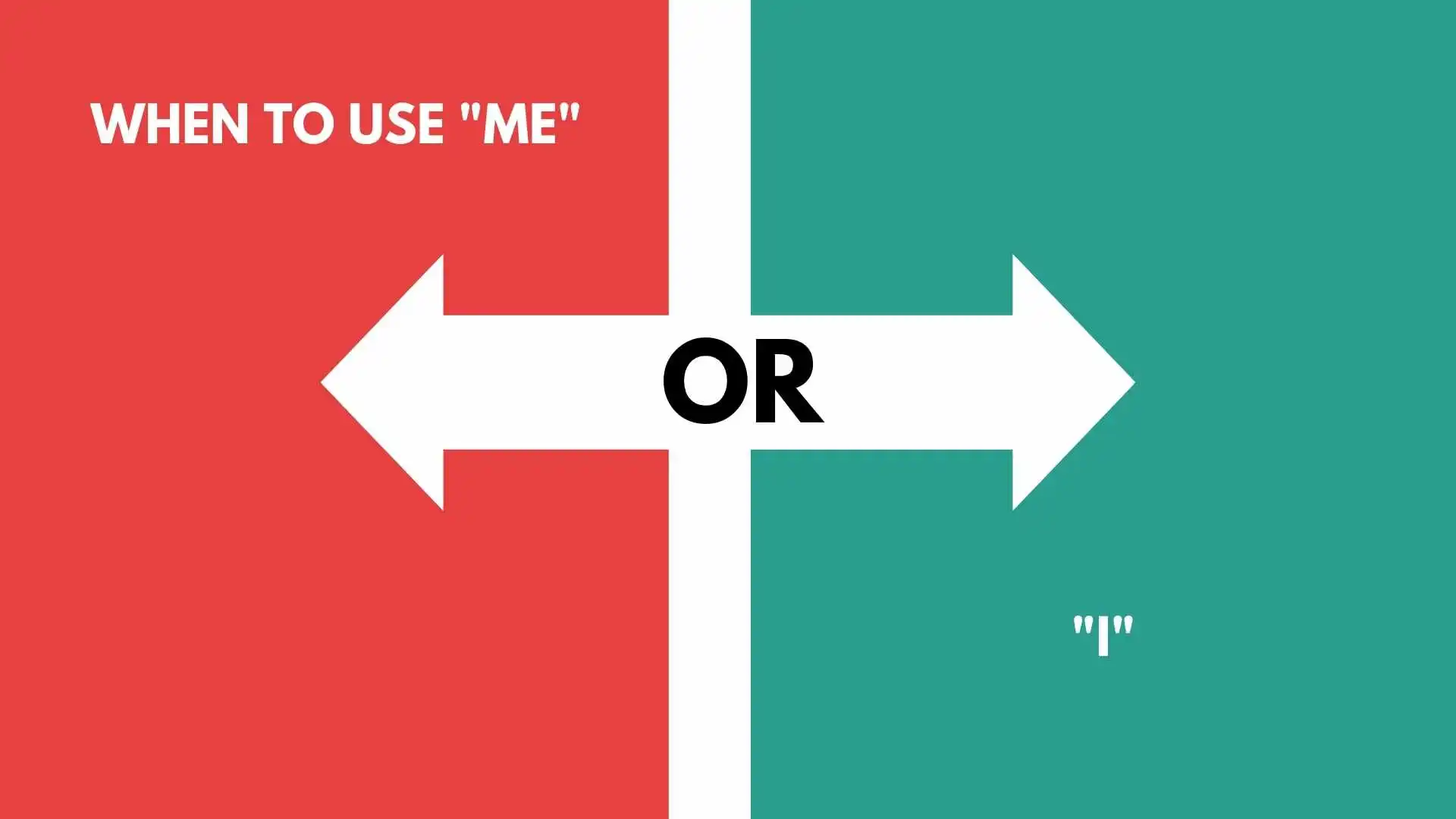
“I” is a subject pronoun use it when you’re the one doing the action (e.g., “I went to the park”). “Me” is an object pronoun use it when the action is happening to you (e.g., “She gave the book to me“).
That’s the core rule! But let’s unpack it further so you understand why and can apply it confidently in every situation.
Understanding “I” The Subject Pronoun 👤
“I” is used when you are performing the action in a sentence. In grammar terms, it’s called a subject pronoun, meaning it acts as the subject of the verb.
Examples of “I” in a sentence:
- I love pizza. 🍕
- I am going to the gym later.
- My sister and I are planning a trip.
- I think this movie is amazing.
- Tom and I studied together for the exam.
Key point:
Whenever you’re the one doing something (the action-taker), you use “I.”
Understanding “Me” The Object Pronoun 🎯
“Me” is used when you are receiving the action meaning something is being done to you or for you. This is called an object pronoun.
Examples of “me” in a sentence:
- She gave the gift to me. 🎁
- Can you help me with this project?
- The teacher called me after class.
- Please send the email to John and me.
- It was nice of them to invite me.
Key point:
If you can replace the pronoun with “me” and the sentence still makes sense when you remove the other person, you’re on the right track!
“Me” vs “I”: Comparison Table 📊
| Pronoun | Type | Function | Example Sentence | Quick Test |
| I | Subject pronoun | Performs the action | “I am learning English.” | Remove other names sentence still works: “I am learning.” ✅ |
| Me | Object pronoun | Receives the action | “She helped me.” | Remove other names sentence still works: “She helped me.” ✅ |
| I (with others) | Subject pronoun | Compound subject | “Sarah and I went shopping.” | Say “I went shopping” alone correct ✅ |
| Me (with others) | Object pronoun | Compound object | “They invited Sarah and me.” | Say “They invited me” alone correct ✅ |
The Easiest Trick to Never Get Confused Again 🧠✨
Here’s a golden mnemonic that grammar teachers swear by:
“Remove the other person, and see what sounds right!”
Example:
❌ “Me and Sarah went to the mall.” ✅ Remove “Sarah” → “Me went to the mall.” That sounds wrong! ✅ Correct version: “Sarah and I went to the mall.”
Another example: ❌ “The manager sent the report to Alex and I.” ✅ Remove “Alex” → “The manager sent the report to I.” That sounds wrong! ✅ Correct version: “The manager sent the report to Alex and me.”
💡 Memory Trick: Think of it as the “Minus Test” subtract the other name, and your ear will usually tell you the right pronoun!
Common Mistakes People Make 🚫
Even confident writers slip up sometimes. Here are the most frequent “me vs I” mistakes:
- “Me and him are going to the concert.” ✅ Correct: “He and I are going to the concert.”
- “Between you and I, this secret stays here.” ✅ Correct: “Between you and me” (because “between” is a preposition, and prepositions need object pronouns).
- “The prize was given to Sam and I.” ✅ Correct: “The prize was given to Sam and me.”
- “Him and I are best friends.” ✅ Correct: “He and I are best friends.”
- “She is taller than me.” This one is actually often acceptable in casual speech, but formally it should be: ✅ “She is taller than I (am).”
Real-Life Examples: Emails, Social Media & Everyday Speech 💬
Let’s look at how this shows up in real situations:
📧 In Emails (Professional Writing)
- ❌ “Please contact John or I if you have questions.”
- ✅ “Please contact John or me if you have questions.”
📱 On Social Media
- ❌ “Me and my bestie had the best day ever!”
- ✅ “My bestie and I had the best day ever!”
🗣️ In Everyday Speech
- ❌ “Me want that.”
- ✅ “I want that.”
🎓 In Academic Writing
- ❌ “The research was conducted by Dr. Lee and I.”
- ✅ “The research was conducted by Dr. Lee and me.”
British English vs American English: Is There a Difference? 🇬🇧🇺🇸
Good news the grammar rule for “me” and “I” is the same in both British and American English. However, there are some subtle style differences:
| Feature | British English | American English |
| Formal writing | Strict adherence to subject/object rules | Same, but slightly more relaxed in casual speech |
| Common phrase “It’s me” | Widely accepted, even in formal contexts | Also widely accepted |
| “Than I” vs “Than me” | Formal writing prefers “than I” | Casual speech often uses “than me” |
So no matter where you’re from, the core rule stays the same: subject = I, object = me. 🌍
Bonus: What About “Myself”? 🙋
Many people mistakenly use “myself” instead of “me” or “I,” especially in professional emails:
❌ “Please send the report to John or myself.” ✅ “Please send the report to John or me.”
“Myself” should only be used:
- Reflexively: “I hurt myself.”
- For emphasis: “I myself will handle this.”
Keyword Insights & Grammar Trends 📈
Search trends show that people frequently look up:
- “me vs I grammar rule”
- “when to use I or me in a sentence”
- “me and my friend or my friend and I”
- “correct spelling and grammar tips for pronouns”
- “English usage mistakes to avoid”
This shows that the “me vs I” confusion remains one of the top grammar tips people search for proving it’s a timeless English usage challenge, not just a beginner issue.
Frequently Asked Questions (FAQs) ❓
1. Is it “my friend and I” or “my friend and me”?
It depends on whether the pronoun is the subject or object. “My friend and I went out” (subject) vs. “She invited my friend and me” (object).
2. Is “between you and I” correct?
No. It should be “between you and me” because “between” is a preposition, and prepositions take object pronouns.
3. Why do people say “me and him” instead of “he and I”?
It’s a common informal habit, but it’s grammatically incorrect in formal writing and speech.
4. Is “it’s me” grammatically correct?
Yes! While traditionally “it is I” was considered correct, “it’s me” is now widely accepted in both spoken and written English.
5. Is “than I” or “than me” correct?
Both are used, but “than I” (as in “than I am”) is more formally correct, while “than me” is common in casual speech.
6. How can I remember when to use “I” or “me” quickly?
Use the “Minus Test”: remove the other name from the sentence and see which pronoun sounds correct.
7. Do British and American English follow different rules for “me” and “I”?
No, the grammar rule is the same, though casual speech patterns may vary slightly.
Conclusion: Master “Me vs I” Once and for All! 🎯
Understanding when to use “Me” or “I” can make your English clearer and more grammatically correct. Use “I” when you are the subject of a sentence, meaning you are doing the action. Use “Me” when you are the object, meaning the action happens to you or involves you. A simple way to remember the difference is to remove the other person’s name and see which word sounds correct. With regular practice and examples, choosing between “Me” and “I” becomes easy. Learning this basic grammar rule will help you speak and write English more confidently.

Olivia Bennett is a passionate English grammar writer at GrammBoost.com who loves making grammar simple and easy to understand. She specializes in spelling, word differences, punctuation, and everyday English usage. Through clear explanations and practical examples, Olivia helps students, writers, and professionals write with greater confidence and accuracy.