Ever typed “canon” when you meant “cannon” or the other way around and then just… left it there, hoping nobody would notice? 😅 You’re not alone. These two words look almost identical, sound nearly the same when you say them out loud, and yet they mean completely different things.
One is about rules, sacred texts, and “official” storylines (hello, Marvel fans 👋). The other is about giant weapons that go BOOM 💥.
Mixing them up isn’t just a typo it can make your sentence say something totally unintended (imagine writing “the church’s cannon law” suddenly your church has an artillery department).
Quick Answer: Canon vs Cannon
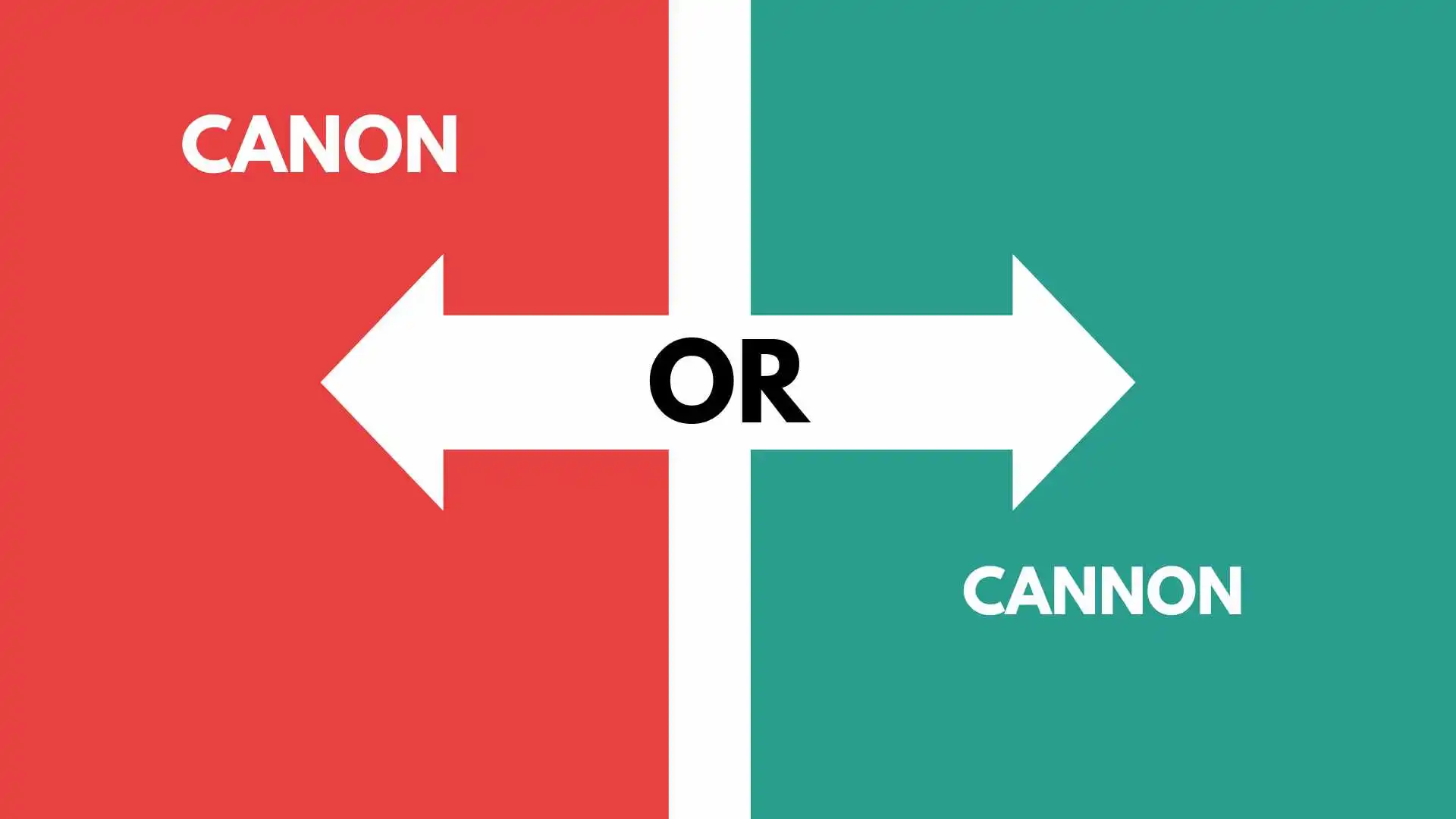
Canon (one “n”) refers to an official set of rules, religious texts, or accepted works (like “canon” in a fandom). Cannon (two “n”s) is a large military weapon that fires projectiles. Different meanings, different spelling easy once you know the trick! 🔑
What Does “Canon” Mean? 📖
Canon is a noun that generally refers to something considered the official, authentic, or accepted standard especially in religion, literature, law, or pop culture fandoms.
Common Uses of “Canon”
- Religious context: A collection of texts officially accepted as authoritative.
- Example: “The Book of Revelation is part of the biblical canon.”
- Literary/artistic context: The body of work considered genuine or officially part of a series.
- Example: “Fans debated whether the spin-off movie was part of the Star Wars canon.”
- Legal context: A church law or decree (this is where people often confuse it with “cannon law” it’s actually canon law).
- Example: “Canon law governs many internal matters of the Catholic Church.”
- General/figurative use: An accepted set of standards or principles.
- Example: “Shakespeare’s plays are firmly part of the literary canon.”
- Pop culture/fandom slang: Whether an event, character, or storyline is “official” within a franchise.
- Example: “Is that deleted scene considered canon in the Marvel Cinematic Universe?”
💡 Bonus tip: “Canon” can also be an adjective in casual speech “That plot twist is so canon now.”
What Does “Cannon” Mean? 💣
Cannon is a noun referring to a large, heavy artillery weapon that fires cannonballs or shells, typically mounted on wheels or a fixed platform. It’s associated with warfare, ships, and historical battles.
Common Uses of “Cannon”
- Literal military weapon:
- Example: “The pirate ship fired its cannons at the approaching vessel.”
- Historical references:
- Example: “Napoleon’s army relied heavily on cannon fire during the battle.”
- Figurative/idiomatic expressions:
- Example: “He’s a loose cannon you never know what he’ll do next.”
- Example: “She was used as cannon fodder in the corporate restructuring.”
- Sports slang (especially soccer/football):
- Example: “He’s got a cannon for a right foot that shot was unstoppable!”
- Billiards term (mainly British English):
- Example: “He played a clever cannon shot to sink two balls at once.”
Canon Camera Currys
Currys is a popular UK retailer where you can find a range of Canon cameras, including DSLR, mirrorless, and compact models. Customers can compare camera specifications, prices, and available features before making a purchase. Currys may also offer accessories such as lenses, memory cards, batteries, and camera bags. Availability and prices can vary depending on the model and current offers.
Canon Camera U.S.A. Website
The official Canon Camera U.S.A. website provides detailed information about Canon cameras and related products available in the United States. You can explore different camera models, compare features, check specifications, and find compatible lenses and accessories. The website also provides product support, manuals, drivers, and software. It is a useful source for checking official Canon product information.
Canon Camera That Connects to Phone
Many modern Canon cameras can connect to a smartphone using Wi-Fi, Bluetooth, or the Canon Camera Connect app. This connection allows users to transfer photos and videos from the camera directly to their phone. Some compatible models also let you control the camera remotely from a smartphone. The exact connection features depend on the specific Canon camera model.
Canon Camera Back Market
Back Market is an online marketplace that offers refurbished and pre-owned electronics, including Canon cameras. You may find different Canon camera bodies, lenses, and accessories at prices that can be lower than buying new. Before purchasing, check the camera’s condition, included accessories, warranty, and seller information. Available Canon models and prices can change frequently.
Canon vs Cannon: Comparison Table 📊
| Feature | Canon | Cannon |
| Number of “n”s | One “n” | Two “n”s |
| Part of Speech | Noun (sometimes adjective) | Noun |
| Core Meaning | Official rules, sacred texts, accepted works | Large weapon that fires projectiles |
| Common Context | Religion, literature, fandoms, law | Military, history, idioms, sports |
| Example Sentence | “The novel became part of the classic canon.” | “The soldiers loaded the cannon before dawn.” |
| Idiomatic Use | “Canon” (fandom slang for official content) | “Loose cannon,” “cannon fodder” |
| Pronunciation | KAN-uhn | KAN-uhn (same sound, different spelling!) |
Yes they’re homophones, which is exactly why people confuse them so often. 🎧 They sound identical when spoken, so the mix-up almost always happens in writing.
Common Mistakes People Make ❌
- Writing “cannon law” instead of “canon law”
- ❌ “The priest explained cannon law to the congregation.”
- ✅ “The priest explained canon law to the congregation.”
- Writing “canon fodder” instead of “cannon fodder”
- ❌ “The new hires felt like canon fodder.”
- ✅ “The new hires felt like cannon fodder.”
- Confusing fandom “canon” with a weapon
- ❌ “Is that scene cannon in the show?”
- ✅ “Is that scene canon in the show?”
- Using “loose canon” instead of “loose cannon”
- ❌ “He’s such a loose canon at work.”
- ✅ “He’s such a loose cannon at work.”
Memory Trick to Never Mix Them Up Again 🧠
Here’s a simple mnemonic to lock this in permanently:
“Cannon” has two N’s, just like it has two wheels (or takes two hands to fire) big, heavy, and doubled up. 💥
“Canon” has one N, just like there’s one official rulebook or one true version of the story. 📜
Another fun trick:
- C-A-N-N-O-N = “Can Not Not… BOOM” (two N’s, double the firepower)
- C-A-N-O-N = “Can On” as in, the rules that are “on” and officially accepted
Pick whichever trick sticks best for your brain! 🧩
Real-Life Examples From Everyday Communication 🗣️
📧 In Emails
“Please review the attached document to ensure it aligns with our company’s editorial canon before publishing.”
📱 On Social Media
“Just watched the new episode and I NEED to know if that flashback is canon 😭 #FandomDebates”
📰 In News Writing
“Historians recovered an 18th-century cannon from the shipwreck site off the coast.”
🎓 In Academic Writing
“The professor argued that certain overlooked female authors deserve a place in the literary canon.”
💬 In Everyday Speech
“Watch out for him, he’s a total loose cannon when he’s stressed.”
British vs American English: Any Differences? 🇬🇧🇺🇸
Good news there’s no major spelling difference between British and American English for these two words. Both “canon” and “cannon” are spelled the same way in both dialects.
However, usage nuances exist:
| Region | Notable Usage |
| British English | “Cannon” is used in billiards/snooker as a specific shot type |
| American English | “Cannon” is more commonly used in sports slang (“he’s got a cannon arm”) |
| Both | “Canon” is used identically in religious, literary, and fandom contexts |
So no matter where you’re writing from, the spelling rules stay the same just the flavor of usage might shift slightly. 🌍
Trending Usage: Why “Canon” Is Everywhere Online Right Now 📈
Thanks to fandom culture (Marvel, Star Wars, anime, K-dramas, and even TikTok relationship trends), the word “canon” has exploded in popularity as slang. You’ll now see phrases like:
- “That’s not canon.”
- “Canon event” (a life experience considered a defining, inevitable part of someone’s story thanks, Spider-Man: Into the Spider-Verse!)
- “Make it canon.”
This is a great example of how grammar tips and pop culture collide understanding correct spelling helps you use trending slang accurately instead of embarrassingly misspelling it in a viral post. 😉
FAQs: People Also Ask ❓
1. Is “canon” the same as “cannon”? No.
“Canon” (one N) means official rules or accepted works, while “cannon” (two N’s) is a weapon. They’re homophones but have completely different meanings.
2. What is a “canon event”? It’s slang (popularized by pop culture) for a life event or experience considered an unavoidable, defining part of someone’s personal story regardless of whether it’s positive or negative.
3. Is it “canon law” or “cannon law”? It’s canon law referring to church or religious legal codes. “Cannon law” would incorrectly suggest laws about weapons!
4. What does “loose cannon” mean? It’s an idiom describing an unpredictable person who might cause trouble or act without thinking things through always spelled with two N’s.
5. Can “canon” be used as a verb? No, “canon” is a noun (and informally an adjective, as in “that’s so canon”). It is not used as a verb in standard English.
6. Why do people confuse canon and cannon so often? Because they’re homophones they sound exactly the same when spoken so the mistake usually only shows up in writing.
7. Is “cannon fodder” spelled with one N or two? Two N’s it’s cannon fodder, referring to soldiers (or people) treated as expendable.
8. Does British English spell these words differently than American English? No, the spelling is identical in both. Only some contextual/slang usage patterns differ slightly.
Final Takeaway: Canon or Cannon? 🎬
Here’s your cheat sheet to walk away with:
- ✅ Canon = official rules, sacred texts, accepted fandom storylines (one N)
- ✅ Cannon = a big weapon that fires things, and idioms like “loose cannon” (two N’s)
- ✅ They’re homophones, so the mistake only shows up in writing proofread carefully!
- ✅ Use the mnemonic: two N’s, double the firepower for “cannon.”
Now you’re fully equipped to use both words with confidence you’re debating your favorite fandom’s canon or writing a historical essay about 18th-century cannons. Next time you pause and think “wait, which one is it again?” just remember: one N for rules, two N’s for booms. 🎉
Read More About This
Cleanup or Clean Up: Grammar Rules and Examples for 2026
Without or Whitout: Which Spelling Is Correct? Complete Grammar & Usage Guide 2026
Label or Lable: Which Spelling Is Correct? Complete Grammar & Usage Guide 2026
Halves or Halfs: Which Spelling Is Correct? 2026

Olivia Bennett is a passionate English grammar writer at GrammBoost.com who loves making grammar simple and easy to understand. She specializes in spelling, word differences, punctuation, and everyday English usage. Through clear explanations and practical examples, Olivia helps students, writers, and professionals write with greater confidence and accuracy.