Have you ever typed the word “fulfill” (or was it “fulfil”?) and suddenly your brain just… froze? 🧠 You stare at the word, it starts looking weird, and now you’re not sure if you added one “L” too many or one too few.
Don’t worry this happens to almost everyone, and it’s one of the most searched spelling confusions in English.
The good news? This isn’t actually a grammar mistake it’s a spelling difference between British and American English. Once you know the rule, you’ll never second-guess yourself again.
Quick Answer 🎯
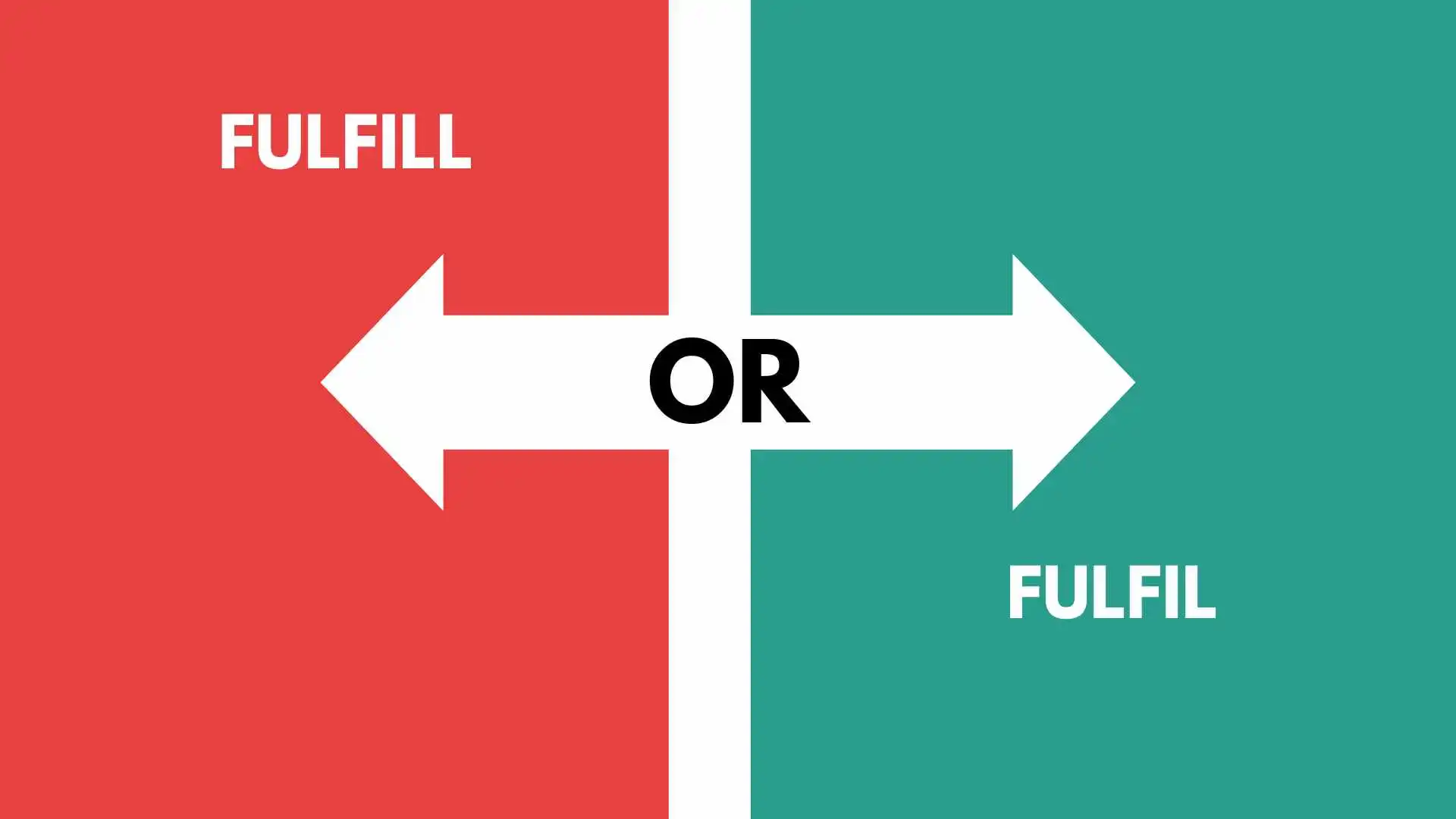
“Fulfill” (with double L) is the American English spelling, while “fulfil” (with a single L) is the British English spelling. Both mean the same thing to complete, achieve, or satisfy something the only difference is regional spelling style.
Understanding the Basics 🧠
What Does “Fulfill” Mean? 🇺🇸
Fulfill means to carry out, achieve, or satisfy a duty, promise, wish, or requirement. It’s the spelling used in American English.
Examples:
- She worked hard to fulfill her dream of becoming a doctor. 🩺
- The company failed to fulfill its contract on time.
- He finally fulfilled his promise to visit his grandmother.
- This job doesn’t fulfill me anymore I need a new challenge.
What Does “Fulfil” Mean? 🇬🇧
Fulfil has the exact same meaning as “fulfill” to complete or achieve something but it’s spelled with a single L, following British English spelling conventions.
Examples:
- She hopes to fulfil her lifelong ambition of writing a novel. 📖
- The manager didn’t fulfil his responsibilities properly.
- They fulfilled all the requirements for the scholarship.
- His volunteer work helps him fulfil a sense of purpose.
Notice: Both words are pronounced exactly the same way the difference is purely in spelling, not meaning or sound. 🔊
Fulfill vs Fulfil: Comparison Table 📊
| Feature | Fulfill (American English) 🇺🇸 | Fulfil (British English) 🇬🇧 |
| Spelling | Double L | Single L |
| Meaning | To complete, achieve, satisfy | Same meaning |
| Pronunciation | /fʊlˈfɪl/ | /fʊlˈfɪl/ (identical) |
| Region used | United States, Canada (mostly) | UK, Australia, India, most Commonwealth countries |
| Past tense | Fulfilled | Fulfilled |
| Present participle | Fulfilling | Fulfilling |
| Noun form | Fulfillment | Fulfilment |
| Example sentence | “She fulfilled her goal.” | “She fulfilled her goal.” |
Interesting note: Even though “fulfil” only has one L in its base form, both British and American English add two L’s in “fulfilled” and “fulfilling” this trips up a LOT of people! 😅
How to Tell Them Apart 🔎
The “Double L for America” Memory Trick ✋
Here’s a simple mnemonic to lock this into your memory:
“America likes it BIG double L, double everything!” 🇺🇸 “Britain keeps it simple single L, less is more.” 🇬🇧
Another easy trick:
- Fulfill = Full + Fill → Americans keep both “full” words looking complete with double L’s.
- Fulfil = Ful + Fil → British English trims it down to a single L, just like it trims the U in “colour” → “color” (wait, that’s reversed but the “British keeps it shorter in some, longer in others” idea still helps some learners remember there’s a pattern of regional variation).
Simplest trick of all: If you’re writing for a US audience (American blog, app, resume) → use fulfill. If you’re writing for a UK audience (British website, UK job application) → use fulfil.
Common Mistakes People Make 🙈
- Mixing spellings in the same document. Writing “fulfil” in one paragraph and “fulfill” in another looks inconsistent and unprofessional.
- Forgetting the double L in “fulfilled” and “fulfilling.” Even British English uses double L here a very common trap!
- Assuming one spelling is “more correct.” Neither is wrong it simply depends on which English variant you’re using.
- Autocorrect confusion. Many phone keyboards are set to US English by default, which can silently change “fulfil” to “fulfill” without you noticing.
- Overusing the word in formal writing. While correct, “fulfill/fulfil” can sound repetitive synonyms like achieve, complete, satisfy, or accomplish can add variety.
Real-Life Examples & Usage Notes 🗣️
Real-Life Examples 💬
From an American job application email:
“I’m confident that I can fulfill the responsibilities outlined in this role and contribute meaningfully to the team.”
From a British news article:
“The government has pledged to fulfil its promise of improved healthcare funding by next year.”
From a social media caption:
“Finally fulfilling my dream of traveling solo across Europe! ✈️🌍 #goals”
From academic writing (UK university essay):
“The study aims to fulfil the research objectives outlined in the introduction.”
From everyday speech:
“I just want a job that actually fulfills me, you know?”
These examples show that the word choice often comes down to where the writer or publication is based not a strict grammar rule.
Usage Notes: British vs American English 🌍
| Word Type | British English 🇬🇧 | American English 🇺🇸 |
| Base verb | Fulfil | Fulfill |
| Past tense | Fulfilled | Fulfilled |
| Present participle | Fulfilling | Fulfilling |
| Noun | Fulfilment | Fulfillment |
| Common in | UK, Australia, New Zealand, India | USA, Canada (often) |
Fun fact: This single-L vs double-L pattern shows up in other words too, like skilful (UK) vs skillful (US), and enrol (UK) vs enroll (US). Once you spot the pattern, spelling gets a lot easier! 💡
Related Keywords & Search Insights 🔍
If you’re researching this topic, here are related terms worth knowing:
- Fulfill vs fulfil meaning
- Fulfilment vs fulfillment spelling
- British vs American English spelling differences
- Correct spelling of fulfill
- Grammar tips for spelling variations
- Common English spelling mistakes
- English usage rules
Understanding these related terms can help you write more confidently across both British and American English contexts.
FAQs: People Also Ask ❓
1. Is “fulfil” a real word?
Yes, “fulfil” is a completely correct and standard spelling in British English it’s not a typo or mistake.
2. Is “fulfill” spelled with one L or two?
It depends on the English variant: American English uses “fulfill” (double L), while British English uses “fulfil” (single L).
3. Why do both spellings add double L in “fulfilled”?
This is a quirk of English spelling rules even British English adds an extra L when forming “fulfilled” and “fulfilling,” regardless of the single-L base spelling.
4. Which spelling should I use in a resume or CV?
Use “fulfill” if applying to US-based companies, and “fulfil” if applying to UK, Australian, or other Commonwealth-based companies.
5. Is “fulfillment” or “fulfilment” correct?
Both are correct depending on region: fulfillment (American English) and fulfilment (British English).
6. Does Google or Microsoft Word mark one spelling as wrong?
It depends on your language settings. If your document is set to “English (US),” it may flag “fulfil” as incorrect, and vice versa for “English (UK).”
7. Are there other words with the same single-L vs double-L pattern?
Yes! Words like skilful/skillful, enrol/enroll, and instalment/installment follow the same British vs American spelling pattern.
Final Takeaway
In conclusion, both Fulfill and Fulfil are correct spellings of the same verb, meaning to complete, satisfy, or carry out something. The main difference is regional usage. Fulfill is the standard spelling in American English, while Fulfil is commonly used in British English and other varieties influenced by British spelling.
Both forms are grammatically correct, so your choice depends on your target audience and preferred style guide. If you are writing for American readers, choose Fulfill. For British readers, Fulfil is the better choice. Understanding this small spelling difference can help you write more accurately and confidently in different forms of English.

James Carter is an English language enthusiast and content writer who loves making grammar simple and easy to understand. He creates clear, beginner-friendly guides on spelling, grammar rules, confusing words, and everyday English usage. His goal is to help readers write with confidence through practical examples, easy explanations, and accurate language tips.