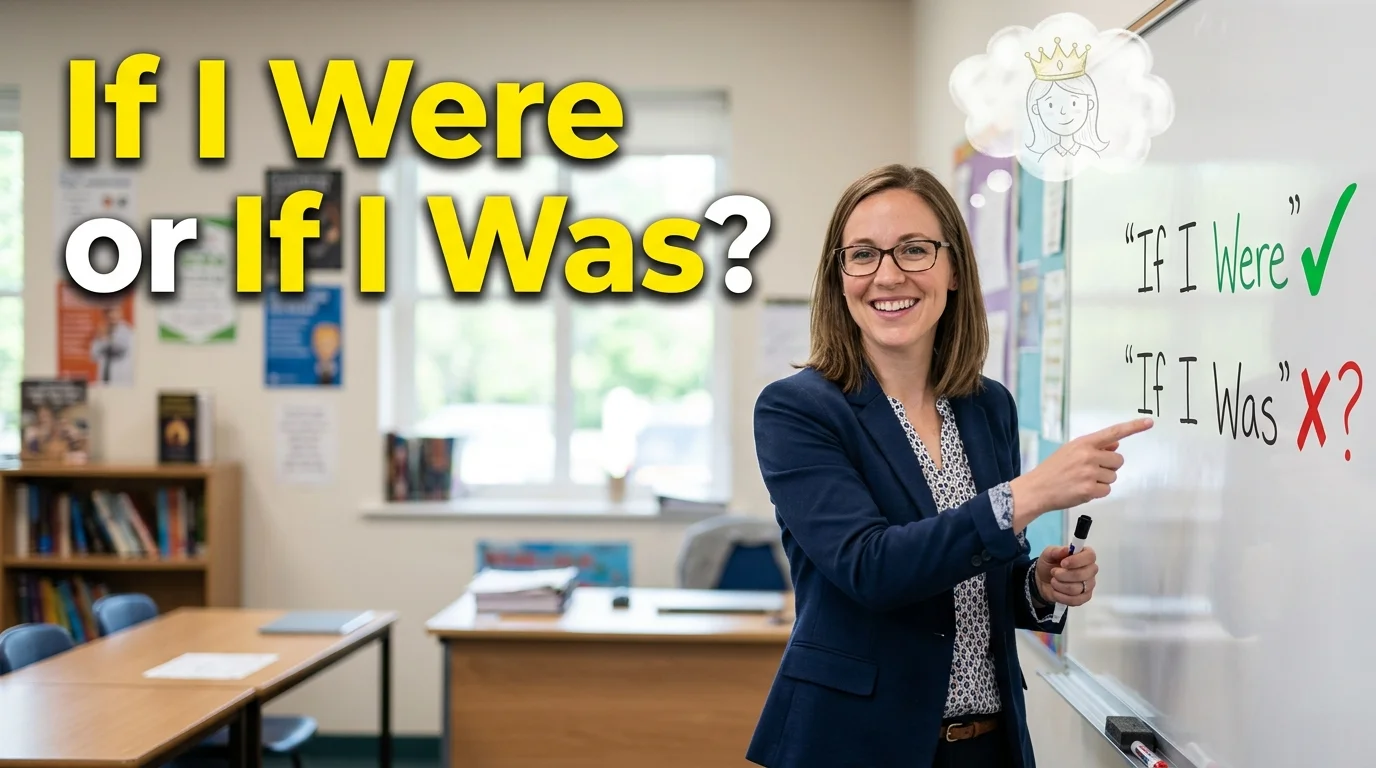
Choosing between “if I were” and “if I was” can be confusing, even for people who speak English every day. Both expressions are used in conversation, but the correct choice often depends on what you want to express. “If I were” is generally preferred when talking about an imaginary situation, a wish, or something that is not true in the present.
For example, “If I were rich, I would travel around the world” describes an unreal or hypothetical situation. In this sentence, “were” is part of a grammatical form known as the subjunctive mood, which English uses for certain imagined or unlikely situations.
On the other hand, “if I was” is commonly used when discussing a possible past situation or wondering whether something actually happened. For example, “If I was rude yesterday, I apologize” suggests that the speaker is unsure whether they were rude. In everyday conversation, you may hear people use both expressions, and informal speech sometimes differs from formal grammar rules.
Quick Answer ⚡
“If I were” is used for hypothetical, unreal, or wishful situations (this is called the subjunctive mood), while “if I was” is used for real, factual situations in the past. Example: “If I were you, I’d apologize” vs. “If I was late, I’m sorry.”
Let’s break this down step by step so it actually sticks. 👇
What’s the Real Difference? 🤔
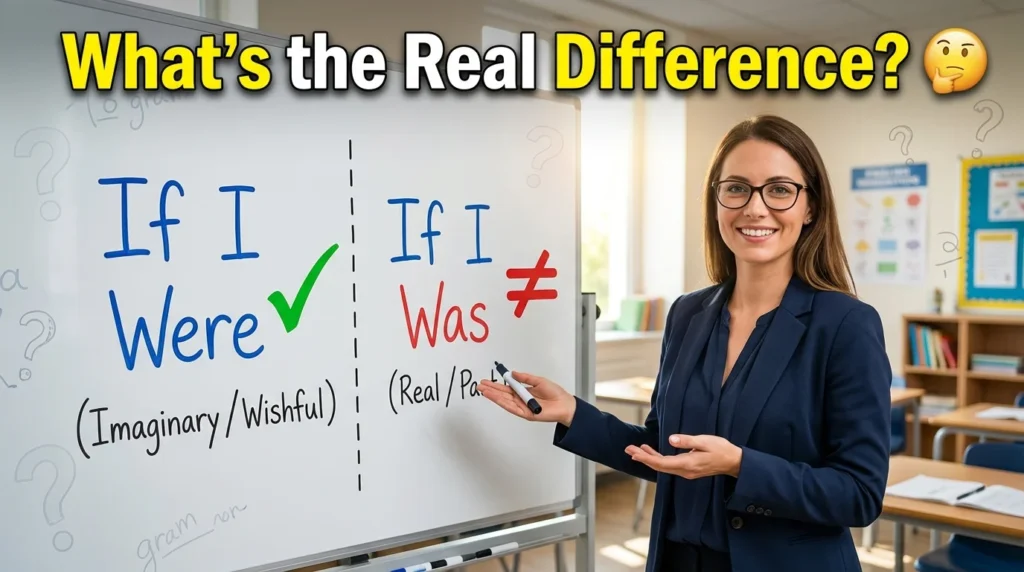
This confusion exists because both phrases look similar, but they serve completely different grammatical purposes.
- “If I were” → used for imaginary, unreal, or hypothetical situations (things that aren’t true or haven’t happened)
- “If I was” → used for real possibilities or facts about the past
This distinction comes from something called the subjunctive mood, which English uses to talk about wishes, imaginary scenarios, or things contrary to fact.
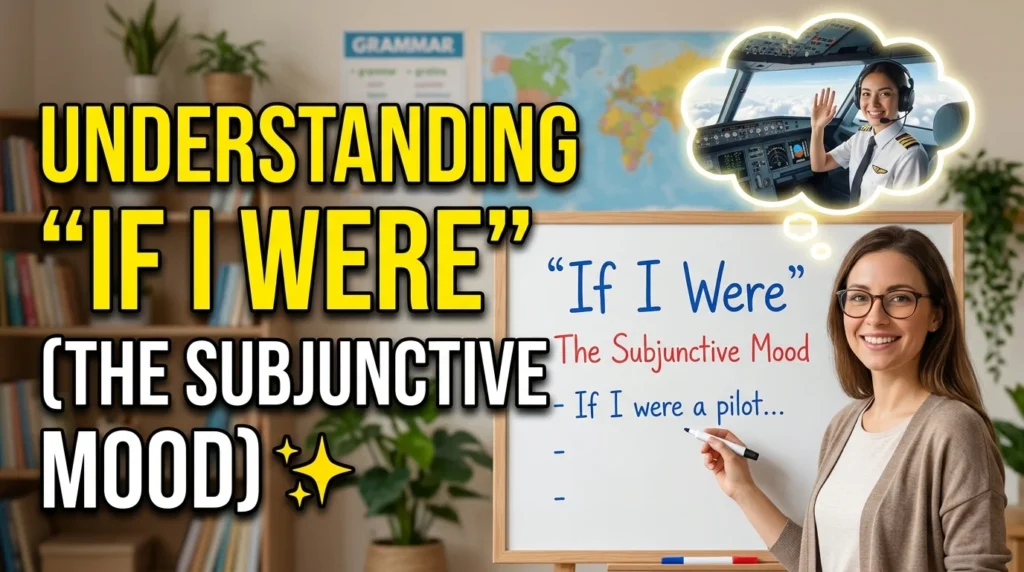
Understanding “If I Were” (The Subjunctive Mood) ✨
Meaning of “If I Were”
“If I were” is used when you’re describing something hypothetical, imaginary, or untrue a situation that doesn’t actually exist right now.
You’ll often see it in:
- Giving advice 💡
- Dreaming or wishing 🌟
- Talking about impossible or unreal situations
Examples of “If I Were”
- If I were you, I’d take that job offer. (giving advice I’m not actually you)
- If I were a millionaire, I’d travel the world. 🌍 (hypothetical I’m not a millionaire)
- If I were taller, I’d play basketball. (unreal condition)
- She acts as if she were the boss. (she isn’t the boss)
- If I were in your shoes, I’d stay calm.
- I wish I were more confident in interviews. 🎤
Notice something? “Were” stays the same even with “I,” “he,” “she,” or “it” because in the subjunctive mood, we don’t follow normal subject-verb agreement rules!
Understanding “If I Was” (Real/Past Conditions) 🕰️
Meaning of “If I Was”
“If I was” is used when talking about something that may have actually happened a real possibility in the past, not a fantasy or wish.
Examples of “If I Was”
- If I was rude earlier, I apologize. (maybe I was, maybe I wasn’t but it’s possible)
- If I was late to the meeting, it wasn’t intentional.
- If I was at the party, I don’t remember it. 😅
- If I was the one who broke it, I’ll fix it.
- She asked if I was feeling okay yesterday.
- If I was wrong about the directions, let’s check the map again.
In these examples, there’s real uncertainty about a fact not an imaginary “what if” scenario.
Comparison Table: If I Were vs If I Was 📊
| Aspect | If I Were | If I Was |
| Grammar Mood | Subjunctive (hypothetical) | Indicative (real/factual) |
| Situation Type | Imaginary, unreal, wishful | Possible, real, factual |
| Common Use | Advice, wishes, dreams | Past facts, uncertain past events |
| Formality | More formal/traditional | More casual/conversational |
| Example | “If I were rich, I’d retire.” | “If I was late, sorry about that.” |
| Follows “Wish”? | ✅ Yes (“I wish I were…”) | ❌ Rare/incorrect |
| Followed by “Was” Ever Acceptable? | In casual speech, yes (informally) | Always acceptable |
The Simple Rule to Remember 🧠
Here’s an easy way to test which one to use:
Ask yourself: “Is this real or imaginary?”
- Imaginary/impossible → use “were”
- Real/possible → use “was”
Memory Trick (Mnemonic) 🎯
“WERE is for WISHES and WEIRD (unreal) situations!”
Both “were” and “wishes” and “weird” start with a “w” sound an easy way to remember that were goes with unreal, wishful ideas. 🌟
Another fun trick:
“If it’s not true, use WERE like Beyoncé, wishing she WERE a boy!” 🎵
Real-Life Examples Across Different Contexts 📬
In Emails
“If I were in charge of this project, I’d extend the deadline by a week.”
In Social Media Posts
“If I was out of line in that comment, my bad didn’t mean it that way 😅”
In News and Journalism
“Analysts say that if the policy were implemented today, inflation could drop significantly.”
In Academic Writing
“If the hypothesis were true, the experiment would have shown different results.”
In Everyday Speech
“If I were you, I wouldn’t stress about it.” “She asked if I was coming to the party tonight.”
See how “were” pairs naturally with imaginary or advice-based statements, while “was” pairs with real, everyday facts?
British English vs American English 🇬🇧🇺🇸
Here’s an interesting twist: this grammar rule applies similarly in both British and American English, but there’s a key cultural difference:
- American English tends to be a bit more flexible and increasingly uses “was” even in hypothetical situations in casual speech (e.g., “If I was rich…” is heard often, even though “were” is technically correct).
- British English, especially in formal writing, tends to preserve the subjunctive “were” more strictly, particularly in professional and academic contexts.
Usage Note: In formal writing (essays, business reports, official documents), always default to “were” for hypothetical situations regardless of American or British English. It’s considered more grammatically correct and professional. ✅
Common Mistakes with “If I Were” and “If I Was” 🚩
- Using “was” in clearly hypothetical situations (in formal writing)
- ❌ “If I was a bird, I would fly away.” (too casual for formal writing)
- ✅ “If I were a bird, I would fly away.”
- Overcorrecting and using “were” for real past situations
- ❌ “If I were late yesterday, I apologize.” (should be “was” it’s a real possibility)
- ✅ “If I was late yesterday, I apologize.”
- Forgetting subject-verb agreement doesn’t apply in the subjunctive
- ❌ “If he was taller, he’d be a better player.” (fine casually, but formally should be “were”)
- ✅ “If he were taller, he’d be a better player.”
- Confusing “wish” statements
- ❌ “I wish I was there.” (common in speech, but grammatically it should be “were”)
- ✅ “I wish I were there.”
Pro tip: In casual conversation and texting, “was” is often accepted informally but if you’re writing an essay, resume, or professional email, always use “were” for hypothetical situations. This small detail boosts your English usage and writing credibility significantly. ✨
Why This Grammar Rule Matters for Writers & Students 🎓
Understanding subjunctive mood isn’t just a “grammar nerd” thing it directly impacts:
- Clarity readers instantly understand if you’re talking about something real or imaginary.
- Professionalism using “were” correctly in essays and reports shows strong command of grammar tips and correct English usage.
- SEO & content quality well-written, grammatically accurate content ranks better and builds trust with readers searching for common mistakes and language help.
This topic is one of the most searched grammar tips online because so many people students, professionals, and even native speakers get tripped up by it daily.
FAQs: People Also Ask 🙋
1. Is “if I were” always more correct than “if I was”?
Not always it depends on context. “Were” is correct for hypothetical/unreal situations, while “was” is correct for real, factual past situations.
2. Is it grammatically wrong to say “if I was” in a hypothetical sentence?
Technically, yes, in formal writing. However, it’s very common and accepted in casual, spoken English.
3. Why does “were” stay the same for “I,” “he,” and “she” in these sentences?
Because it’s using the subjunctive mood, which doesn’t follow normal subject-verb agreement rules it always uses “were,” regardless of the subject.
4. Should I say “I wish I were” or “I wish I was”?
Grammatically, “I wish I were” is correct because “wish” statements express something untrue or unreal.
5. Is “if I were” only used with “I,” or can it apply to other pronouns?
It applies to any singular subject in the subjunctive: “if he were,” “if she were,” “if it were,” etc.
6. Does American English prefer “was” over “were”?
American English is more relaxed with this rule in casual speech, but formal writing in both American and British English still favors “were” for hypothetical situations.
7. What’s an easy way to remember when to use “were”?
Think: “WERE = WISHES and WEIRD (unreal) situations.” If it’s not real, go with “were.”
Final Thoughts:
In conclusion, “if I were” and “if I was” are both used in English, but their meanings and contexts can differ. “If I were” is generally preferred for hypothetical or imaginary situations, such as “If I were rich, I would travel the world.” In contrast, “if I was” is commonly used when referring to a possible real situation in the past, such as “If I was rude, I apologize.”
Understanding this difference helps you choose the correct expression for your sentence. When discussing wishes, dreams, or unlikely situations, remember that “if I were” is usually the better choice.

Sophia Collins is a passionate English grammar writer at GrammBoost.com who loves making the English language simple and easy to understand. She creates clear, beginner-friendly guides on grammar, spelling, word differences, and common language mistakes. Her goal is to help students, writers, and English learners build confidence and improve their writing through practical, easy-to-follow explanations.