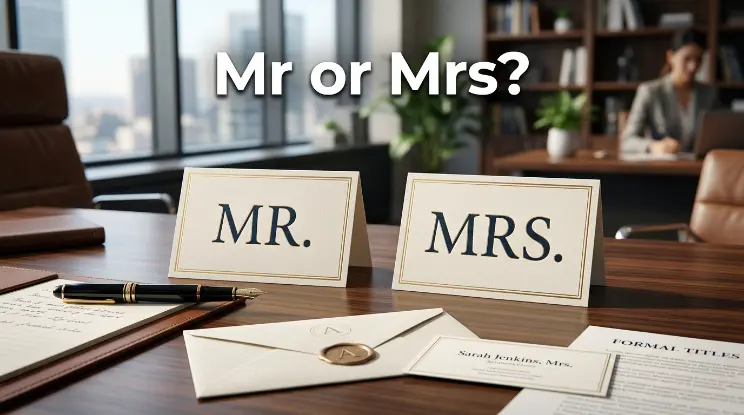
Have you ever stopped while writing an email, filling out a form, or introducing someone and wondered, “Should I use Mr or Mrs?” At the same time, you may have found yourself confused between “prefer” and “perfer.” These small language questions can be surprisingly tricky, especially when you want your writing to look clear, correct, and professional.
The good news is that both questions have simple answers once you understand the basic rules. Mr and Mrs are titles used before a person’s name, but they are not interchangeable, and choosing the right one depends on the person and context. Similarly, prefer is the correct spelling of the word, while perfer is a common spelling mistake.
You are writing a formal email, completing an application, chatting online, or simply improving your English, knowing these differences can help you communicate with greater confidence. In this guide, we’ll explain Mr or Mrs? Prefer or Perfer? in simple English, with clear examples and practical tips.
Quick Answer 🚀
Mr is used before a man’s name (married or not), while Mrs is used before a married woman’s name. If you’re unsure about a woman’s marital status, Ms is the safer, neutral choice.
That’s the short version now let’s break it down properly. 👇
What Does “Mr” Mean?
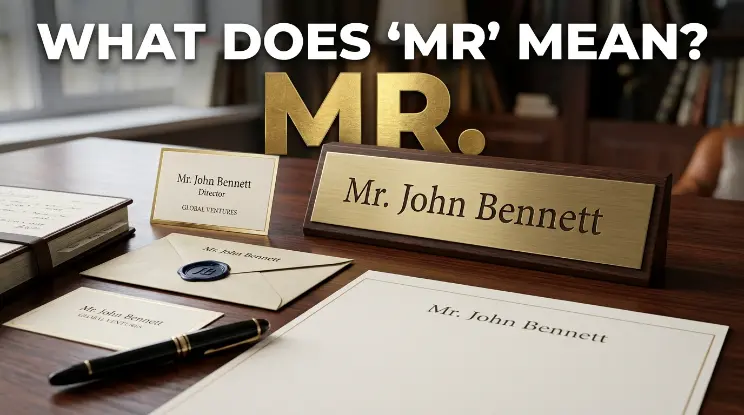
Mr (pronounced “mister”) is a title used before the name of a man. It doesn’t matter whether he’s single, married, divorced, or widowed Mr works for all adult men.
Examples of “Mr” in Sentences
- Mr Ahmed will be leading today’s meeting.
- Please welcome Mr Johnson, our new manager.
- I sent the invoice to Mr Smith yesterday.
- Mr Khan teaches mathematics at our school.
- Have you met Mr Davies, the new neighbor?
Key Points About “Mr”
- ✅ Works for any adult male, regardless of marital status
- ✅ Common in formal writing, emails, and introductions
- ✅ Always followed by a surname (never a first name alone in formal contexts, e.g., Mr Smith, not Mr John)
What Does “Mrs” Mean?
Mrs (pronounced “missus”) is a title used specifically for a married woman. It traditionally shows that the woman has taken her husband’s surname or is known to be married.
Examples of “Mrs” in Sentences
- Mrs Parker picked up her children from school.
- I spoke with Mrs Ali about the project deadline.
- Mrs Thompson has been married for 20 years.
- The letter was addressed to Mrs Roberts.
- Mrs Khan runs a small bakery downtown.
Key Points About “Mrs”
- ✅ Used only for married women
- ✅ Often paired with the husband’s surname (traditionally)
- ✅ Common in formal letters, invitations, and introductions
- ⚠️ Should not be used if you don’t know the woman’s marital status
What About “Ms”? (The Neutral Option) 🤝
Since we’re talking about titles, it’s worth mentioning Ms (pronounced “miz”). This title is used for a woman regardless of her marital status just like “Mr” works for men.
- Use Ms when you don’t know if someone is married.
- Use Ms in professional or formal settings as a safe default.
- Many women today prefer Ms over Mrs or Miss, especially in workplaces.
Example: Ms Carter will present the quarterly report.
Comparison Table: Mr vs Mrs vs Ms
| Title | Meaning | Used For | Example |
| Mr | Mister | Any adult man (married or not) | Mr Wilson signed the contract. |
| Mrs | Missus | A married woman | Mrs Brown attended the ceremony. |
| Ms | Miz | Any woman (marital status unknown/neutral) | Ms Lee is our new director. |
| Miss | Miss | An unmarried woman or young girl | Miss Davis won the award. |
This table is a great quick-reference if you ever forget which title fits which situation. 📝
Common Mistakes People Make ❌
Even native English speakers slip up sometimes! Here are the most common errors:
- Using “Mrs” for an unmarried woman ❌ Mrs Green is my colleague (if she’s not married) ✅ Ms Green is my colleague
- Forgetting the period in American English
- American English: Mr. and Mrs. (with a period)
- British English: Mr and Mrs (no period)
- Using first names instead of surnames ❌ Mr John will call you back. ✅ Mr Smith will call you back.
- Assuming marital status without knowing
- It’s safer to use Ms when unsure, especially in professional emails.
- Mixing up “Mrs” and “Miss”
- Mrs = married
- Miss = unmarried or young girl
Memory Trick to Remember the Difference 🧠
Here’s a simple mnemonic to lock this in:
“Mr has no ring info it works for all men. Mrs has an “r” for “ring” think married. Ms is mysterious marital status unknown!
Another fun trick:
- Mrs rhymes with “kisses” 💋 think of a wedding kiss (married).
- Ms sounds neutral, like “miss-terious” you just don’t know!
British English vs American English 🇬🇧🇺🇸
There’s a small but important difference between British and American usage:
| Feature | British English | American English |
| Punctuation | Mr, Mrs (no period) | Mr., Mrs. (with period) |
| Formality | Slightly less strict | Slightly more traditional in formal letters |
| Common usage | Same core meaning | Same core meaning |
So if you’re writing for a British audience, drop the period. If you’re writing for an American audience, keep it. Simple! ✅
Real-Life Examples 📬
In Emails
Dear Mr. Anderson, Thank you for your prompt response regarding the contract.
In Wedding Invitations
Mr. and Mrs. Thomas Wright request the pleasure of your company…
In News Articles
Mrs Merkel addressed the press following the summit. (used historically for married public figures)
In Everyday Speech
“Have you met Mr. Patel from next door?” “Mrs. Lopez is hosting the neighborhood meeting tonight.”
On Social Media
“Huge congrats to the newest Mr. and Mrs. Carter! 🎉💍 #JustMarried”
Usage Trends and Modern Notes 📊
- Many workplaces now default to Ms for women unless told otherwise, to avoid assumptions about marital status.
- Mr remains unchanged and universal for men.
- In formal or legal documents, Mrs is still used when a woman’s married status is confirmed.
- Wedding-related content (invitations, hashtags, cards) frequently uses “Mr and Mrs” together as a couple’s title.
- Search trends show many people searching “Mr vs Mrs,” “Mr or Mrs meaning,” and “when to use Ms” showing this confusion is very common worldwide.
FAQs: People Also Ask 🙋
1. What is the difference between Mr and Mrs?
Mr is used for men (any marital status), while Mrs is used only for married women.
2. Can I use Mrs for an unmarried woman?
No. If she’s unmarried, use Miss or the neutral Ms instead.
3. Is Ms the same as Mrs?
No. Ms doesn’t reveal marital status, while Mrs specifically means married.
4. Do Mr and Mrs need a period after them?
In American English, yes (Mr., Mrs.). In British English, no (Mr, Mrs).
5. What title should I use if I don’t know someone’s marital status?
Use Ms for women and Mr for men both are safe, neutral defaults.
6. Is “Mrs” outdated?
Not outdated, but many workplaces now prefer Ms for professional communication unless the person specifically prefers Mrs.
7. Can Mrs be used with a woman’s first name instead of her husband’s surname?
Traditionally, Mrs was paired with the husband’s name (e.g., Mrs John Smith), but modern usage often pairs it with the woman’s own name (e.g., Mrs Sarah Smith).
Conclusion:
In conclusion, understanding the difference between Mr. and Mrs. is simple once you know what each title means. Mr. is generally used for a man, regardless of whether he is married or unmarried. Mrs. is traditionally used for a married woman. Choosing the correct title helps your writing sound clear, respectful, and appropriate in emails, letters, forms, and everyday communication.
If you are unsure about a woman’s preferred title or marital status, Ms. is often a suitable neutral option. By using Mr., Mrs., and Ms. correctly, you can communicate more confidently and avoid common mistakes in formal and informal situations.

Sophia Collins is a passionate English grammar writer at GrammBoost.com who loves making the English language simple and easy to understand. She creates clear, beginner-friendly guides on grammar, spelling, word differences, and common language mistakes. Her goal is to help students, writers, and English learners build confidence and improve their writing through practical, easy-to-follow explanations.