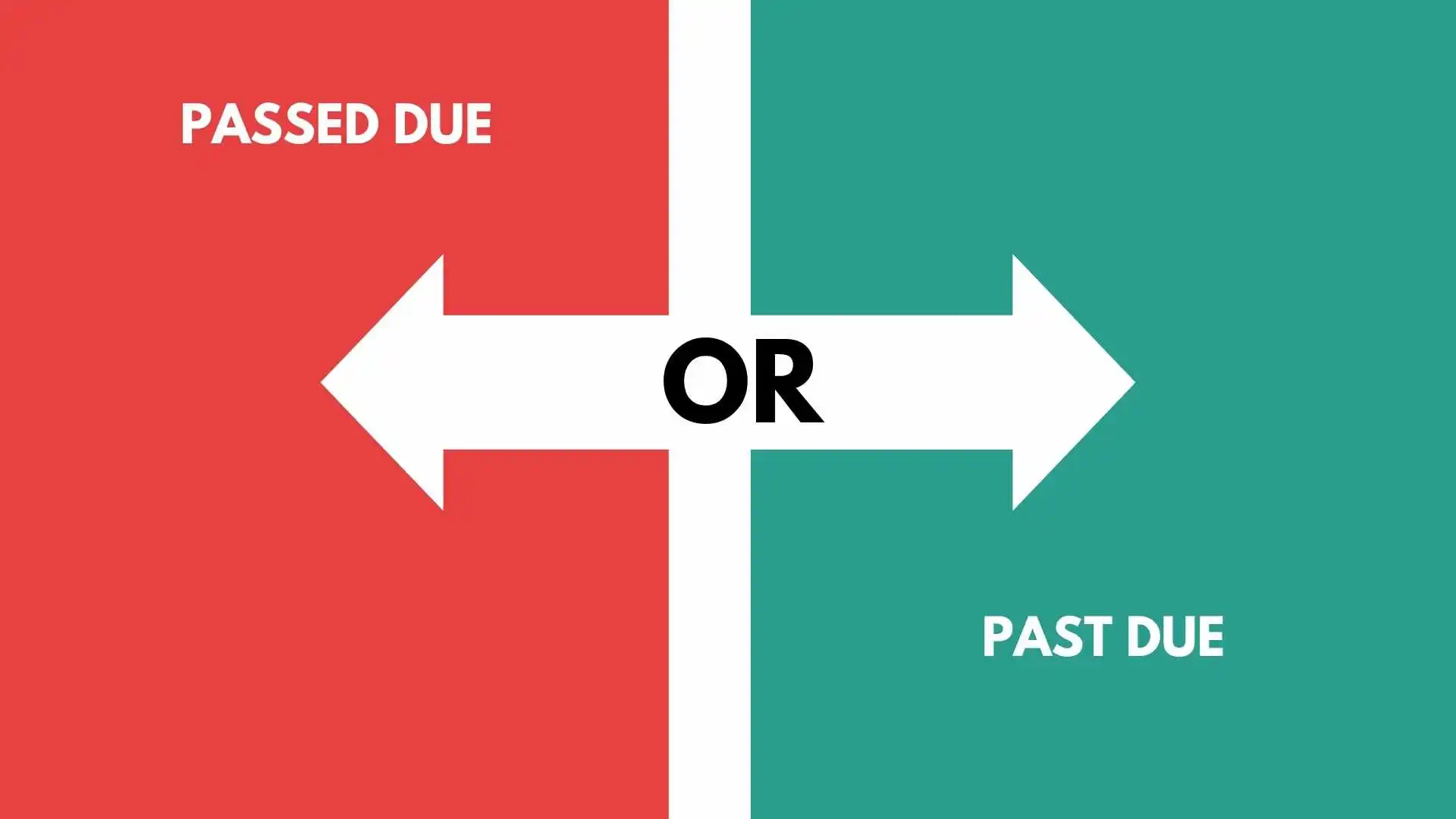
Have you ever typed out a payment reminder and paused, fingers hovering over the keyboard, wondering: “Wait… is it ‘passed due’ or ‘past due’?” 🤔
You’re not alone. This is one of the most common English usage mix-ups out there, and it trips up native speakers just as often as English learners.
The confusion makes total sense too “passed” and “past” sound almost identical when spoken, but they play completely different roles in a sentence.
Good news: by the end of this article, you’ll never second-guess yourself again. 🎉
Quick Answer ⚡
“Past due” is the correct phrase to describe something (like a bill or task) that is overdue. “Passed due” is grammatically incorrect “passed” is a verb, and it doesn’t fit this expression at all.
Let’s break down exactly why, with plenty of examples along the way.
Why This Mix-Up Happens 🔍
The root of the confusion is simple: “past” and “passed” are homophones they sound the same but are spelled differently and serve different grammatical purposes.
- Past = an adjective, noun, preposition, or adverb (relates to time or position)
- Passed = the past tense/past participle of the verb “to pass”
Since our brains often process language by sound first, it’s easy to write “passed” when we mean “past,” especially when typing quickly in an email or text. 📱
What Does “Past Due” Mean? 📌
“Past due” is an adjective phrase used to describe something that hasn’t been completed, paid, or submitted by its deadline. It’s most commonly seen in:
- Billing and finance 💳
- Library books 📚
- Homework and assignments 🏫
- Legal and contractual deadlines ⚖️
Examples of “Past Due” in a Sentence
- Your electricity bill is past due please pay immediately to avoid disconnection.
- The library sent a notice saying my book is past due.
- This invoice is 30 days past due.
- Her mortgage payment became past due after she missed the deadline.
- The report was marked past due by the project manager.
Notice how “past due” always functions like an adjective describing a noun (bill, invoice, payment, book).
What Does “Passed Due” Mean? ❌
Here’s the simple truth: “passed due” is not standard English. It doesn’t appear in dictionaries, style guides, or professional writing because “passed” (a verb) cannot logically combine with “due” (an adjective) in this way.
However, people often mistakenly write “passed due” when they actually mean:
- “past due” (overdue), or
- A sentence involving the verb “passed” and the word “due” separately, such as:
✅ Correct verb usage: “The deadline passed, so the payment is now due immediately.”
Here, “passed” correctly describes the deadline moving by (verb), and “due” separately describes the payment (adjective). But “passed due” as one phrase is a mistake.
Past vs Passed: The Core Grammar Difference 🎓
To really nail this, let’s zoom out and understand the words individually.
“Past” Adjective, Noun, Preposition, or Adverb
| Function | Example |
| Adjective | “In past years, sales were lower.” |
| Noun | “Let’s not dwell on the past.” |
| Preposition | “She walked past the store.” |
| Adverb | “It’s half past three.” |
“Passed” Verb (Past Tense of “Pass”)
| Function | Example |
| Verb (past tense) | “He passed the exam.” |
| Verb (past participle) | “Time has passed quickly.” |
| Verb (moved by) | “The car passed us on the highway.” |
Memory Trick 🧠: If you can replace the word with another verb like “walked,” “moved,” or “went by” use “passed.” If you’re describing a time, condition, or deadline (not an action) use “past.”
💡 Mnemonic: “PASSED has two S’s like ‘action’ has two syllables it’s a doing word (verb). PAST is short and still, like something that’s frozen in time.”
Comparison Table: “Past Due” vs “Passed Due” 📊
| Feature | Past Due ✅ | Passed Due ❌ |
| Grammatically correct? | Yes | No |
| Part of speech | Adjective phrase | Not a standard phrase |
| Common usage | Bills, invoices, deadlines | Rarely used correctly |
| Example sentence | “Your payment is past due.” | “Your payment is passed due.” (incorrect) |
| Dictionary listed? | Yes | No |
| Best used in | Finance, admin, academic writing | Never as a fixed phrase |
Common Mistakes People Make 🚫
Here are the most frequent slip-ups related to this grammar tips topic:
- ❌ “The bill is passed due.” → ✅ “The bill is past due.”
- ❌ “My assignment is passed due date.” → ✅ “My assignment is past the due date.”
- ❌ “It’s passed due time we left.” → ✅ “It’s past due time we left.” (though “high time” is more natural here)
- ❌ Confusing “past due” with “over due” spelled as one word incorrectly remember, “overdue” is one word, and it’s a synonym for “past due”!
Quick Spelling Tip 📝
- Past = P-A-S-T (short, no “sed” ending think “fast,” “last,” “past”)
- Passed = P-A-S-S-E-D (has the “-ed” verb ending, just like “walked” or “talked”)
If the word needs an “-ed” verb ending because something happened, it’s passed. If it’s describing a state or time, it’s past.
Real-Life Examples 🌍
📧 In Emails
“This is a friendly reminder that your invoice #4521 is now past due. Please remit payment at your earliest convenience.”
📱 On Social Media
“Ugh, my rent is officially past due and I’m panicking 😩 #adulting”
📰 In News Headlines
“Millions of Americans Report Credit Card Bills Past Due Amid Rising Inflation”
🎓 In Academic Writing
“Students who submit assignments past due dates may face a grade penalty as outlined in the syllabus.”
🗣️ In Everyday Speech
“Hey, isn’t your library book past due by now?”
In every single one of these examples, only “past due” works never “passed due.”
British vs American English 🇬🇧🇺🇸
Good news here this isn’t a regional spelling difference like “colour” vs “color.” “Past due” is used identically in both British and American English.
That said, there are some regional preferences worth noting:
| Region | Preferred Term | Example |
| American English 🇺🇸 | “past due” | “Your payment is past due.” |
| British English 🇬🇧 | “overdue” (more common) | “Your payment is overdue.” |
Both phrases mean the same thing, but British speakers often lean toward “overdue” in everyday conversation, while American businesses (especially banks and utility companies) frequently use “past due” in official notices.
Related Words You Might Also Confuse 🔗
Since we’re on the topic of correct spelling and commonly confused words, here are a few similar pairs:
- Passed away vs past away → Correct: “passed away” (verb phrase for death)
- In the past vs in the passed → Correct: “in the past” (noun)
- Walked past vs walked passed → Correct: “walked past” (preposition)
- Time has passed vs time has past → Correct: “time has passed” (verb)
Interesting twist, right? Even though “past due” uses “past,” in other contexts “passed” is the correct choice. Context truly is everything! 🔑
Why This Matters for SEO and Professional Writing 💼
If you’re writing invoices, financial content, customer emails, or blog posts, using the correct term matters for:
- Credibility professional writing free from common mistakes builds trust
- Clarity customers understand exactly what action is needed
- SEO search engines and readers both favor correct spelling and standard English usage
Businesses that consistently use “past due” instead of “passed due” appear more polished and trustworthy which matters a lot in finance-related communication. 💰
Frequently Asked Questions (FAQs) ❓
1. Is “passed due” ever correct?
No. “Passed due” is not a recognized or grammatically correct phrase in standard English. Always use “past due” instead.
2. What’s the difference between “past due” and “overdue”?
They’re synonyms! Both describe something not completed or paid by its deadline. “Overdue” is more common in British English, while “past due” is more common in American English, especially in billing.
3. How do I remember when to use “past” vs “passed”?
Use this trick: if you can substitute the word with another action verb (like “moved” or “walked by”), use “passed.” If you’re describing a time or condition, use “past.”
4. Can “past due” be used for things other than bills?
Yes! It can describe overdue library books, late assignments, expired deadlines, or even pregnancy due dates (“She’s past her due date”).
5. Is “past due” one word or two?
It’s always written as two separate words: “past due” never “pastdue” or “past-due” in most standard writing, though hyphenation (“past-due notice”) is sometimes used when it acts as a compound adjective before a noun.
6. Why do people confuse “past” and “passed” so often?
Because they’re homophones they sound identical when spoken, which makes spelling errors extremely common, especially in casual writing like texts and social media.
7. Is there a British equivalent to “past due”?
Yes British English speakers often prefer “overdue” in everyday and even financial contexts, though “past due” is understood as well.
Final Takeaway 🎯
In conclusion, “past due” is the correct phrase when referring to a payment, bill, deadline, or task that has not been completed by its required date. It means that the due date has already passed. For example, “Your payment is past due.” On the other hand, “passed due” is generally incorrect in this context. Remembering this simple difference can help you avoid common writing mistakes. Use “past due” in formal and everyday communication to clearly describe something that is late or overdue.

Olivia Bennett is a passionate English grammar writer at GrammBoost.com who loves making grammar simple and easy to understand. She specializes in spelling, word differences, punctuation, and everyday English usage. Through clear explanations and practical examples, Olivia helps students, writers, and professionals write with greater confidence and accuracy.