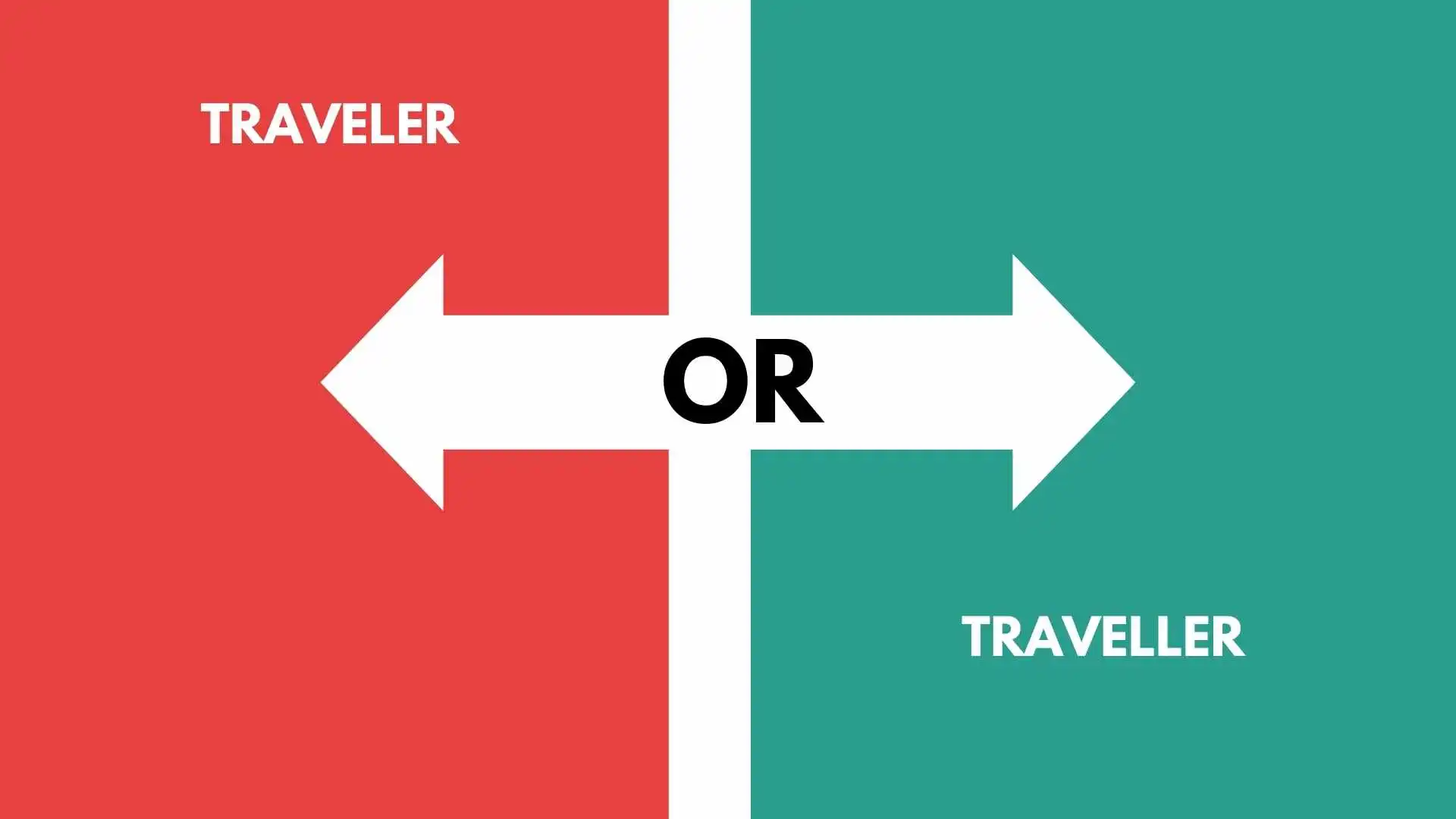
The words Traveler or Traveller may look slightly different, but they share the same meaning. Both refer to a person who travels from one place to another, for adventure, work, education, or relaxation.
The main difference between these two spellings comes from regional English usage. Traveler is the preferred spelling in American English, while Traveller is more commonly used in British English and other regions that follow British spelling rules.
Understanding the difference between Traveler or Traveller can help you write more accurately, especially when creating content for an American or British audience. Although the spelling changes, the meaning and pronunciation remain the same. A traveler can explore beautiful destinations, visit new cultures, or simply journey from one city to another.
Quick Answer 🎯
Both spellings are correct! “Traveler” (one L) is the American English spelling, while “traveller” (double L) is the British English spelling. The meaning is identical someone who travels only the regional spelling convention changes.
Why Does This Confusion Even Exist?

English is spoken across the globe, but it didn’t stay identical everywhere. Over centuries, American English and British English developed different spelling rules, especially around suffixes like -ed, -ing, and -er.
This isn’t a one-off case either. You’ll see the same pattern with:
- Cancel → canceled (US) vs. cancelled (UK)
- Label → labeled (US) vs. labelled (UK)
- Model → modeled (US) vs. modelled (UK)
So “traveler” vs “traveller” is really just one example of a much bigger British vs American English spelling rule. 🌍
The Meaning: What Does “Traveler/Traveller” Actually Mean?
Before we go deeper into spelling, let’s nail down the meaning.
Traveler/Traveller (noun): A person who travels, especially one who goes on trips or journeys, often to different places or countries.
Examples:
- She is a frequent traveler who has visited over 40 countries. (American English)
- He is a frequent traveller who has visited over 40 countries. (British English)
- The hotel offers a discount for solo travelers/travellers.
- Business travelers/travellers often prioritize convenience over cost.
Notice something? The meaning never changes only the spelling shifts depending on your audience. 😊
American English: “Traveler” (One L)
In the United States (and generally in Canadian English too, though Canada sometimes borrows British spellings), the standard spelling is:
✅ Traveler ✅ Traveled ✅ Traveling
Examples in American English:
- “I’m a frequent traveler, so I always pack light.” 🧳
- “The company reimburses traveling expenses for employees.”
- “We traveled across five states last summer.”
British English: “Traveller” (Double L)
In the United Kingdom, Australia, New Zealand, India, and most Commonwealth countries, the standard spelling doubles the L:
✅ Traveller ✅ Travelled ✅ Travelling
Examples in British English:
- “As a seasoned traveller, she knows how to pack efficiently.” 🎒
- “They’ve been travelling through Europe for months.”
- “He travelled to over 20 countries before turning 30.”
Comparison Table: Traveler vs Traveller
| Feature | American English 🇺🇸 | British English 🇬🇧 |
| Noun (person) | Traveler | Traveller |
| Verb (past tense) | Traveled | Travelled |
| Verb (present participle) | Traveling | Travelling |
| Plural | Travelers | Travellers |
| Used in | US, and often the Philippines | UK, Australia, NZ, India, Canada (mixed) |
| Common in | American blogs, US news, US business writing | British newspapers, UK academic writing, Commonwealth countries |
| Example sentence | “The traveler booked her flight early.” | “The traveller booked her flight early.” |
Common Mistakes People Make 🚫
Here are the mistakes even confident writers slip into:
- Mixing spellings in the same document ❌
- Wrong: “The traveller packed her bags. She traveled for six hours.”
- Right (pick one style and stick with it): “The traveller packed her bags. She travelled for six hours.”
- Assuming one spelling is “more correct” ❌
- Neither spelling is wrong! It depends entirely on your audience and region.
- Forgetting consistency in SEO content or resumes ❌
- If you’re writing for a UK audience, don’t randomly switch to “traveler” halfway through your webpage.
- Doubling the L in words that don’t need it ❌
- Some writers overcorrect and add double L’s to words like “travel” itself, writing “travell” this is always incorrect. It’s just travel, with a single L, regardless of region.
Memory Trick to Remember the Difference 🧠
Here’s a simple mnemonic to lock this in:
“America is simple, Britain is double.”
- America likes to keep things simple → one L → traveler
- Britain likes things a bit more traditional and double → double L → traveller
Another fun trick: Think of the extra “L” in “traveLLer” as standing for “Long-standing British tradition.” The double letter is like a little nod to old-school English spelling rules. 😄
Real-Life Examples 📱
In Emails:
“Dear team, our frequent traveler program now offers extra rewards points.” (US-based company)
“Dear team, our frequent traveller program now offers extra rewards points.” (UK-based company)
On Social Media:
“Just became a certified digital nomad 🌴✈️ #traveler #wanderlust” (American influencer)
“Just became a certified digital nomad 🌴✈️ #traveller #wanderlust” (British influencer)
In News Headlines:
“Solo Traveler Shares Budget Tips for Backpacking Europe” USA Today style headline
“Solo Traveller Shares Budget Tips for Backpacking Europe” BBC style headline
In Academic Writing:
“The study analyzed the behavior of international travelers across three continents.” (American journal)
“The study analysed the behaviour of international travellers across three continents.” (British journal notice “analysed” and “behaviour” too, following the same British pattern!)
Other Related Word Pairs to Know 📝
Since we’re talking about English usage and spelling differences, here are a few more common ones to keep in your back pocket:
- Color (US) vs. Colour (UK)
- Organize (US) vs. Organise (UK)
- Center (US) vs. Centre (UK)
- Traveling (US) vs. Travelling (UK)
- Jewelry (US) vs. Jewellery (UK)
Learning these patterns helps you master grammar tips and correct spelling across both English varieties, which is a huge win for anyone doing international English usage work, content writing, or ESL learning.
FAQs: People Also Ask 🙋
1. Is “traveler” or “traveller” correct?
Both are correct! “Traveler” is American English, and “traveller” is British English. Neither is a spelling mistake it depends on which English variety you’re using.
2. Which spelling should I use in the USA?
Use traveler (single L) if you’re writing for an American audience, US-based business, or US publication.
3. Which spelling should I use in the UK?
Use traveller (double L) if you’re writing for a British, Australian, or other Commonwealth audience.
4. Does Canada use “traveler” or “traveller”?
Canadian English is a mix of both American and British influences, but “traveller” (double L) is slightly more common in formal Canadian writing.
5. What about “traveling” vs “travelling”?
Same rule applies: traveling (one L) is American English, and travelling (double L) is British English.
6. Is one spelling more formal than the other?
No, formality has nothing to do with it. It’s purely a regional spelling difference, not a formal-vs-informal issue.
7. Does Google penalize one spelling over the other in SEO?
No. Google understands both spellings and won’t penalize your content either way. However, using the spelling that matches your target audience can slightly improve relevance and click-through rates.
8. Can I use both spellings in the same article?
It’s best to pick one and stay consistent throughout your document, website, or blog post to maintain a professional, polished tone.
Final Thoughts: Traveler or Traveller? 🌟
In conclusion, both Traveler and Traveller are correct spellings, but their usage depends on the type of English you use. Traveler is the preferred spelling in American English, while Traveller is commonly used in British English and many other regions. The meaning remains exactly the same: a person who travels from one place to another. When writing, choose the spelling that matches your audience and stay consistent throughout your content. Understanding this simple spelling difference can help you write more accurately and confidently in English.

Sophia Collins is a passionate English grammar writer at GrammBoost.com who loves making the English language simple and easy to understand. She creates clear, beginner-friendly guides on grammar, spelling, word differences, and common language mistakes. Her goal is to help students, writers, and English learners build confidence and improve their writing through practical, easy-to-follow explanations.