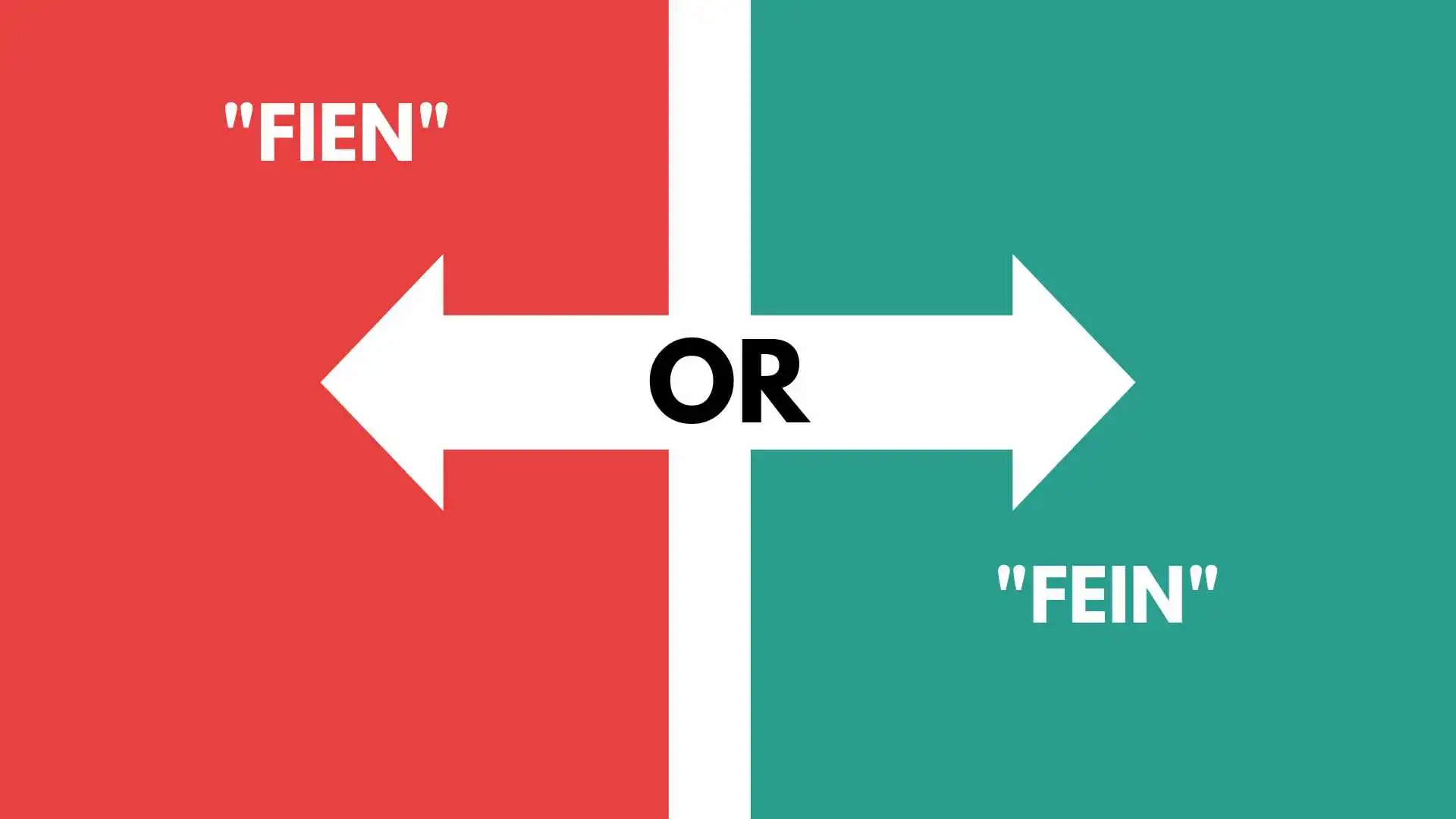
The words “Fien” and “Fein” may look very similar, but their meanings and correct usage can be quite different. This small spelling difference often creates confusion, especially when people see these words in text messages, names, slang, or everyday writing.
“Fein” is commonly used as slang to describe someone who strongly craves or is obsessed with something, while “Fien” may appear as a misspelling or in specific names and contexts.
Understanding the difference between these two terms can help you choose the correct spelling and avoid mistakes in your writing.
Quick Answer ⚡
Neither “fien” nor “fein” is a correctly spelled English word. The word you’re almost certainly looking for is “fiend” meaning a demon, an evil spirit, or (more commonly today) someone who’s obsessively enthusiastic about something, like a “coffee fiend.” ☕
Let’s dig into why this mix-up happens so often, and how to make sure you never misspell it again.
Why Do People Write “Fien” or “Fein” Instead of “Fiend”?
English spelling has a well-earned reputation for being tricky, and this word is a perfect example why. Here’s what’s going on:
- The sound doesn’t match the spelling. “Fiend” is pronounced like feend, so your brain naturally wants to spell it the way it sounds hence “fien.”
- The “ei vs ie” rule confusion. Most of us learned “i before e, except after c” as kids. But “fiend” doesn’t follow the simple version of that rule the way people expect, so the letters get flipped to “fein.”
- Autocorrect and typing speed. When typing fast on social media or texting, the “d” at the end often gets dropped entirely, turning “fiend” into “fien.”
- Confusion with similar-looking words like feign, Fein (a surname), or Fein as it appears in “Sinn Féin” (the Irish political party) none of which mean the same thing as “fiend.”
None of these are “wrong” reasons to make the mistake English spelling genuinely is inconsistent! But now that you know why it happens, it’s much easier to remember the fix. 🧠
What Does “Fiend” Actually Mean?
Fiend (noun) has two main meanings:
1. An evil spirit, demon, or wicked person 😈
This is the older, more literary meaning think ghost stories, folklore, and gothic novels.
Examples:
- “In the old legend, a fiend haunted the abandoned castle.”
- “The villagers believed a fiend lived in the forest at night.”
- “Dracula is often described as a fiend in classic literature.”
2. Someone who’s extremely enthusiastic about (or addicted to) something 🍫
This is the modern, everyday usage and it’s actually the more common one in casual speech and writing today.
Examples:
- “My roommate is a total coffee fiend she drinks five cups a day.”
- “He’s a fitness fiend, hitting the gym every single morning.”
- “I used to be a chocolate fiend before I cut back on sugar.”
- “She’s a speed fiend who loves fast cars.”
So whether you’re writing about ghosts or your friend’s obsession with iced lattes, “fiend” is the word you want not “fien” or “fein.”
Comparison Table: Fien vs. Fein vs. Fiend
| Word | Correct? | Meaning | Example Sentence |
| Fien | ❌ Incorrect spelling | No meaning common misspelling | ~~”He’s a coffee fien.”~~ |
| Fein | ❌ Incorrect spelling (as a common noun) | Only correct as a surname (e.g., Bernie Feinstein) or part of “Sinn Féin” | “Sinn Féin is a political party in Ireland.” |
| Fiend | ✅ Correct spelling | Demon/evil spirit OR an enthusiast/addict | “She’s an absolute fiend for true crime podcasts.” |
📌 Bottom line: If you mean “an evil being” or “someone obsessed with something,” always spell it fiend.
Common Mistakes to Avoid ⚠️
Here’s a quick rundown of the slip-ups people make with this word:
- ❌ “He’s a total dope fien.” → ✅ “He’s a total dope fiend.”
- ❌ “That movie was fein-ishly scary.” → ✅ “That movie was fiend-ishly scary.” (yes, “fiendish” is a real word too!)
- ❌ “She fiened over the new phone release.” → ✅ “She fiended over the new phone release.” (informal slang usage)
- ❌ Confusing “fein” with “feign” (which means to pretend) these are completely different words with different meanings.
Related Word: “Fiendish”
Don’t forget the adjective form! Fiendish means cruel, cunning, or extremely difficult.
Example: “The escape room had a fiendish puzzle that took us an hour to solve.” 🧩
Memory Trick to Never Misspell “Fiend” Again 🧠✨
Here’s a simple mnemonic to lock it in:
“A FIEND is a FRIEND who went bad.”
Notice that “friend” and “fiend” share almost the same letters just swap the “r” and “d” positions! If you can spell “friend” (i before e), you can spell “fiend” (also i before e).
Another trick:
- F-I-E-N-D → Think: “I End up scared” when the fiend shows up. The I-E pattern stays the same in both “friend” and “fiend.”
Once this clicks, you’ll never reach for “fien” or “fein” again. 🎉
Real-Life Examples: Where You’ll See “Fiend” Used
📱 Social Media
“Not me being a total skincare fiend and buying another serum I don’t need 😩”
📧 Everyday Email/Texting
“Lol my brother is such a video game fiend, he’s been on the couch all weekend.”
📰 News & Journalism
Headlines often use “fiend” for dramatic effect, especially in crime reporting or entertainment pieces: “Local ‘Sneaker Fiend’ Turns Hobby Into Business.”
🎓 Academic & Literary Writing
In literature classes, “fiend” appears frequently in discussions of Gothic fiction, Shakespeare (Macbeth famously calls the witches “juggling fiends”), and horror analysis.
💬 Everyday Speech
“I’m such a Netflix fiend I wallow-watched an entire season last night.”
British vs. American English: Any Differences? 🇬🇧🇺🇸
Good news here there’s no spelling difference between British and American English for this word. “Fiend” is spelled the same way on both sides of the Atlantic.
| Region | Spelling | Usage Notes |
| 🇺🇸 American English | Fiend | Common in casual slang (“adrenaline fiend”) |
| 🇬🇧 British English | Fiend | Slightly more common in literary/formal contexts, though slang use exists too |
The only regional note worth mentioning: “Sinn Féin” (with the accented é) is an Irish political term, completely unrelated to the English word “fiend,” and is often what confuses search engines and spellcheckers alike.
Fiend: Keyword & Usage Insights 🔍
If you’re a writer, blogger, or content creator, here are a few quick English usage notes worth knowing:
- “Fiend” pairs naturally with nouns to describe enthusiasts: coffee fiend, shopping fiend, gym fiend, sugar fiend.
- It’s frequently used in informal, conversational writing rather than formal academic writing (except in literary analysis).
- Related searches people often make: “fiend vs friend,” “fiendish meaning,” “fein or fiend,” “how to spell fiend correctly.”
- This falls under the broader umbrella of commonly confused words in English, alongside pairs like “their/there,” “affect/effect,” and “desert/dessert.”
FAQs: People Also Ask ❓
1. Is “fien” a word?
No. “Fien” is not a recognized English word it’s a common misspelling of “fiend.”
2. Is “fein” a word?
Not as a common noun. “Fein” only appears correctly as a surname or as part of the Irish political party name “Sinn Féin.”
3. How do you spell “fiend” correctly?
It’s spelled F-I-E-N-D, pronounced like “feend.”
4. What does “fiend” mean?
It means either an evil spirit/demon or, more commonly today, someone who’s extremely enthusiastic or obsessed with something (e.g., “a chocolate fiend”).
5. Is “fiend” a formal or informal word?
It can be both! It’s used formally in literature and folklore, and informally in everyday slang (e.g., “gym fiend”).
6. What’s the difference between “fiend” and “feign”?
They’re unrelated. “Fiend” is a noun meaning demon/enthusiast, while “feign” is a verb meaning to pretend (e.g., “She feigned surprise”).
7. Is “fiendish” a real word?
Yes! “Fiendish” is the adjective form, meaning cruel, cunning, or very difficult, as in “a fiendish riddle.”
Final Takeaway 🎯
Let’s recap the key point in one sentence: “Fien” and “fein” are not correct English spellings the word you want is “fiend.” Whether you’re describing a demon in a spooky story or your best friend’s obsession with pumpkin spice lattes, “fiend” is spelled with an i-e-n-d, just like its cousin “friend.”
Next time your fingers want to type “fien” or “fein,” just remember the mnemonic: a fiend is a friend who went bad and you’ll spell it right every time. ✅

Olivia Bennett is a passionate English grammar writer at GrammBoost.com who loves making grammar simple and easy to understand. She specializes in spelling, word differences, punctuation, and everyday English usage. Through clear explanations and practical examples, Olivia helps students, writers, and professionals write with greater confidence and accuracy.