GTS Meaning in Text can be confusing when you first see it in a message, comment, or social media conversation. Like many internet abbreviations, GTS can have different meanings depending on the context and the people using it.
In texting, GTS commonly means “Go to Sleep,” especially when someone is ending a conversation late at night or telling a friend to get some rest.
However, it can also mean “Google That Sh*t” in casual online conversations, where someone suggests searching for an answer instead of asking others. Understanding the intended meaning usually depends on the sentence, tone, and situation.
Quick Answer 🎯
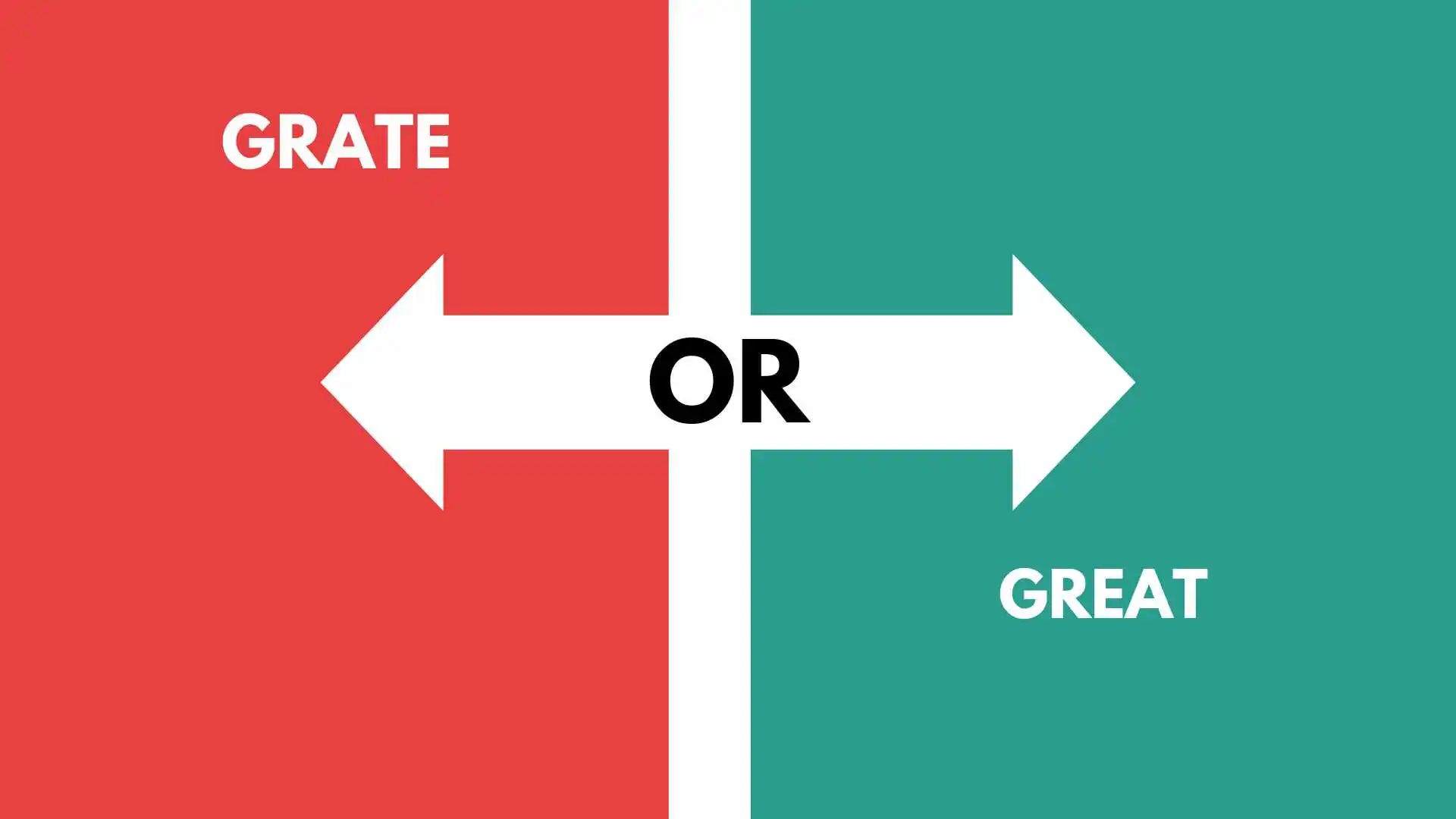
Great means excellent, large, or impressive (as in “a great movie”). Grate means to shred something into small pieces (like cheese) or can describe an annoying, harsh sound. If you’re praising something, you almost always want great not grate.
Understanding the Basics 🧠
What Does “Great” Mean? 🌟
Great is an adjective used to describe something that is:
- Excellent or wonderful
- Large in size, number, or degree
- Important or distinguished
Examples of “Great” in Sentences:
- “That was a great concert last night!” 🎶
- “She’s one of the great leaders of our time.”
- “We had a great time at the beach.” 🏖️
- “There’s a great amount of pressure on new employees.”
- “Thanks, that sounds great to me!”
Notice how “great” is always describing something positive, big, or impressive never an action of shredding or a sound.
What Does “Grate” Mean? 🧀
Grate can be used in a few main ways:
- As a verb to shred food into small pieces using a grater.
- As a verb (figurative) to cause irritation, usually with the phrase “grate on someone’s nerves.”
- As a noun a metal frame, like a drainage grate or fireplace grate.
Examples of “Grate” in Sentences:
- “Can you grate some cheese for the pasta?” 🧀
- “I need to grate the carrots for this salad.”
- “His loud chewing really grates on my nerves.” 😩
- “Water flowed down through the street grate.”
- “The fireplace grate needed cleaning after winter.”
See the difference? Grate always involves shredding, an annoying sound, or a physical object like a metal grid never praise or excellence.
Grate vs Great: Comparison Table 📊
| Feature | Great 🌟 | Grate 🧀 |
| Part of speech | Adjective | Verb / Noun |
| Meaning | Excellent, large, impressive | To shred; to irritate; a metal frame |
| Example sentence | “That’s a great idea!” | “Please grate the cheese.” |
| Common context | Compliments, praise, size, importance | Cooking, irritation, drainage systems |
| Sounds like | /greɪt/ | /greɪt/ (identical pronunciation) |
| Related words | Greatness, greatly | Grater, grated, grating |
How to Tell Them Apart 🔎
Common Mistakes to Avoid 🙈
Because grate and great are pronounced identically, it’s incredibly easy to type the wrong one, especially when writing quickly on social media or in texts.
- ❌ “You did a grate job today!” → ✅ “You did a great job today!”
- ❌ “That’s a really grate idea.” → ✅ “That’s a really great idea.”
- ❌ “I need to great some cheese.” → ✅ “I need to grate some cheese.”
- ❌ “The sound was really irritating, it was great on my nerves.” → ✅ “…it was grating on my nerves.”
Memory Trick (Mnemonic) 🔑
Here’s an easy way to remember which is which:
“GREAT has an ‘EA’ like in ‘AMAZING’ both are positive words.” “GRATE has an ‘A’ like in ‘GRATER’ both relate to shredding.”
Another fun trick:
- G-R-E-A-T → think of “REALLY AMAZING THING” (positive, excellent)
- G-R-A-T-E → think of “GRATING A TASTY EDIBLE” like cheese or veggies 🧀
Whichever mnemonic works best for you, the key is linking great to something positive and grate to something physical like shredding or friction.
Real-Life Examples & Usage Notes 🗣️
Real-Life Examples 💬
Seeing these words in real contexts makes it even easier to remember the difference.
From a text message:
“Hey! Dinner was great last night, thanks for having us over! 😊”
From a recipe blog:
“Grate the parmesan finely before sprinkling it over the pasta.”
From a social media caption:
“Had a great weekend with the fam 💛 #blessed”
From a workplace email:
“Great job on the presentation today the client loved it!”
From a cooking show script:
“Now we’re going to grate the ginger to release its full flavor.”
From everyday speech:
“Ugh, that noise is really starting to grate on me.”
Notice how great always shows up around compliments and positivity, while grate appears in cooking instructions or descriptions of irritation.
Usage Notes: British vs American English 🌍
Good news this is one grammar rule that stays exactly the same in both British and American English. There’s no spelling or usage difference across regions.
| Term | British English | American English |
| Great | Great (same meaning & spelling) | Great (same meaning & spelling) |
| Grate | Grate (same meaning & spelling) | Grate (same meaning & spelling) |
| Grater (tool) | Cheese grater | Cheese grater |
So no matter where you’re writing from London or Los Angeles the rule doesn’t change. That’s one less thing to worry about! 😅
Related Keywords & Search Insights 🔍
If you’re researching this topic, here are some related search terms and grammar tips worth knowing:
- Grate vs great examples
- Homophones in English
- Common English spelling mistakes
- Great vs grate grammar rule
- English usage tips
- Correct spelling guide
- Grammar tips for beginners
Understanding homophones like this one is a great (not grate!) way to improve your overall writing accuracy and confidence.
FAQs: People Also Ask ❓
1. Is “grate” ever used to mean “great”?
No, never. They are two completely different words that just happen to sound the same. Using “grate” to mean excellent is always a spelling mistake.
2. What part of speech is “great”?
“Great” is primarily an adjective, used to describe something as excellent, large, or important.
3. What part of speech is “grate”?
“Grate” can be a verb (to shred or irritate) or a noun (a metal frame or grid, like a drainage grate).
4. Why do people confuse grate and great so often?
Because they are homophones words that sound identical when spoken but have different spellings and meanings, which makes them easy to mix up while typing.
5. Is “grating” always negative?
Not always it commonly describes shredding food (like grating cheese), but it can also describe an annoying sound or feeling, such as “a grating noise.”
6. What’s a simple way to remember the difference?
Remember: “GREAT” is about greatness (excellent), and “GRATE” is about grating (shredding or friction). Linking the spelling to the meaning helps lock it in.
7. Can “great” be used as a noun?
Rarely, but yes “the greats” can refer to legendary or highly respected people, as in “one of the all-time greats.”
Final Takeaway
In conclusion, “grate” and “great” are two different words with completely different meanings and uses. Great is commonly used to describe something excellent, impressive, large, or important, while grate can refer to a metal frame or the verb meaning to annoy or scrape.
Understanding the difference between these words can help you avoid common spelling and grammar mistakes. Remember, if you want to express something positive or excellent, “great” is usually the correct choice. With a little practice, you can easily recognize when to use grate and when to use great in everyday writing and communication.

Olivia Bennett is a passionate English grammar writer at GrammBoost.com who loves making grammar simple and easy to understand. She specializes in spelling, word differences, punctuation, and everyday English usage. Through clear explanations and practical examples, Olivia helps students, writers, and professionals write with greater confidence and accuracy.