Ever been writing an email, a resume, or a school assignment and suddenly frozen mid-sentence, wondering, “Wait… is it ‘license’ or ‘licence’?” 🤔 You type one, it looks wrong. You type the other, it still looks wrong. Suddenly you’re staring at a five-letter word like it’s written in another language.
Don’t worry this happens to so many people, including native English speakers. The confusion isn’t really your fault. It’s because English has two major “flavors” American and British and they don’t always agree on spelling. “License” and “licence” is one of the most common examples of this exact problem.
In this guide, we’ll break it all down in simple terms so you’ll never second-guess yourself again. Let’s get into it! 🚀
Quick Answer 🎯
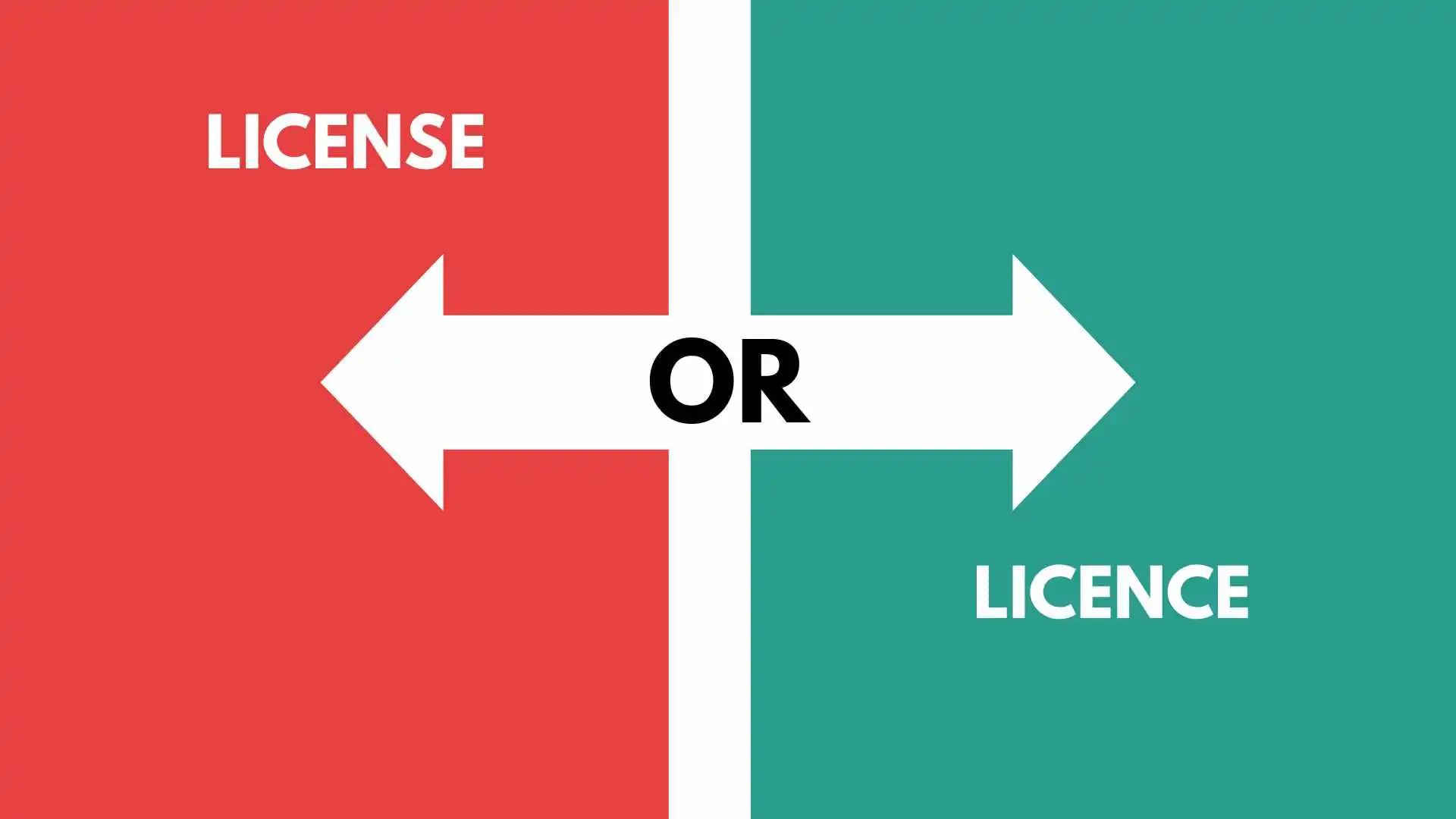
“License” is the spelling used in American English for both the noun and the verb. “Licence” is the British English spelling used for the noun, while British English still uses “license” as the verb. In short: Americans use “license” for everything, while British English splits it “licence” (noun) and “license” (verb).
Understanding the Basics 🧠
What Does “License” Mean? 🇺🇸
In American English, “license” is used as both a noun and a verb. It doesn’t change form based on grammar it’s the same word either way.
As a noun (a permit or official permission):
- I need to renew my driver’s license before it expires. 🚗
- She finally got her business license approved.
- Don’t forget to bring your license to the DMV appointment.
As a verb (to give official permission):
- The state will license new drivers after they pass the test.
- This software is licensed for commercial use.
- The company is fully licensed to operate in three countries.
What Does “Licence” Mean? 🇬🇧
In British English (and also Australian, Canadian, and other Commonwealth variations), “licence” is used only as a noun. The verb form still uses “license” yes, even in British English!
As a noun (British spelling):
- I lost my driving licence and need to apply for a new one.
- You’ll need a TV licence to legally watch live television in the UK.
- Her licence to practice law was granted last year.
As a verb (same in British English):
- The council will license food vendors before the festival.
- This app is licensed for use in the UK and Europe.
Quick way to remember it: In British English, “licence” (with a c) is a thing you hold, and “license” (with an s) is an action you take.
License vs Licence: Comparison Table 📊
| Feature | License 🇺🇸 (American English) | Licence 🇬🇧 (British English) |
| Used as a noun | Yes | Yes |
| Used as a verb | Yes | No always use “license” as the verb |
| Example (noun) | “I have a driver’s license.” | “I have a driving licence.” |
| Example (verb) | “They license new pilots.” | “They license new pilots.” |
| Spelling pattern | Same spelling for noun & verb | Different spelling for noun & verb |
| Common in | USA | UK, Australia, Canada (partially), India |
| Related words | Licensing, licensed, licensee | Licensing, licensed, licensee |
Memory Trick to Never Mix Them Up Again 🧠✋
Here’s a simple mnemonic that grammar teachers love:
“C” is for the “Certificate” (noun) licence. “S” is for the “Sanctioning act” (verb) license.
Or even simpler, if you’re British:
Noun = “c”onfirms you have it. Verb = “s”tarts the action.
If you’re American, though, you can relax a little just use “license” for everything, no matter the grammar role. 🎉
Common Mistakes to Avoid 🙈
- Mixing British and American spelling in the same document. Pick one style (usually based on your audience) and stick with it throughout.
- Using “licence” as a verb in British English. Remember even in the UK, the verb is always “license,” not “licence.”
- Assuming both spellings are interchangeable everywhere. Some countries follow British rules, others follow American always check your target audience.
- Confusing “license” with “licensee” or “licensor.” These are separate words:
- Licensee = the person receiving the license
- Licensor = the person or company granting the license
- Forgetting that spellcheck settings matter. If your document is set to “English (US),” it will always flag “licence” as incorrect and vice versa.
Real-Life Examples 💬
From a UK government website:
“Apply for or renew your driving licence online through the official DVLA portal.”
From a US government website:
“You must renew your driver’s license before the expiration date shown on the card.”
From a business email (American English):
“Please find attached our business license for verification purposes.”
From a business email (British English):
“Please find attached our business licence for verification purposes.”
From social media:
“Finally got my license renewed after waiting 3 hours at the DMV 😩 #americanenglish”
From academic writing (British style):
“The licensing board reviewed the applicant’s licence prior to approval.”
These examples show how the same concept is written differently depending on which English-speaking country you’re writing for.
Usage Notes: British vs American English 🌍
This is one of the classic spelling differences between British and American English, similar to other well-known pairs like:
| American English | British English |
| Color | Colour |
| Organize | Organise |
| Center | Centre |
| License (noun & verb) | Licence (noun) / License (verb) |
Regional Notes 🗺️
- United States 🇺🇸: Always “license,” no exceptions.
- United Kingdom 🇬🇧: “Licence” for nouns, “license” for verbs.
- Canada 🇨🇦: Mixed usage often follows British spelling (“licence”) but influenced heavily by American norms.
- Australia 🇦🇺: Follows British spelling rules, similar to the UK.
- India 🇮🇳: Generally follows British spelling conventions in formal writing.
SEO & Search Insight: If you’re writing content for a global audience, it’s smart to identify your primary audience’s region first this affects not just this word, but dozens of others too.
Related Keywords & LSI Terms 🔍
To boost SEO relevance and cover this topic naturally, here are some related terms worth knowing:
- Grammar tips
- Common mistakes in English
- Correct spelling
- British vs American English
- English usage rules
- Spelling differences
- Driving licence vs driver’s license
- Business license meaning
FAQs: People Also Ask ❓
1. Is “licence” a spelling mistake?
No, it’s not a mistake it’s the correct British English spelling for the noun form. It would only be “incorrect” if you’re writing in American English.
2. Which spelling should I use for a resume or CV?
Use “license” if applying in the US, and “licence” if applying in the UK, Australia, or other Commonwealth countries.
3. Is “license” ever used as a noun in British English?
No, in standard British English, “licence” is reserved for the noun, while “license” is only used as the verb.
4. Do Canada and Australia use the same rule as the UK?
Australia generally follows the UK pattern, while Canada often mixes both American and British spelling depending on context.
5. What is the plural of “license” or “licence”?
The plural forms are “licenses” (American English) and “licences” (British English).
6. Is “licensed” spelled the same in both English types?
Yes, “licensed” is spelled the same in both American and British English the difference only applies to “license/licence” and “licensing.”
7. What’s the difference between “licensee” and “licensor”?
A licensee is the person or company receiving permission, while a licensor is the person or company granting that permission.
Final Takeaway 🎉
Conclusion
In conclusion, both License and Licence are correct spellings, but their usage depends on the type of English you are writing. License is the standard spelling in American English for both the noun and verb. In British English, Licence is generally used as a noun, while License is used as a verb.
Understanding this simple difference can help you avoid spelling mistakes and communicate more clearly. When writing for a specific audience, choose the spelling that matches their preferred form of English. Once you remember this distinction, using License or Licence correctly becomes simple and straightforward.

Sophia Collins is a passionate English grammar writer at GrammBoost.com who loves making the English language simple and easy to understand. She creates clear, beginner-friendly guides on grammar, spelling, word differences, and common language mistakes. Her goal is to help students, writers, and English learners build confidence and improve their writing through practical, easy-to-follow explanations.