Ever stared at a form, an email, or a wedding invitation and frozen at that tiny title before someone’s name? Do you write Mrs. Johnson, Ms. Johnson, or Miss Johnson? 🤔
You’re not alone. This is one of the most common mix-ups in English writing even native speakers get tripped up. The confusion usually comes down to one thing: these three titles all refer to women, but they signal different things about marital status (or, in one case, no status at all).
Good news: once you learn the small but important difference between them, you’ll never second-guess yourself again.
Quick Answer ⚡
Mrs. is for a married woman, Miss is for an unmarried woman (often used for young girls too), and Ms. is a neutral title that works for any woman, married or not. When in doubt, Ms. is the safest, most modern choice.
Let’s break each one down properly.
What Does “Mrs.” Mean? 💍
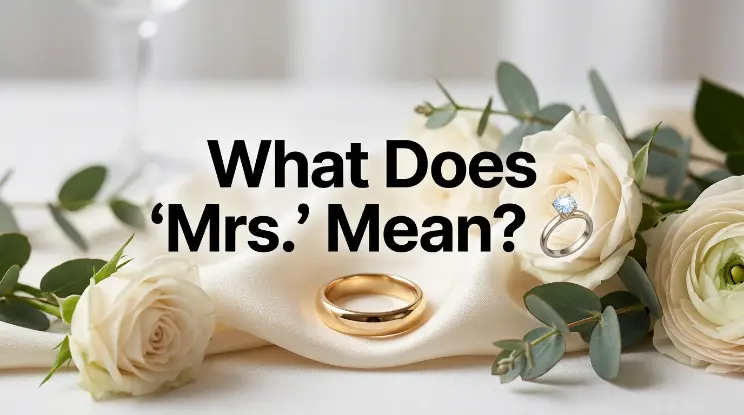
Mrs. is a courtesy title used before the name of a married woman. It’s pronounced “missus” and traditionally comes from the word “mistress” (the female counterpart of “mister”).
Key Points about Mrs.
- Used only for married women.
- Traditionally followed by the husband’s surname (e.g., Mrs. Robert Smith → Mrs. Smith).
- Written with a period in American English (Mrs.) and often without one in British English (Mrs).
Examples
- “Mrs. Patel picked up her kids from school today.”
- “Please welcome our guest speaker, Mrs. Anderson.”
- “The invitation was addressed to Mrs. and Mr. Davis.”
What Does “Miss” Mean? 🎀
Miss is used for an unmarried woman or a young girl. Unlike Mrs. and Ms., it has no period after it because it isn’t an abbreviation it comes directly from “mistress” too, but evolved separately.
Key Points about Miss
- Used for unmarried women and girls.
- Common in schools (“Good morning, Miss Carter!”).
- Widely used in beauty pageants and formal titles (Miss Universe, Miss World).
- No period needed: just Miss, not Miss.
Examples
- “Miss Thompson teaches third grade.”
- “This letter is addressed to Miss Emily Rose.”
- “Miss Universe will be crowned this weekend.”
What Does “Ms.” Mean? 🌸
Ms. (pronounced “miz”) is the gender-neutral, marital-status-neutral title for women. It became popular in the 1970s as part of the push for gender equality, since men have always had one single title Mr. regardless of marital status.
Key Points about Ms.
- Works for married, unmarried, divorced, or widowed women.
- The safest default when you don’t know someone’s marital status.
- Preferred in professional and business writing.
- Written with a period in American English (Ms.), sometimes without in British English (Ms).
Examples
- “Ms. Rodriguez is the new marketing director.”
- “Dear Ms. Lee, thank you for your application.”
- “Ms. Grant will be leading today’s meeting.”
Mrs. vs Ms. vs Miss: Comparison Table 📊
| Title | Meaning | Marital Status | Common Use | Example |
| Mrs. | “Missus” | Married | Traditional, social, formal letters | Mrs. Carter |
| Miss | Unmarried woman/girl | Unmarried | Schools, young women, pageants | Miss Carter |
| Ms. | Neutral title | Unknown/Not specified | Business, professional, modern usage | Ms. Carter |
📌 Memory Trick: Think of it as a scale:
- Mrs. = Married
- Miss = Maiden (not yet married)
- Ms. = Mystery (marital status is a mystery, and that’s okay!)
Common Mistakes People Make ❌
Let’s look at some frequent slip-ups so you can avoid them:
- Using Mrs. for someone whose marital status you don’t know.
- ❌ “Mrs. Green will call you back.” (You don’t actually know if she’s married.)
- ✅ “Ms. Green will call you back.”
- Forgetting the period in American English.
- ❌ “Ms Johnson is here.”
- ✅ “Ms. Johnson is here.” (In American English; British English often drops the period.)
- Adding a period to “Miss.”
- ❌ “Miss. Carter”
- ✅ “Miss Carter” (No period it’s a full word, not an abbreviation!)
- Using the wrong surname after marriage.
- Traditionally, Mrs. + husband’s surname was standard (Mrs. John Doe), but today it’s more common to use Mrs. + her own surname or a combined surname.
- Assuming Miss only applies to children.
- Miss can absolutely apply to adult unmarried women too, not just young girls.
Real-Life Examples 📬
In Emails
“Dear Ms. Patel, thank you for reaching out regarding the project timeline.”
Business emails almost always default to Ms. unless the recipient has specifically stated a preference.
On Social Media
“Congrats to the newly married Mrs. Thomas! 🎉💍”
Social posts often use Mrs. to celebrate a wedding or new married name.
In News Articles
“Ms. Winfrey spoke at the conference about media influence.”
News writing tends to favor Ms. for professional women, regardless of marital status, since it’s considered more respectful and neutral.
In Academic Writing
“The study was conducted by Dr. Elena Ruiz and Ms. Sarah Kim.”
Academic papers typically use Ms. unless a woman holds a specific title like Dr. or Prof.
In Everyday Speech
“Did you meet Miss Carter, the new intern?”
Casual conversation might still use Miss informally for younger or unmarried women.
British vs American English: Any Differences? 🇬🇧🇺🇸
| Feature | American English 🇺🇸 | British English 🇬🇧 |
| Period after title | Always used: Mrs., Ms., Dr. | Often dropped: Mrs, Ms, Dr |
| Formality | Ms. widely used in business | Ms also common, but Mrs still more traditional in social contexts |
| Usage trend | Ms. seen as standard/professional | Similar trend, growing steadily |
The core meaning stays the same across both dialects the only real difference is punctuation (the period/full stop). 📝
Why Does “Ms.” Exist Anyway? 🧐
Good question! Before the 1950s–70s, women were typically labeled by their marital status (Mrs. or Miss), while men only ever had one title: Mr., regardless of marriage.
Feminist linguists and activists pushed for Ms. as an equalizer a title that doesn’t require a woman to disclose her marital status just to be addressed politely. Today, Ms. is the go-to default in professional settings, resumes, cover letters, and workplace communication.
Quick Recap Table 🔑
| Situation | Best Title to Use |
| You know she’s married | Mrs. |
| You know she’s unmarried | Miss (or Ms.) |
| You don’t know her marital status | Ms. |
| Writing a business email | Ms. |
| Addressing a young student | Miss or Ms. |
| Formal wedding invitation | Mrs. (for the married couple) |
FAQs: People Also Ask ❓
1. What is the difference between Mrs., Ms., and Miss?
Mrs. is for married women, Miss is for unmarried women or girls, and Ms. is a neutral title that doesn’t reveal marital status.
2. Is Ms. only for divorced women?
No! Ms. can be used for any woman married, single, divorced, or widowed. It’s simply a neutral, all-purpose title.
3. Should I use Ms. or Miss for a young unmarried woman?
Both work, but Ms. is more modern and professional, while Miss feels more traditional or informal.
4. Does Miss need a period after it?
No. Miss is a complete word, not an abbreviation, so it never takes a period.
5. What title should I use if I don’t know a woman’s marital status?
Always default to Ms. it’s polite, neutral, and safe in nearly every situation.
6. Is Mrs. still commonly used today?
Yes, especially in social and traditional contexts like weddings, invitations, and family settings. In business writing, Ms. is more common.
7. What’s the British spelling difference for these titles?
British English often drops the period: Mrs, Ms instead of Mrs., Ms. The meanings stay identical.
8. Can Ms. be used for teenage girls too?
Yes, Ms. can be used for a woman or girl of nearly any age when marital status isn’t relevant or known.
Final Thoughts: Mrs., Ms., or Miss Which Should You Use? ✅
In conclusion, choosing between Mrs., Ms., and Miss depends on the person you are addressing and the context in which the title is used. Miss is traditionally used for an unmarried woman, while Mrs. is generally used for a married woman. Ms. is a neutral and widely accepted option when a woman’s marital status is unknown, irrelevant, or simply not something you want to mention.
In professional and formal communication, Ms. is often the safest choice unless someone has expressed a different preference. Understanding these differences can help you communicate respectfully, confidently, and appropriately in emails, letters, forms, and everyday conversations.

James Carter is an English language enthusiast and content writer who loves making grammar simple and easy to understand. He creates clear, beginner-friendly guides on spelling, grammar rules, confusing words, and everyday English usage. His goal is to help readers write with confidence through practical examples, easy explanations, and accurate language tips.