Many English learners and even native speakers get confused between planning and planing. 🤔 Since both words exist in English and differ by only one letter, it’s easy to assume they are simply alternative spellings.
However, they have different meanings and are not interchangeable.If you’re writing about making future plans, organizing a project, preparing for an event, or creating a business strategy, choosing the wrong spelling can completely change your sentence.
This guide explains the difference between planning and planing, when to use each one, common mistakes, grammar rules, real-life examples, and easy memory tricks.
Quick Answer
Which Is Correct: Planning or Planing?
Planning (with two n’s) is the correct spelling when talking about making plans or preparing for something. Planing (with one n) is also a real English word, but it has a completely different meaning it refers to smoothing or shaping wood with a plane tool or making something flat.
What Does “Planning” Mean?

Definition of Planning
Planning is the present participle and gerund of the verb plan. It means thinking ahead, organizing tasks, setting goals, or preparing for future actions.
People commonly use planning in:
- Business
- Education
- Project management
- Event organization
- Travel
- Personal goals
- Finance
Examples of “Planning”
We are planning our summer vacation.
She is planning a surprise birthday party.
Good planning leads to better results.
The company is planning to expand next year.
Careful planning can save time and money.
They spent weeks planning the wedding.
Proper planning is essential for success.
I enjoy planning my daily schedule.
What Does “Planing” Mean?
Definition of Planing
Planing is the present participle of the verb plane. It refers to making a surface smooth or flat using a plane, which is a woodworking tool or machine.
It can also refer to certain technical processes, such as:
- Woodworking
- Carpentry
- Metalworking
- Engineering
- Aerodynamics (less commonly, as in a boat planing across water)
Examples of “Planing”
The carpenter is planing the wooden board.
He spent the afternoon planing the edges of the table.
Planing creates a smooth wood surface.
The craftsman is planing the door before painting it.
The machine is planing the timber.
Planing or Planning Meaning
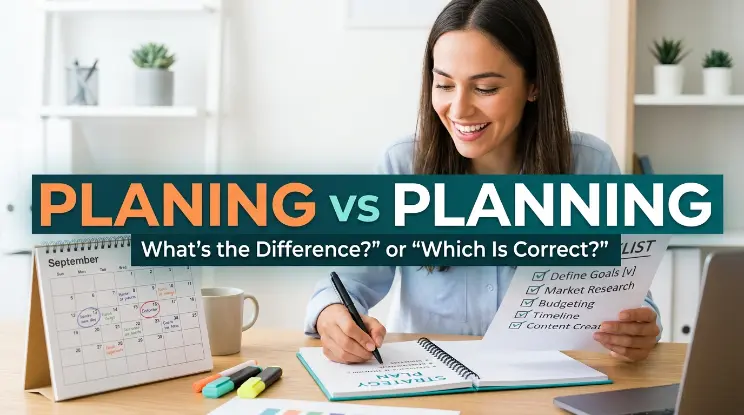
Planning means preparing or organizing something before it happens. It is the correct spelling when you are talking about making arrangements, thinking about the future, or deciding what to do. For example, “I am planning a trip” means you are preparing for a trip. Planing is usually incorrect when you mean making plans. However, “planing” is a real word in a different context, especially when talking about working with wood.
Planning or Planing Wood
When talking about wood, the correct word is planing when you mean smoothing or shaping wood with a plane. Planing wood involves removing thin layers from the surface of a wooden board to make it smoother, flatter, or the desired thickness. For example, “He is planing the wood before building the table.” So, planning means preparing or organizing, while planing can mean working on wood with a woodworking plane.
Planning vs Planing
Comparison Table
| Feature | Planning | Planing |
| Spelling | Two n’s | One n |
| Base Word | Plan | Plane |
| Meaning | Making plans or preparing | Smoothing or flattening a surface |
| Common Usage | Everyday English | Woodworking and technical fields |
| Part of Speech | Gerund / Present Participle | Gerund / Present Participle |
| Most Common Choice | ✅ Yes | Only in specific contexts |
Key Differences
Although the words look similar, they have completely different meanings.
- Planning = Organizing or preparing for the future.
- Planing = Smoothing or shaping a material with a plane.
For example:
✅ We are planning a family trip.
✅ The carpenter is planing a wooden table.
Planning or Planing
| Word | Correct? | Meaning | Example |
|---|---|---|---|
| Planning | ✅ Correct | The act of preparing or organizing something in advance. | We are planning a trip for next month. |
| Planing | ❌ Usually incorrect | “Planing” is not the normal spelling when you mean making plans. | ❌ We are planing a trip. |
| Planning | ✅ Correct spelling | Planning has a double n because it comes from plan + -ing. | She is planning her wedding. |
Why Do People Confuse Planning and Planing?
Similar Spellings
The two words differ by only one letter, making them easy to mix up.
Same Pronunciation for Some Speakers
Depending on the accent, planning and planing may sound very similar.
Spelling Rule Confusion
Many people don’t know that the verb plan doubles the final n before adding -ing.
Why Does “Planning” Have Two N’s?
The Grammar Rule
When a verb ends with:
- One vowel
- Followed by one consonant
The final consonant is usually doubled before adding -ing, especially when the last syllable is stressed.
Examples:
| Base Verb | Correct Form |
| Run | Running |
| Stop | Stopping |
| Sit | Sitting |
| Plan | Planning |
This is why planning has two n’s.
When Should You Use “Planning”?
Correct Situations
Use planning when talking about:
- Events
- Trips
- Meetings
- Businesses
- Goals
- Projects
- Budgets
- Education
Correct Examples
They are planning a new office.
She’s planning her retirement.
Our team is planning next year’s budget.
Good planning prevents problems.
When Should You Use “Planing”?
Correct Situations
Use planing only when referring to:
- Woodworking
- Carpentry
- Construction
- Smoothing surfaces
- Machine tools
Correct Examples
✅ The carpenter is planing the wood.
✅ Planing removes rough edges.
The workshop teaches planing techniques.
Common Mistakes
Mistake 1: Forgetting to Double the N
❌ We are planing our vacation.
✅ We are planning our vacation.
Mistake 2: Using Planning in Carpentry
❌ The carpenter is planning the wood.
✅ The carpenter is planing the wood.
Mistake 3: Assuming They Mean the Same Thing
Although they look alike, the meanings are completely different.
Always think about the context before choosing the word.
Easy Memory Trick
Planning = Making Plans
Think:
Plan → Planning
You’re adding -ing to plan, so remember to double the n.
Planing = Using a Plane
Notice that planing comes from plane.
If someone is using a plane tool, the correct word is planing.
Real-Life Examples
Business Email
“We’re planning a product launch next month.”
Social Media
“I’m planning my dream vacation! ✈️”
School Assignment
“Careful planning improves academic success.”
Construction Site
“The carpenter finished planing the wooden boards.”
DIY Workshop
“Always wear safety glasses while planing wood.”
Everyday Conversation
“We’re planning dinner for Saturday.”
Home Renovation
“The cabinet doors need planing before installation.”
British vs American English
Is There a Difference?
No.
Both British English and American English use:
- Planning for organizing or preparing.
- Planing for woodworking and smoothing surfaces.
The meanings and spellings are the same in both varieties of English.
Usage Trends
Planning Is Extremely Common
You’ll see planning in:
- Business reports
- Travel blogs
- School assignments
- Government documents
- News articles
- Project management
- Everyday conversations
Planing Is Specialized
The word planing is mostly found in:
- Carpentry manuals
- Woodworking books
- Construction guides
- Engineering documents
- Manufacturing industries
Grammar Tips
Doubling the Final Consonant
Many English verbs double the last consonant before adding -ing.
Examples:
| Verb | Correct Form |
| Run | Running |
| Swim | Swimming |
| Stop | Stopping |
| Plan | Planning |
Don’t Confuse Different Base Words
Remember:
- Plan → Planning
- Plane → Planing
Although they look similar, they come from different verbs.
More Example Sentences
Examples Using Planning
We are planning a family reunion.
Good planning reduces stress.
She’s planning to study abroad.
Effective planning improves productivity.
The team is planning a marketing campaign.
They’re planning a charity event.
Financial planning is important for the future.
Careful planning helped complete the project on time.
Examples Using Planing
✅ The carpenter is planing the table.
✅ Planing gives wood a smooth finish.
The workshop demonstrated planing techniques.
He enjoys planing reclaimed wood.
The machine keeps planing the timber evenly.
Frequently Asked Questions (FAQs)
Is it planning or planing?
Both are correct, but they have different meanings. Planning means preparing or organizing, while planing refers to smoothing a surface with a plane.
Why does planning have two N’s?
Because the verb plan follows the English spelling rule that doubles the final consonant before adding -ing.
Is planing a real word?
Yes. Planing is a real English word used mainly in woodworking, carpentry, and manufacturing.
Which spelling should I use when talking about future plans?
Use planning whenever you’re talking about organizing, preparing, or making future arrangements.
What does planing mean in woodworking?
It means smoothing, shaping, or flattening wood using a plane tool or machine.
Is there a British and American English difference?
No. Both British and American English use planning and planing with the same meanings.
How can I remember the difference?
Remember:
- Planning = making plans.
- Planing = using a plane tool.
Conclusion
Although planning and planing differ by just one letter, they have completely different meanings. Planning is the correct word when talking about organizing, preparing, or making future arrangements, while planing refers to smoothing or shaping a surface, especially wood, with a plane.
The easiest way to remember the difference is to think about the base word. If you’re making plans, use planning with two n’s. If you’re using a plane tool in woodworking, use planing with one n. Understanding this simple distinction will help you avoid common spelling mistakes and write with greater confidence.
Read More Articles
Payed Attention or Paid Attention? Correct Usage with Examples for 2026
Send or Sent: Which Word Is Correct? Complete Grammar & Usage Guide 2026
Tyre or Tire: What’s the Difference Between Them? 2026
Niece or Neice: Which Spelling Is Correct? 2026

James Carter is an English language enthusiast and content writer who loves making grammar simple and easy to understand. He creates clear, beginner-friendly guides on spelling, grammar rules, confusing words, and everyday English usage. His goal is to help readers write with confidence through practical examples, easy explanations, and accurate language tips.