If you’ve ever heard someone say “take me or leave me” and paused to wonder what it actually means you’re not alone. 🤔
Some people think it’s just song lyrics (yes, it’s famously the title of a duet from the Broadway musical Rent). Others use it in daily conversation without knowing whether it’s grammatically an idiom, a command, or a casual expression. And a lot of English learners get tripped up on how to use it in a sentence is it rude? Is it confident? Is it correct grammar at all?
This article breaks down the phrase completely: its meaning, its grammar structure, common mistakes people make with it, and how to use it naturally in speech, writing, and even social media captions.
Quick Answer ⚡
“Take me or leave me” is an English idiom meaning “accept me exactly as I am, or don’t accept me at all I won’t change to please you.” It’s a confident, no-compromise expression, grammatically formed as an imperative (command) sentence using two contrasting verbs joined by “or.”
Breaking Down the Phrase: Word by Word
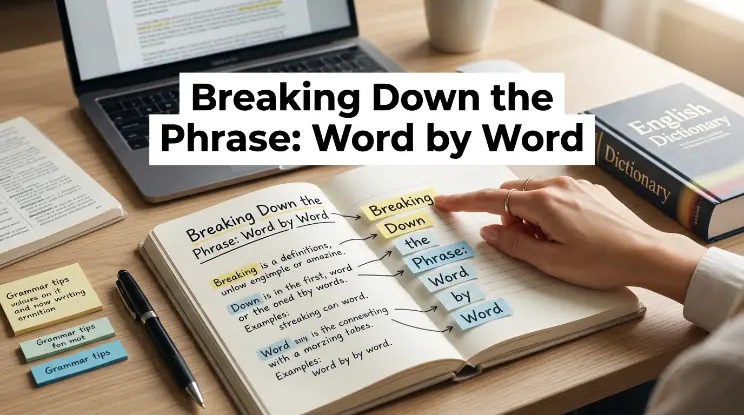
Let’s slow down and look at what’s actually happening grammatically here, because that’s where most confusion starts.
1. “Take” Meaning and Usage
In this phrase, “take” doesn’t mean physically grabbing something. It means to accept, welcome, or embrace someone as they are.
Examples:
- “She knows she’s blunt, but that’s just her take it or leave it.” 🙋♀️
- “I’m not changing my opinion. Take me or leave me.”
- “He offered his final price and said, ‘Take it or leave it.'”
2. “Leave” Meaning and Usage
Here, “leave” means to reject, walk away from, or decide not to accept.
Examples:
- “If you don’t like my honesty, you can leave.”
- “She said, ‘This is who I am leave me if you must.'”
- “You can leave the offer if it’s not good enough for you.”
3. “Or” The Grammar Glue 🔗
The word “or” here is a coordinating conjunction that presents two opposite choices with no middle ground. This is what makes the phrase so powerful it’s binary. There’s no compromise built into the sentence structure.
Comparison Table: Meaning, Usage & Examples

| Phrase | Grammar Type | Meaning | Example Sentence | Tone |
| Take me or leave me | Imperative + coordinating conjunction | Accept me as I am, or don’t accept me at all | “I’m loud and I love it take me or leave me.” | Confident, self-assured |
| Take it or leave it | Imperative (object = “it”) | Accept the offer/deal as is, no negotiation | “That’s my final offer take it or leave it.” | Firm, non-negotiable |
| Love me or leave me | Imperative (romantic variation) | Accept my love/personality fully, or walk away | “Love me or leave me, but don’t try to change me.” | Emotional, romantic |
| Like it or not | Adverbial idiom | Whether you approve or not, it’s happening | “Like it or not, the meeting is at 9 AM.” | Blunt, factual |
Common Mistakes People Make ❌
Here are the most frequent errors learners and even native speakers make with this phrase:
- ❌ “Take me and leave me” Wrong! It should be “or,” not “and,” since the phrase presents a choice, not a combination.
- ❌ “Takes me or leaves me” Incorrect subject-verb agreement. In imperative form, we don’t add “-s” (imperatives use the base verb).
- ❌ “Take or leave me” Missing the repeated pronoun “me” after “take,” which weakens the parallel structure.
- ❌ Confusing it with “give and take”, which is a completely different idiom about compromise. 🚫
Memory Trick 🧠
Think of it like a light switch it’s either ON (take) or OFF (leave). There’s no dimmer switch, no in-between. That visual can help you remember that this phrase never allows a middle option.
Real-Life Examples in Context 📱
In Social Media Captions
“Confidence is knowing your worth. Take me or leave me. 💅✨ #SelfLove #NoApologies”
In Everyday Speech
“Look, I talk with my hands and I laugh too loud take me or leave me!”
In Emails or Professional Contexts (Rare, but Possible)
“This is our final proposal. As discussed, please take it or leave it by Friday.” (Note: In professional writing, “take it or leave it” is more common than “take me or leave me,” since the latter is personal/emotional.)
In Pop Culture 🎭
The phrase gained huge popularity thanks to its use as a song title in the Broadway musical Rent (1996), where two characters express their unwillingness to change for one another. While we won’t reproduce the actual lyrics here (they’re copyrighted), the title itself has become a widely recognized cultural shorthand for “accept me fully or not at all.” If you want to read the actual lyrics, official lyric sites like Genius or the licensed sheet music are the best places to check them out. 🎵
British vs. American English: Any Differences? 🇬🇧🇺🇸
Good news this phrase is used identically in both British and American English. There’s no regional spelling difference or grammar variation here. However:
- American English speakers tend to use it more casually in pop culture and social media contexts.
- British English speakers may lean slightly more toward the classic “take it or leave it” version in business or negotiation contexts.
| Region | Preferred Version | Common Context |
| 🇺🇸 American English | “Take it or leave it” / “Take me or leave me” | Casual speech, pop culture, self-expression |
| 🇬🇧 British English | “Take it or leave it” | Business negotiations, everyday bargaining |
Why This Phrase Trends Online 📈
People often search for this phrase because of:
- Song lyric searches (from Rent and other artists who’ve used similar titles)
- Confidence/self-love quote content on Instagram and Pinterest
- English learners studying idioms and grammar tips
- Writers looking for confident phrasing in personal essays or bios
Related LSI keywords worth knowing if you’re studying this topic: English idioms, common mistakes, correct spelling, grammar tips, English usage, idiomatic expressions, confident phrases, imperative sentences.
FAQs: People Also Ask ❓
1. What does “take me or leave me” mean?
It means accepting someone completely as they are, with no changes or not accepting them at all.
2. Is “take me or leave me” grammatically correct?
Yes! It’s a correctly structured imperative sentence using two contrasting verbs joined by “or.”
3. What’s the difference between “take it or leave it” and “take me or leave me”?
“Take it or leave it” usually refers to a deal, offer, or decision. “Take me or leave me” refers to accepting a person as they are.
4. Is this phrase from a song?
Yes, it’s most famously the title of a song from the Broadway musical Rent, though the phrase existed as a common idiom before that too.
5. Can I use “take me or leave me” in formal writing?
It’s best suited for casual, personal, or creative writing rather than formal or academic writing, since it carries an emotional, conversational tone.
6. Is “take me or leave me” the same as “love me or leave me”?
They’re similar but not identical. “Love me or leave me” is more romantic and emotional, often used in relationships, while “take me or leave me” is broader and can apply to personality or identity.
7. Where can I find the actual lyrics to “Take Me or Leave Me”?
For the full, accurate lyrics, check official and licensed sources like Genius.com or purchase the official sheet music/soundtrack this respects the songwriter’s copyright.
Conclusion: The Key Takeaway 🎯
“Take me or leave me” is a confident English idiom that means accept me fully, exactly as I am, or don’t accept me at all. Grammatically, it’s an imperative sentence joined by the conjunction “or,” creating a clear either/or choice with zero middle ground.
Whether you’re using it in a social media caption, an English lesson, or just explaining your personality to a friend, remember: it’s about self-acceptance and boundaries, not compromise. Use it with confidence and now, correctly too! 💪✨

Olivia Bennett is a passionate English grammar writer at GrammBoost.com who loves making grammar simple and easy to understand. She specializes in spelling, word differences, punctuation, and everyday English usage. Through clear explanations and practical examples, Olivia helps students, writers, and professionals write with greater confidence and accuracy.