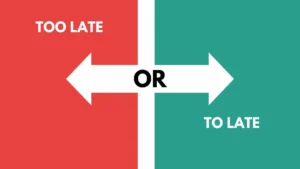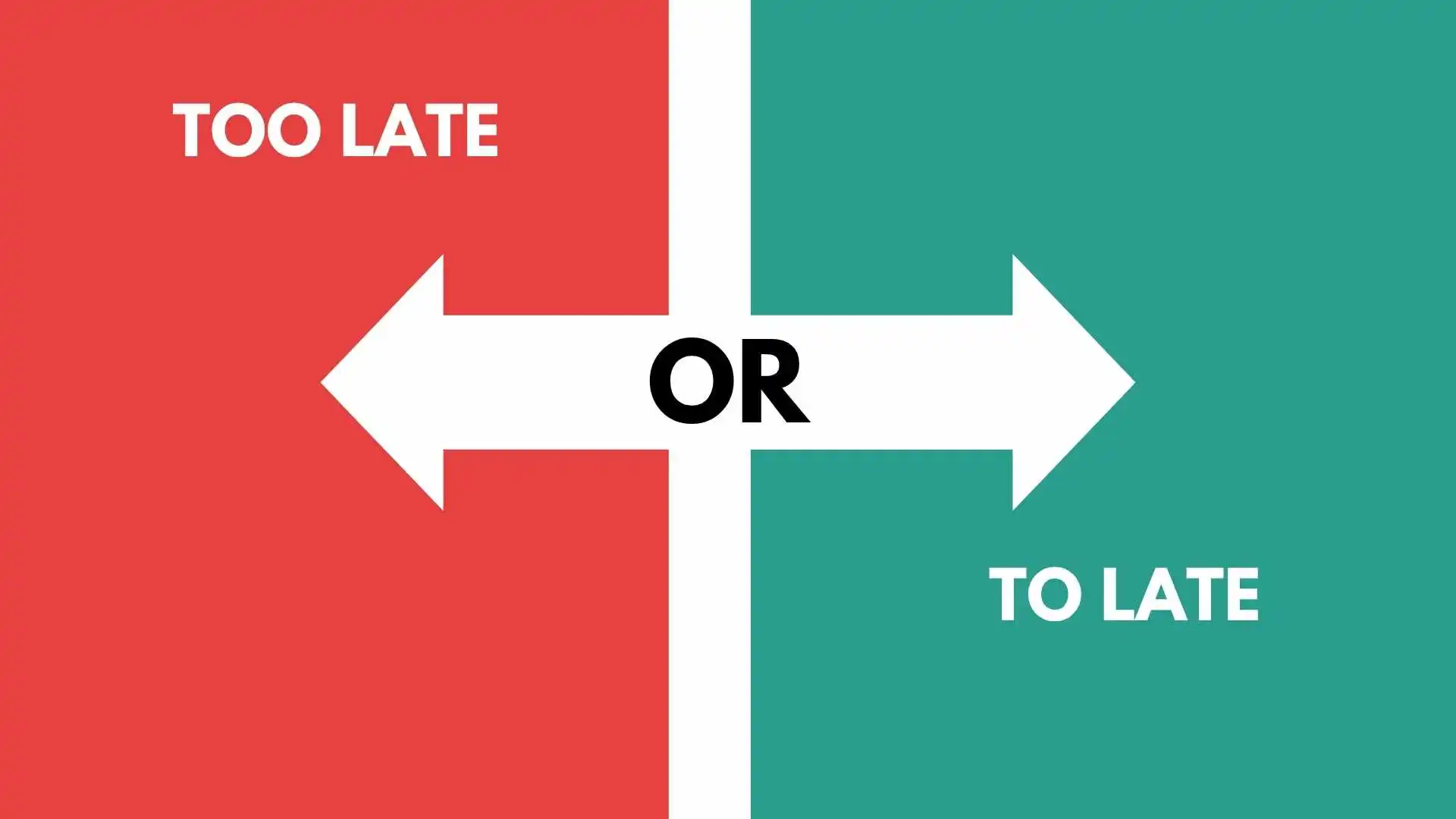
If you have ever wondered whether “Too Late or To Late” is the correct expression, you are not alone. Many English learners confuse these two phrases because they sound almost identical, but only one is correct in standard English.
The phrase “too late” is used when something happens after the right, expected, or useful time. For example, you might say, “I arrived too late to catch the bus.” On the other hand, “to late” is not a correct phrase in standard English.
The word “to” is usually used before a verb or to show direction, while “too” can mean “more than necessary” or “also.” Understanding this small difference can help you avoid a common spelling and grammar mistake in everyday writing.
Quick Answer ⚡
“Too late” is the correct phrase when you mean something happened after the right time (e.g., “I arrived too late for the meeting”). “To late” is grammatically incorrect “to” is a preposition and can never be paired with “late” this way.
Let’s break it all down so it sticks for good. 👇
What Does “Too” Mean? 📌
“Too” is an adverb, and it has two main jobs in English:
- Meaning “excessively” or “more than needed”
- The soup is too hot to eat.
- She was driving too fast.
- This shirt is too small for me.
- Meaning “also” or “as well”
- I like coffee. I like tea, too.
- Can I come too?
- He’s coming to the party, and his sister is too.
📝 Memory Tip: “Too” has an extra O, just like it means an extra amount of something (too much, too many, too late).
What Does “To” Mean? 📌
“To” is a preposition, and it’s one of the most-used words in English. It shows:
- Direction or movement
- I’m going to the store.
- She walked to school.
- Part of an infinitive verb
- I want to sleep.
- He tried to call you.
- A relationship or connection
- This gift is to my mom.
- Give the report to your manager.
📝 Memory Tip: “To” is short and simple think of it as a one-way arrow (→) pointing somewhere, showing direction or connection.
“Too Late” vs “To Late” Which One Is Correct? ✅❌
Here’s the simple truth: “to late” is never correct English. Since “to” is a preposition used for direction or before a verb, it doesn’t logically pair with an adjective like “late” on its own.
“Too late” is the only correct form when describing a missed opportunity or something that happened after the right time.
Examples of Correct Usage: “Too Late”
- I got to the airport too late to catch my flight. ✈️
- It’s never too late to learn something new. 📚
- By the time we called, it was too late to cancel the order.
- Sorry, you’re too late the tickets are sold out. 🎟️
- It’s too late to apologize now.
Why “To Late” Doesn’t Work
You could technically use “to” before “late” if “late” were functioning as part of a longer phrase involving movement or direction but this is extremely rare and not standard usage. In everyday English, if you’re describing something happening past the right time, you always need “too.”
Comparison Table: Too vs To vs Too Late 📊
| Word/Phrase | Part of Speech | Meaning | Example Sentence |
| Too | Adverb | Excessively / Also | “It’s too cold outside.” |
| To | Preposition | Direction / Before a verb | “I’m going to work.” |
| Too late | Adverb + Adjective | Past the right/expected time | “We arrived too late for the show.” |
| To late | ❌ Incorrect | Not a valid grammatical phrase | ❌ “I came to late.” (Wrong) |
Common Mistakes People Make 🚫
- Confusing “to” and “too” because they sound the same (homophones).
- ❌ I want to go to, my friend is going to.
- ✅ I want to go too, my friend is going too.
- Forgetting the extra “o” in “too.”
- ❌ It’s not to late to sign up.
- ✅ It’s not too late to sign up.
- Using “too” instead of “to” before a verb.
- ❌ I need too go now.
- ✅ I need to go now.
- Overusing “too” when “very” fits better.
- Awkward: This cake is too delicious.
- Better: This cake is very delicious. (Unless you mean it’s too delicious to resist!)
🧠 The Easiest Memory Trick
Think of it this way:
- “Too” = T-O-O = Too Often Overdoing it (extra amount, extra letter)
- “To” = T-O = Toward Objective (direction, simple and short)
If you’re describing “more than enough” or “as well,” add the extra O. If you’re showing direction or connecting to a verb, keep it short with just “to.”
Real-Life Examples 🌍
In Emails 📧
“Unfortunately, it’s too late to change your flight without a fee.”
In Text Messages/Social Media 📱
“omg it’s not too late to join the group chat right?? 😅”
In News Headlines 📰
“Experts warn it may be too late to reverse climate damage in some regions.”
In Academic Writing 🎓
“The study concludes that early intervention is critical, as treatment initiated too late shows significantly reduced effectiveness.”
In Everyday Speech 🗣️
“Don’t wait it’s never too late to start exercising!”
British English vs American English 🇬🇧 🇺🇸
Good news here “too late” is used identically in both British and American English. There’s no regional spelling or usage difference for this particular phrase, unlike words such as “colour/color” or “favourite/favorite.”
However, some usage notes worth knowing:
| Region | Common Phrase | Notes |
| 🇺🇸 American English | “It’s too late” | Same usage as British English |
| 🇬🇧 British English | “It’s too late” | Identical, no spelling variation |
| Both | “Better late than never” | Common idiom related to lateness |
So no matter where you’re from, the rule stays the same: too late is correct, to late is not.
Keyword & Usage Insights 🔍
If you’re searching for grammar clarity, here are related terms people often search alongside this topic:
- too vs to grammar
- correct spelling of too late
- common English mistakes
- grammar tips for beginners
- homophones in English
- to vs too examples
- English usage rules
- writing mistakes to avoid
Understanding too vs to isn’t just about one phrase it’s a foundational grammar rule that improves your writing across emails, essays, resumes, and social media posts.
FAQs: People Also Ask ❓
1. Is it “too late” or “to late”?
It’s always “too late.” “To late” is grammatically incorrect and should never be used.
2. Why do people confuse “to” and “too”?
Because they’re homophones they sound identical when spoken, even though they have completely different meanings and functions.
3. What’s an easy way to remember the difference?
Remember: “too” has an extra “o” for “extra” or “also.” “To” is short, like a one-way direction.
4. Can “to late” ever be correct?
In standard English, no. There’s no common, accepted sentence structure where “to late” is grammatically correct.
5. Is “too late” formal or informal?
It’s neutral you can use “too late” in casual conversations, emails, academic writing, and formal documents alike.
6. What’s the difference between “too” and “very”?
“Very” simply intensifies a description (very hot), while “too” implies excess beyond what’s acceptable or wanted (too hot to drink).
7. Is there a British vs American difference in “too late”?
No this phrase is used the same way in both British and American English, with no spelling or usage variations.
Final Thoughts: Never Get “Too Late” Wrong Again 🎯
Understanding the difference between “Too Late” and “To Late” is important for clear and correct English. “Too late” is the correct phrase and means that something happens after the appropriate or useful time. For example, “I arrived too late to catch the bus.” On the other hand, “to late” is generally incorrect because “to” does not modify the adjective “late” in this expression. Remember that “too” can mean “excessively” or “more than necessary,” which fits perfectly in “too late.” Using the correct phrase will make your writing more accurate, natural, and professional.

Olivia Bennett is a passionate English grammar writer at GrammBoost.com who loves making grammar simple and easy to understand. She specializes in spelling, word differences, punctuation, and everyday English usage. Through clear explanations and practical examples, Olivia helps students, writers, and professionals write with greater confidence and accuracy.