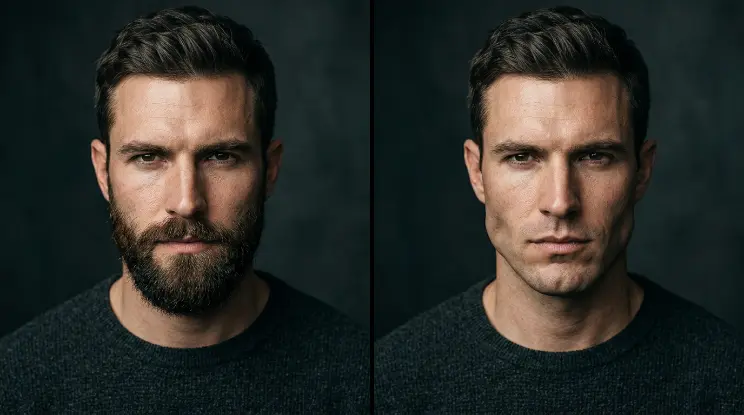
Ever stood in front of the bathroom mirror, razor in one hand, coffee going cold in the other, whispering “beard or no beard?” to your own reflection like it’s a life-altering decision? 😅
You’re not alone. This tiny five-word question causes more indecision than picking a Netflix show on a Friday night. Some people swear a beard makes them look more mature and put-together. Others feel instantly cleaner, younger, and sharper the moment the stubble disappears. And a lot of us just keep going back and forth growing it out for a month, then shaving it all off in a fit of impatience.
Here’s the thing: there’s no single “correct” answer. But there is a smart way to think it through and that’s exactly what this guide is for.
Quick Answer 🎯
There’s no universal right choice a beard tends to add maturity, warmth, and a rugged edge, while going clean-shaven gives a sharper, younger, more polished look. The “best” option depends on your face shape, profession, grooming commitment, and personal style.
What Does “Beard or No Beard” Actually Mean?
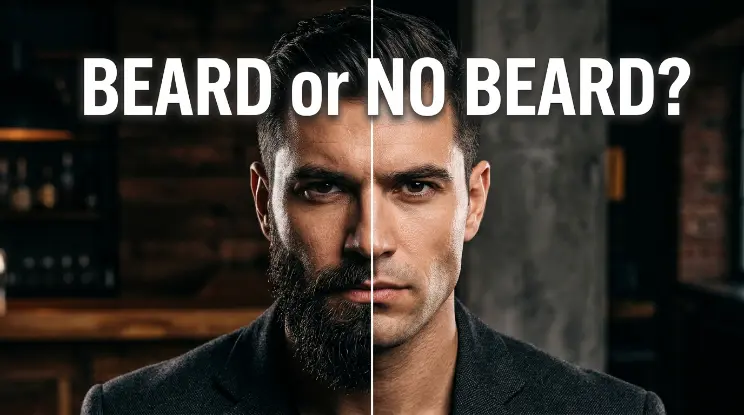
Let’s break the phrase down like we would with any tricky English expression, because believe it or not, this is where a lot of people trip up not on the decision, but on how they talk and write about it.
“Beard” 🧔♂️
- Meaning: Facial hair grown on the chin, jaw, and cheeks.
- Usage: Can refer to any style full beard, stubble, goatee, etc.
- Examples:
- “He’s had a beard since college.”
- “She said my beard makes me look older.”
- “Growing a beard takes patience.”
“No Beard” (Clean-Shaven) 🪒
- Meaning: A face free of facial hair, achieved by regular shaving.
- Usage: Often written as “clean-shaven” in formal writing, but “no beard” works fine in casual speech.
- Examples:
- “I prefer the no beard look for job interviews.”
- “He went clean-shaven for the wedding.”
- “My boss likes the no-beard policy at work.” (Note the hyphen when it’s used as an adjective before a noun more on that below!)
“Beard or No Beard” The Phrase Itself
This is what’s called a binary choice expression in English similar to “yes or no,” “in or out,” or “love it or hate it.” It’s used to present two contrasting options side by side.
- ✅ “It’s a beard or no beard situation there’s no in-between.”
- ✅ “The debate of beard vs. no beard has existed for decades.”
Grammar tip: When using it as a noun phrase before another noun (like “dilemma” or “decision”), hyphenate it:
- “The beard-or-no-beard dilemma is real.”
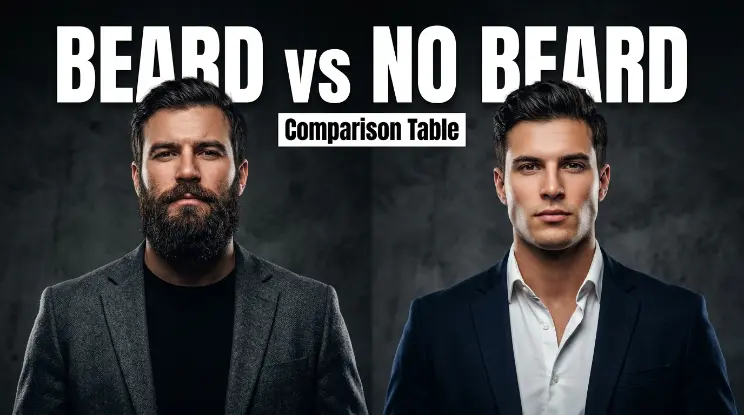
Comparison Table: Beard vs. No Beard
| Feature | Beard 🧔 | No Beard (Clean-Shaven) 🪒 |
| Appearance | Rugged, mature, bold | Sharp, youthful, polished |
| Maintenance | Requires trimming, oils, balms | Requires daily/regular shaving |
| Face shape impact | Can hide a weak jawline or round face | Highlights jawline and facial structure |
| Professional image | Seen as trendy in creative industries | Often preferred in traditional/corporate settings |
| Time investment | Low daily effort, but styling upkeep | Daily razor time |
| Skin sensitivity | Can irritate skin underneath if not cleaned | Can cause razor burn or ingrown hairs |
| Common perception | Confident, wise, “lumberjack energy” | Clean, disciplined, approachable |
| Popular example | Chris Hemsworth, Jason Momoa | Ryan Gosling (clean look era), Michael B. Jordan |
Common Mistakes People Make (Beard Edition) 😬
Just like grammar has its classic mix-ups (affect vs. effect, anyone?), the “beard or no beard” debate has its own set of common slip-ups in both grooming and how people write/talk about it.
1. Confusing “Stubble” with “Beard”
- ❌ “I grew a full beard overnight.”
- ✅ “I have stubble after not shaving for two days.” (A beard usually needs 4+ weeks of growth.)
2. Writing “Clean Shaven” Without a Hyphen (when used before a noun)
- ❌ “He has a clean shaven face.”
- ✅ “He has a clean-shaven face.”
- ✅ (No hyphen needed if it comes after the noun): “His face is clean shaven.”
3. Overusing “No-Beard” Instead of “Clean-Shaven” in Formal Writing
- Casual: “I’m going no-beard this summer.”
- Formal/Professional: “I’ve decided to remain clean-shaven for the interview.”
🧠 Memory Trick (Mnemonic)
Think of it this way:
Beard = Bold Clean-shaven = Crisp
Both start with the same sound as the feeling they give off. Bold and bushy vs. crisp and clean. Easy to remember! 😄
Real-Life Examples: Where “Beard or No Beard” Shows Up
📧 In Emails
“Hey team, quick poll beard or no beard for the company headshots this year? Reply by Friday!”
📱 On Social Media
“Beard or no beard?? 🤔 Drop a 🧔 or 🪒 in the comments and I’ll do whichever gets more votes!”
📰 In News & Lifestyle Articles
“The beard or no beard debate has resurfaced as celebrities swing between rugged and refined looks on the red carpet.”
🎓 In Academic/Research Writing
“Studies on facial hair perception suggest that beard presence is often associated with increased perceived dominance and maturity, while a clean-shaven appearance is linked to perceived youthfulness.”
🗣️ In Everyday Speech
“Honestly, I go back and forth every few months beard in winter, no beard in summer!”
Trends & Usage Notes 📊
British vs. American English
Good news there isn’t a major spelling or grammar difference here! Both British and American English use “beard,” “clean-shaven,” and “no beard” the same way. However, there are a few subtle style notes:
| Region | Common Phrase | Notes |
| 🇺🇸 American English | “clean-shaven” or “no beard” | Both used casually and formally |
| 🇬🇧 British English | “clean-shaven” (preferred formally) | “No beard” is more conversational/informal |
Search & Cultural Trends
- The “beard or no beard” debate spikes in searches every “No-Shave November” (a movement raising cancer awareness).
- Interest also rises around wedding season and New Year resolutions, when people consider a grooming reset.
- Pinterest and Instagram see huge engagement around “beard transformation” and “beard vs no beard” comparison photos.
Related Keywords You’ll Often See Together
- beard grooming tips
- clean-shaven vs bearded look
- facial hair styles for men
- beard grooming for beginners
- how to maintain a beard
- English usage tips
- common grammar mistakes
- correct spelling of clean-shaven
How to Decide: Beard or No Beard? 🤔
If you’re still stuck, ask yourself these quick questions:
- Does your face shape need more structure? → A beard can add definition to round or narrow faces.
- Is your workplace formal or conservative? → Clean-shaven might be safer.
- Can you commit to regular maintenance? → Beards need trims; clean-shaven needs daily razors.
- What does your partner/family think? → Worth considering, but don’t let it be the only factor!
- What season is it? → Beards offer warmth in winter; clean-shaven feels lighter in summer.
FAQs (People Also Ask) ❓
1. Is it “beard or no beard” or “beard vs no beard”?
Both are correct! “Beard or no beard” sounds more like a casual question, while “beard vs. no beard” is often used as a title or heading for comparisons.
2. How long does it take to grow a full beard?
On average, it takes 4 to 6 weeks to grow a noticeable, fuller beard, though full thickness can take 2–3 months depending on genetics.
3. Do beards make you look older or younger?
Generally, beards tend to make people look older and more mature, while being clean-shaven often gives a younger, fresher appearance.
4. Is “clean-shaven” one word or two?
It’s always two words with a hyphen when used as an adjective before a noun (e.g., “clean-shaven look”). Without a following noun, the hyphen is often dropped (“He is clean shaven”).
5. Are beards more attractive than no beard?
This is subjective! Studies show attractiveness perception varies some find beards more attractive due to perceived masculinity, while others prefer the clean, youthful look of no beard.
6. What’s the correct term “beardless” or “no beard”?
Both are used, but “beardless” is more common in formal or literary writing, while “no beard” is more conversational.
7. Is going beard or no beard a big career decision?
In some conservative industries (law, finance, aviation), a clean-shaven look may be preferred. In creative or casual industries, beards are widely accepted and even trendy.
Conclusion: So… Beard or No Beard? 🧔🪒
At the end of the day, the “beard or no beard” question isn’t about right or wrong it’s about what fits your lifestyle, face shape, profession, and personal style. A beard brings boldness, warmth, and maturity. Going clean-shaven brings sharpness, youth, and polish. Neither choice is “better” it’s simply about knowing yourself and owning whichever look makes you feel most confident. 💪
And remember the quick grammar tip: it’s “clean-shaven” with a hyphen before a noun, and the phrase itself works beautifully both casually (“beard or no beard?”) and formally (“the beard-versus-no-beard debate”).

James Carter is an English language enthusiast and content writer who loves making grammar simple and easy to understand. He creates clear, beginner-friendly guides on spelling, grammar rules, confusing words, and everyday English usage. His goal is to help readers write with confidence through practical examples, easy explanations, and accurate language tips.