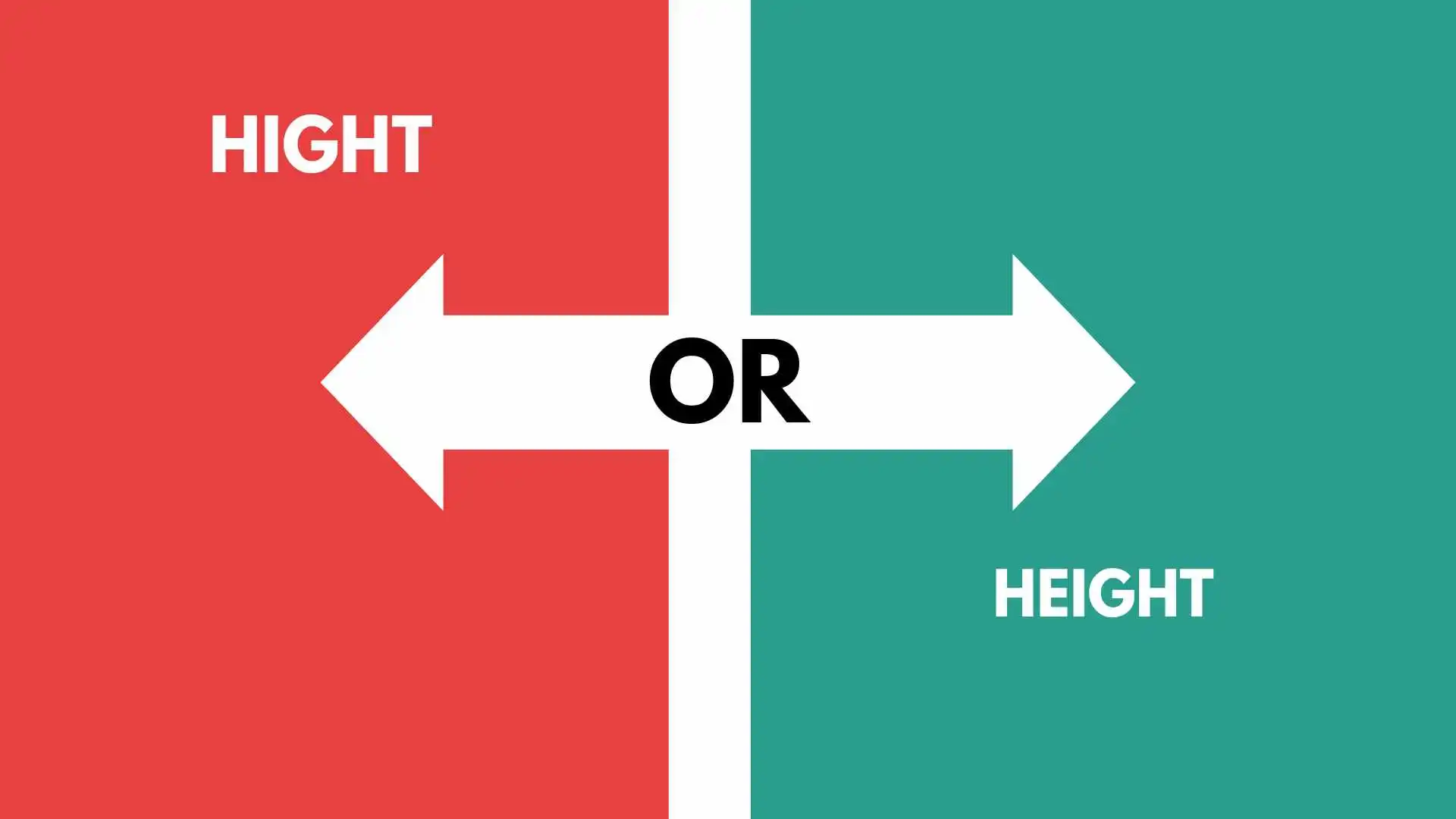
When it comes to English spelling, even a small difference between two words can create confusion.
“Hight or Height” is a common spelling question because both words look almost identical, but only one is the correct standard spelling. If you have ever paused while writing and wondered whether to use “Hight” or “Height,” you are certainly not alone.
These kinds of spelling mistakes often happen because English pronunciation does not always clearly show how a word should be written.
Quick Answer ⚡
Height is the correct modern word to describe how tall something or someone is (e.g., “What is your height?”). Hight is an archaic, poetic word meaning “called” or “named,” and it’s virtually never used in everyday English today.
So if you’re writing an email, a resume, a school essay, or literally anything in 2026 — always go with height.
What Does “Height” Mean? 📐
Height is a noun that refers to:
- The measurement of how tall a person, object, or place is
- The distance from the base to the top of something
- A high point, peak, or extreme degree of something (used figuratively)
Examples of “Height” in a Sentence
- The height of the Eiffel Tower is about 330 meters.
- My little brother’s height increased by two inches this year.
- She reached the height of her career in her thirties.
- The plane was flying at a height of 35,000 feet.
- Please enter your height and weight on the form.
- At the height of the storm, the wind was howling like confused. 🌪️
- Fear of heights is called acrophobia.
Notice how “height” works both literally (measuring tallness) and figuratively (a peak moment or extreme level). That flexibility is part of why it’s such a commonly used word.
What Does “Hight” Mean? 📜
Here’s where things get interesting. Hight is a real English word but it’s ancient. It comes from Old and Middle English and was historically used as the past tense of “hote” or “hatan,” meaning “to call” or “to name.”
In plain terms: hight used to mean “named” or “called.”
Examples of “Hight” in Historical/Poetic Use
- “There once lived a knight, Sir Gareth hight.” (meaning: named Sir Gareth)
- “In a village hight Willow Creek…” (meaning: called Willow Creek)
- Old poetry and fairy tales sometimes used it like: “The maiden hight Rosalind wandered the forest.”
You’ll mostly find “hight” in Shakespearean texts, medieval literature, fantasy novels, or poetry trying to sound old-fashioned. It is not used in modern conversation, business writing, or casual texting and if you see it used to mean “tall,” that’s simply a spelling mistake. ❌
Height or Hight Calculator
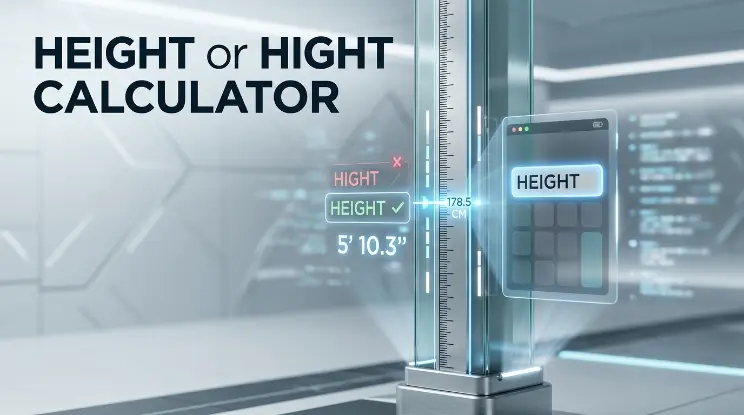
When talking about a person’s measurement, height is the correct spelling, while hight is generally incorrect in modern standard English. A height calculator is a tool that can be used to calculate or convert a person’s height between different units, such as feet, inches, and centimeters. For example, you can enter 5 feet 8 inches and convert it to centimeters. The correct phrase is “height calculator,” not “hight calculator.”
Hight or Height in Feet
Height is the correct spelling when describing how tall someone is in feet. The word hight is not the standard spelling for this meaning. Height is commonly written in feet and inches, such as 5 feet 6 inches or 5’6″. For example, “Her height is 5 feet 6 inches” is correct. Therefore, when searching or writing about a person’s measurement, use “height in feet.”
Hight or Height in CM
Height is also the correct spelling when measuring a person in centimeters. Hight is generally an incorrect spelling in modern English. The correct phrase is “height in cm” or “height in centimeters.” For example, “His height is 175 cm” is correct. In scientific, medical, and international contexts, centimeters are commonly used to describe height, while feet and inches are more common in the United States.
Height vs Hight: Comparison Table 📊
| Feature | Height | Hight |
| Meaning | Measurement of tallness; a peak or extreme point | Archaic word meaning “called” or “named” |
| Part of Speech | Noun | Archaic verb (past tense) |
| Modern Usage | Extremely common ✅ | Virtually obsolete ❌ |
| Used In | Everyday speech, writing, forms, science, sports | Old poetry, medieval literature, fantasy fiction |
| Example Sentence | “What’s your height?” | “A knight hight Lancelot.” |
| Pronunciation | /haɪt/ (rhymes with “kite”) | /haɪt/ (same pronunciation!) |
| Correct Spelling for Everyday Use | ✅ Yes | ❌ No (unless writing historical fiction) |
Fun fact: both words are actually pronounced the same way — that’s a big reason people confuse them in writing! 🤯
Why Do People Confuse “Hight” and “Height”? 🤔
There are a few solid reasons this mix-up happens so often:
- Identical pronunciation — both sound like “hite,” so your ear can’t tell them apart.
- Similar spelling pattern — just one missing “e” separates them.
- Autocorrect issues — some people type fast and drop letters without noticing.
- Old literature exposure — reading Shakespeare or fantasy novels can make “hight” feel familiar, even though it’s outdated.
- Regional dialects and old surnames — some family names or place names (like “Wainwright” adjacent spellings) can create false familiarity with unusual letter combos.
Common Mistakes to Avoid 🚫
| Mistake | Why It’s Wrong | Correct Version |
| “What’s your hight?” | “Hight” doesn’t mean tallness | “What’s your height?” |
| “The hight of the building is 50m.” | Wrong word for measurement | “The height of the building is 50m.” |
| “He is 6 feet in hight.” | Should be a noun for measurement | “He is 6 feet in height.” |
| “At the hight of summer” | Should use “height” for peak/extreme | “At the height of summer” |
Memory Trick to Never Mix Them Up Again 🧠✨
Here’s a simple mnemonic to lock this in permanently:
“Height has an E, like mEasurE.”
Both “height” and “measure” relate to measuring things — and both contain an “e” you might forget. Picture a measuring tape stretching up to the letter E at the top. 📏
Another fun trick:
“Hight is for knighTs, not for heighTs.”
Both “knight” and “hight” belong to old-fashioned English, while “height” belongs in your everyday vocabulary.
Real-Life Examples 🌍
📧 In an Email
“Hi Sarah, could you please confirm the height requirements for the new office shelving units? Thanks!”
📱 On Social Media
“New personal record! Jumped to a height of 6 feet today at track practice 🏃♂️🔥 #HighJump”
📰 In the News
“Wildfire smoke has reached new heights, affecting air quality across three states.”
🎓 In Academic Writing
“The study measured plant height growth over a six-week period under varying light conditions.”
🗣️ In Everyday Speech
“Wow, you’ve really grown — what’s your height now, like 5’10”?”
As you can see, “height” fits naturally into nearly every kind of writing and conversation — while “hight” simply doesn’t belong in modern usage at all.
British vs American English: Any Difference? 🇬🇧🇺🇸
Good news there’s no difference between British and American English when it comes to spelling “height.” Both dialects:
- Spell it the same way: height
- Pronounce it the same way: /haɪt/
- Use it in the same contexts (measurements, peaks, extremes)
Unlike words such as “colour/color” or “organise/organize,” height doesn’t have regional spelling variations. That’s one less thing to worry about! 🎉
SEO & Language Trend Insights 🔍
If you search online, you’ll notice that “hight or height” is a frequently searched query — mostly from people trying to double-check their spelling before submitting a form, resume, or school assignment. Related search trends include:
- “height correct spelling”
- “how do you spell height”
- “height meaning in English”
- “hight vs height grammar”
- “words that sound like height”
This shows that spelling confusion around height is a global grammar tip search topic, especially among ESL (English as a Second Language) learners and students trying to avoid common mistakes in formal writing.
Frequently Asked Questions (FAQs) ❓
1. Is “hight” a real word?
Yes, but it’s archaic. It historically meant “called” or “named” and is rarely used in modern English outside of poetry or fantasy writing.
2. Is “hight” ever correct instead of “height”?
No. If you’re referring to tallness or measurement, “hight” is always incorrect. Only use “height.”
3. How do you spell height correctly?
The correct spelling is h-e-i-g-h-t. Remember: “height has an E, like measure.”
4. Why does “height” not have a “th” sound like “width” or “length”?
English spelling can be inconsistent because it borrows from many languages. “Height” comes from Old English “hēhþu,” which evolved differently than “width” and “length.”
5. Is “heighth” a word?
No, “heighth” is a common mispronunciation/misspelling. The correct word is simply height, with no extra “th” sound.
6. What is the noun form of “high”?
The noun form of “high” is height — it describes the measurement of how high something is.
7. Do British and American English spell “height” differently?
No, both use the exact same spelling: height. There’s no regional variation here.
Final Thoughts: Height Wins, Every Time 🏆
Whenever you’re describing how tall someone or something is, filling out a form, writing an email, or crafting an essay always choose “height.” Save “hight” for historical fiction or if you’re channeling your inner medieval poet. 😄
Mastering small grammar details like this one boosts your writing confidence and helps you avoid embarrassing typos in professional or academic settings. Keep this guide handy, and you’ll never confuse these two words again!
Read More Articles
Armour or Armor: Which Spelling Is Correct? Complete Grammar 2026
Or vs Nor: What’s the Difference? Complete Grammar 2026
Ms Mrs or Miss: What’s the Difference and When Should You Use Each? 2026
Vacuum or Vaccum: Which Spelling Is Actually Correct? 🤔2026

Olivia Bennett is a passionate English grammar writer at GrammBoost.com who loves making grammar simple and easy to understand. She specializes in spelling, word differences, punctuation, and everyday English usage. Through clear explanations and practical examples, Olivia helps students, writers, and professionals write with greater confidence and accuracy.